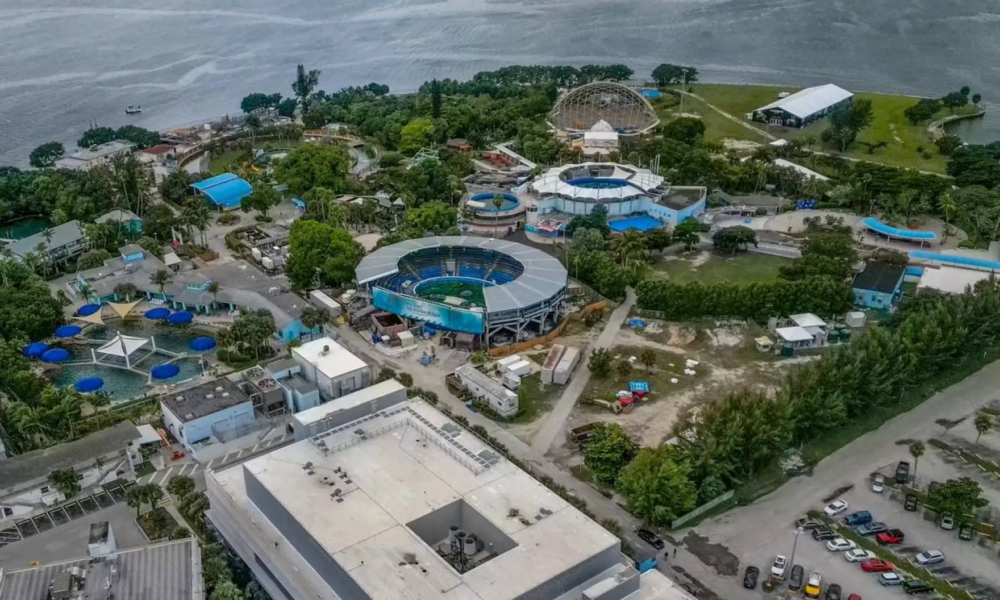


A county planning board approved a zoning change this week for the proposed Seaquarium redevelopment despite warnings that its massive marina could threaten manatees and nearby seagrass beds. Final approval of the project is pending.
Editor’s Note: The Miami-Dade County Commission has called a special meeting for Tuesday, Dec. 8 at 9:30 a.m. to consider the proposed Seaquarium redevelopment, including a revised 99-year lease agreement, and land-use and zoning changes. This story was first published on Nov. 17, 2026, by WLRN Public Media. The Spotlight is republishing the story under a partnership agreement with WLRN.
Despite new warnings from Miami-Dade County environmental regulators, a planning board on Monday unanimously cleared the way for a revamped Seaquarium with space for megayachts.
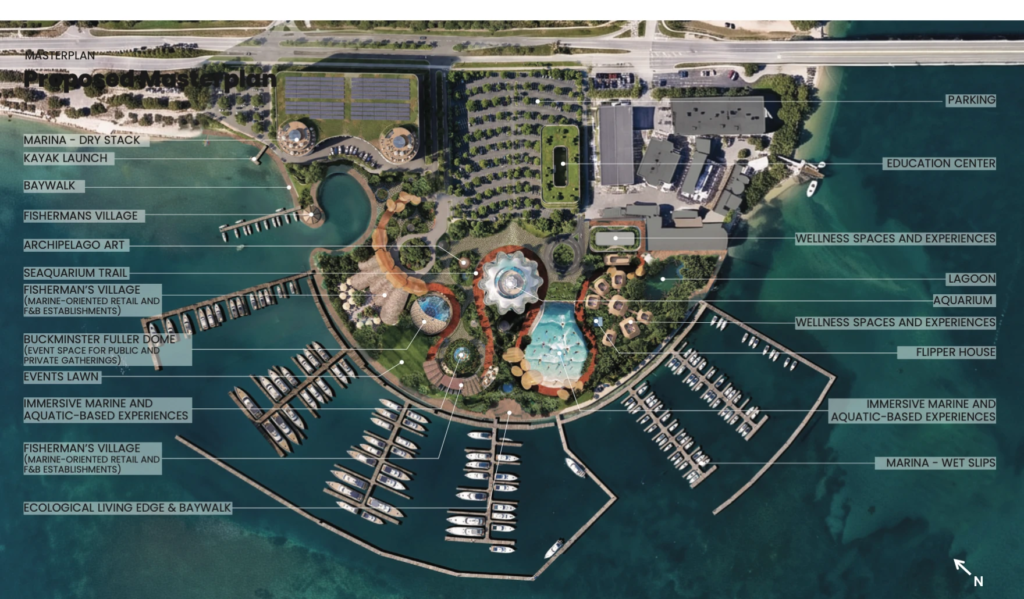
In a report posted last week, the Department of Environmental Resources Management warned that two earlier environmental studies submitted by developer David Martin’s Resilient Aquarium team failed to consider the full scope of the project that includes nearly 300 wet boat slips and another 552 in dry stack storage.
Those reports, regulators said, relied on data that only provide a snapshot of manatee behavior in Biscayne Bay and not how they move around. The project will likely shift boat traffic to nearby seagrass flats where manatees graze, the report said.
“Placement of a marina expansion in an area that is utilized by manatees as well as vessels for travel may cause negative impacts,” the report said.
The report said Martin’s analysis also relied on outdated boating information, using numbers from 2009 when about 58,000 boats were registered in the county. As of 2024, that number had jumped to nearly 74,000.
Before approving a new entertainment district to make way for the marina, board members asked about ongoing environmental reviews for the Virginia Key site.
Even though the construction of the marina is “inextricably linked” to the redevelopment of the marine park, planning chief Garrett Rowe said environmental concerns would be addressed later as the project is designed. The new district only sets a limit for 295 wet boat slips.
“There are several things occurring at the same time,” he explained, including approving a new 99-year lease, a zoning application and regulatory permits for building the marina in the Biscayne Bay Aquatic Preserve. “They’re progressing, being processed now. But the primary subject of this hearing is the [land use] application.”
Worried board members said it was the first time they’d seen an application carved into different pieces.
“I’m aware that several of these things will be addressed during the permitting processes,” said board member Michael Montiel, who represents the district covering Virginia Key. “But I think it’s important that we put it on the record, and hopefully the county commissioners will evaluate this. I believe strongly that this has not been fully vetted on the environmental side.”
Two other reports on manatees — from the Florida Fish and Wildlife Conservation Commission and Save the Manatee Club — found the area is frequented by manatees. Both recommended limiting the total number of slips to 250.
Still, the board praised Martin’s plans, which include restoring the Buckminster Fuller gold dome and Flipper house, as well as building a bayfront walkway open to the public and a soaring new aquarium, not unlike the Frost Museum of Science across the bay.
The University of Miami is also leasing property on the site to build a new science center. Martin has boasted that a team from the UM Rosenstiel School is serving as science advisors, although one member said only two meetings had been held so far.
UM has failed to respond to multiple requests for details about the plan.
The project’s complicated approval process has drawn criticism from environmental groups who complain the county is intentionally sidestepping more detailed state reviews by keeping the project under 50 acres, which allows it to proceed as a “small-scale” amendment to the county’s land use plan. The old Seaquarium site makes up about 35 acres, but the marina adds nearly 60 acres more to the project.
“Now is exactly when your responsibility matters,” said Aaron Stauber, a plaintiff in a lawsuit fighting to have the project go to a voter referendum, who addressed board members. “Only 35 acres? C’mon, we know that’s not the whole project.”