
The statewide program aims to breathe new life into the West Grove’s historic commercial corridor while preserving its character.
As major development continues to reshape the West Grove, a state-backed preservation effort is seeking to revitalize Grand Avenue, the historic commercial heart of Coconut Grove’s historically Black neighborhood.
“Little Bahamas Grand Avenue Main Street” launched last month as part of Florida Main Street, a program of the Florida Division of Historical Resources that promotes economic development and preservation in historic downtowns across the state.
Coconut Grove joins 57 other designated Main Streets across Florida, including two already started in Miami — Allapattah and Overtown.
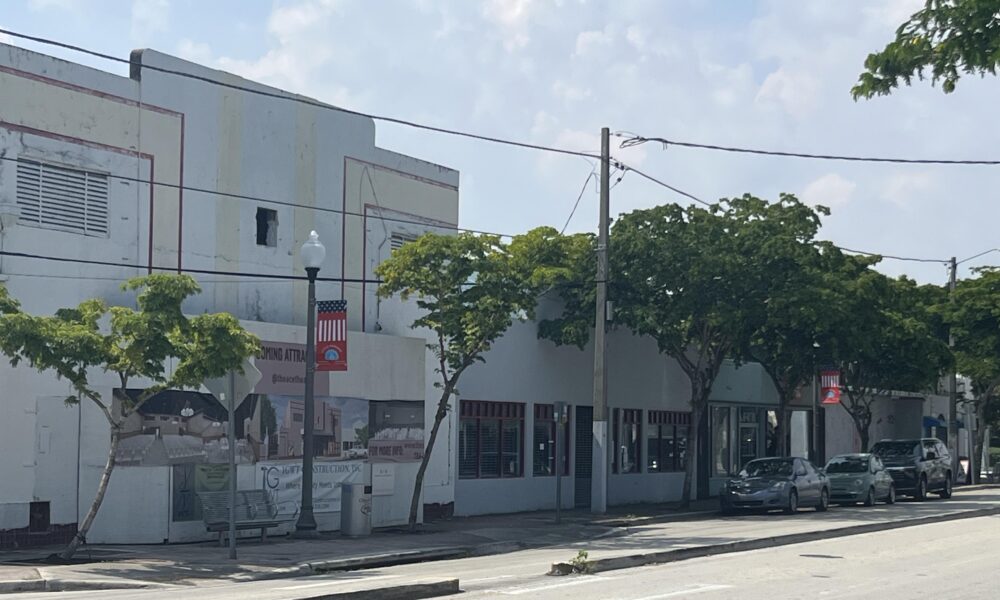
The Grove’s Main Street stretches along Grand Avenue from Margaret Street, a block west of the U.S. Post Office, to Brooker Street, a block east of Armbrister Park – a section of the neighborhood that served as a center of Black commerce during segregation.
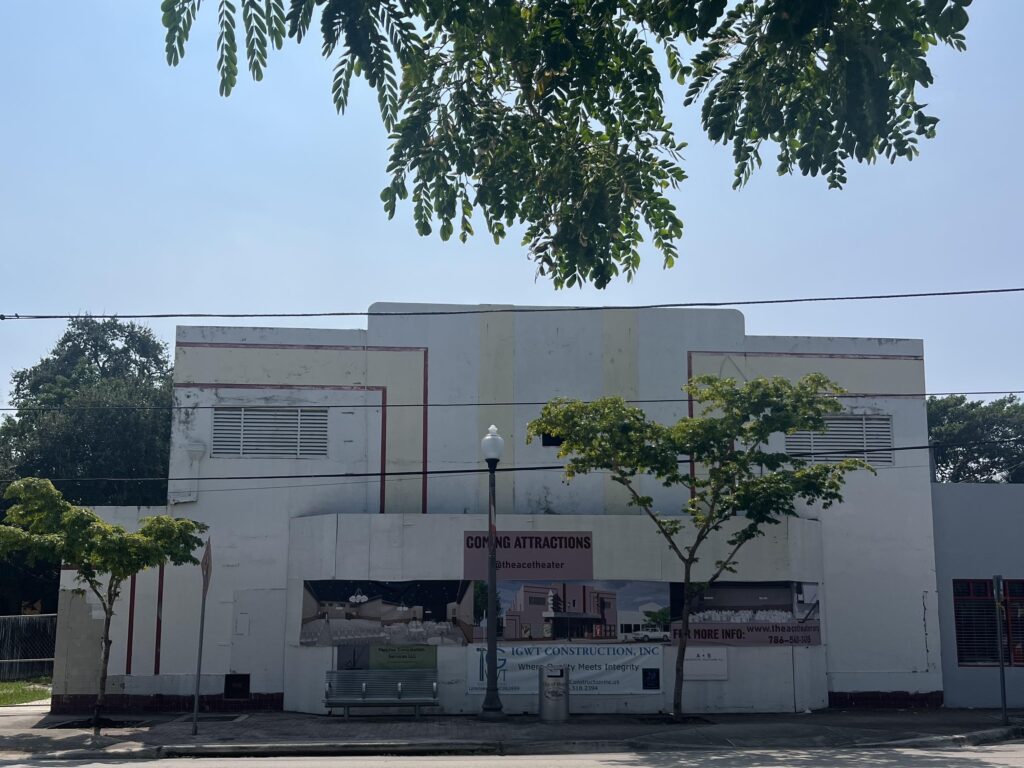
Restaurants, bars, grocery stores and shops lined the street, alongside entertainment venues like the Ace Theater, which opened as a colored-only movie house in the 1930s and later hosted graduation ceremonies, proms, concerts and other events.
Many of those businesses and community institutions have since closed, leaving vacant storefronts along Grand Avenue — a challenge the Main Street program seeks to address.
Katherine Beck, Florida Main Street’s coordinator, said the corridor has retained a strong foundation despite vacancies, both in its physical buildings and local businesses in the surrounding community.
“You’ve got good bones there,” she said. “You’ve got some good structures, but we got vacant buildings.”
Like many urban Main Streets, Grand Avenue is also grappling with the challenge of development pressure, Beck said.
In recent years, residential and commercial development has accelerated along the corridor’s east side, raising concerns about the future of historic buildings and long-term businesses.
At Matilda Street, two blocks east of the new Main Street district, the mixed-use Ziggurat development replaced a collection of low-rise neighborhood commercial buildings and local businesses, including Coconut Grove Laundry & Cleaners.
Some displaced businesses like the laundry and the UPS store relocated farther west along the boulevard, into what is now the Main Street district.
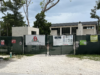
Other storefronts on the corridor’s west end include pet groomer Dogtown, Fookem’s Fabulous bakery and the ARRAE art gallery.
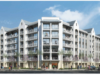
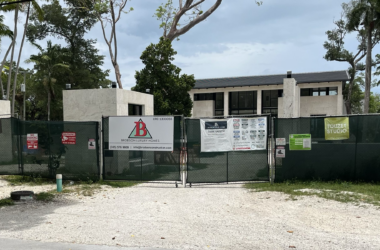
Developer Silver Bluff also has two new developments planned or under construction between Margaret and Elizabeth Streets: a five-story, 27-unit apartment building and an 80,000-square-foot Class A office building.
Gener Romeo, director of Miami Dade College’s Gibson Center on Grand Avenue, said the program offers the community an opportunity to have a say in what comes next.
“In life sometimes you only get one opportunity, and this is our opportunity,” he said.
“This is Little Bahamas’ opportunity to really take advantage of the fact that it’s recognized as a Main Street neighborhood.”
Romeo helped apply for and secure the Main Street designation. He said he envisions a Grand Avenue with thriving local businesses, architecture that reflects the neighborhood’s Bahamian history and more visitors drawn to the area by arts and culture.
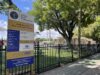
Miami Dade College is serving as the program’s anchor institution, providing a physical space, coordinating community meetings and handling administrative needs as the initiative gets off the ground.
The Main Street effort also has support from the city’s Department of Human Services, as well as Miami District 2 Commissioner Damian Pardo, Miami-Dade District 7 Commissioner Raquel Regalado, and the Miami-Dade Chamber of Commerce.
While the college spearheaded the effort to get the program launched, Romeo said it will ultimately be led by the community itself.
“We’re just the anchoring institution,” Romeo said. “We’re here to make sure that things are happening, but we need you all to be a part of it to do the work.”
The next step is establishing an official community nonprofit to oversee the program.
The college has hosted two community meetings focusing on recruiting a nonprofit board, advisory council and committees that will help set priorities and shape future initiatives.
Once the nonprofit structure is officially in place, it will set concrete goals in a work plan shared with Florida Main Street. Beck said that the work plan should be complete by next fall.
No plans are finalized yet, and Romeo stressed that participating community members will be responsible for leading the vision.
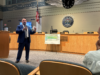
The program’s start-up efforts have drawn some skepticism from community members. When Romeo shared a Main Street update at a recent Coconut Grove Village West Homeowners and Tenants Association meeting, some residents complained that the process hasn’t been as transparent or inclusive as it should be.
Romeo sought to ease those concerns, emphasizing that the program is still in its early stages and inviting residents to get involved.
“We’re building the plane as we’re flying it,” he told the Spotlight.
Denise Wallace, co-owner of the Ace Theater, attended the most recent Main Street community meeting. As her team continues to renovate the 1930s theater, she said she “wholeheartedly” welcomes the initiative and hopes the Ace will boost its efforts when it reopens as a revived entertainment venue.
“The Ace Theater is the oldest landmark in that section of Grand Avenue, and it is the only one in that sector of Coconut Grove that’s on the National Register for Historic Places, so it could play a role in helping revitalize the area,” she said.
Read more: At 97, Dorothy Wallace Takes a Tour of her Legacy Project
A Grove resident with a deep family history on Grand Avenue, Wallace said she hopes the program will give historic and new businesses alike an opportunity to establish themselves in the neighborhood.
One idea that emerged from early meetings is a Main Street pipeline to help local entrepreneurs fill vacant storefronts on Grand Avenue.
Miami Dade College would provide technical training through a commercial-readiness program, while grant funding could support an “incubator space” on the corridor where entrepreneurs could develop and launch their businesses.
In the meantime, the organization plans to pursue funding. A major advantage of joining the statewide Main Street program is access and assistance in grant opportunities, including a $50,000 grant for starting organizations, Beck said.
The work, Beck cautioned, will not transform Grand Avenue overnight. Main Street revitalization tends to happen incrementally, she said, through sustained investment and community involvement.
“In three to five years, you’ll see a big difference in that corridor,” she said.
Sinclair Holian is a Spotlight reporter and Report for America corps member covering gentrification and development in Coconut Grove. She joins us through our partnership with Report for America, a national organization that places journalists in local newsrooms across the United States.