

A proposed change to Miami’s zoning code would make it easier to rezone smaller properties, potentially allowing higher-density development to spread into single-family neighborhoods. Critics warn of a domino effect.
The Miami City Commission will vote Thursday on proposed changes to the city’s zoning code that could make it easier for owners of small residential properties to seek higher-density zoning along the edges of established neighborhoods.
The amendments to Miami 21 — the city’s rulebook for development and land use — would allow individual lots to be rezoned even if they don’t meet the city’s minimum property-size requirements, which currently restrict such zoning changes to larger parcels.
The changes would apply citywide, including in Coconut Grove, where low-density residential neighborhoods frequently border commercial corridors and more intensive development.
City officials say the revisions are intended to make zoning procedures more efficient, transparent and predictable while preserving neighborhood character.
But the proposal also raises questions about whether individual rezonings could gradually push higher-density zoning deeper into established residential neighborhoods, one property at a time.
Under existing rules, rezoning applications generally must involve at least 40,000 square feet of land or 200 feet of street frontage, with certain exceptions, such as when the proposed rezoning extends an existing zoning district boundary.
The new legislation would sidestep that minimum size requirement by allowing owners of smaller properties to seek an upzoning if their land borders a property zoned for higher-density, more intensive development.
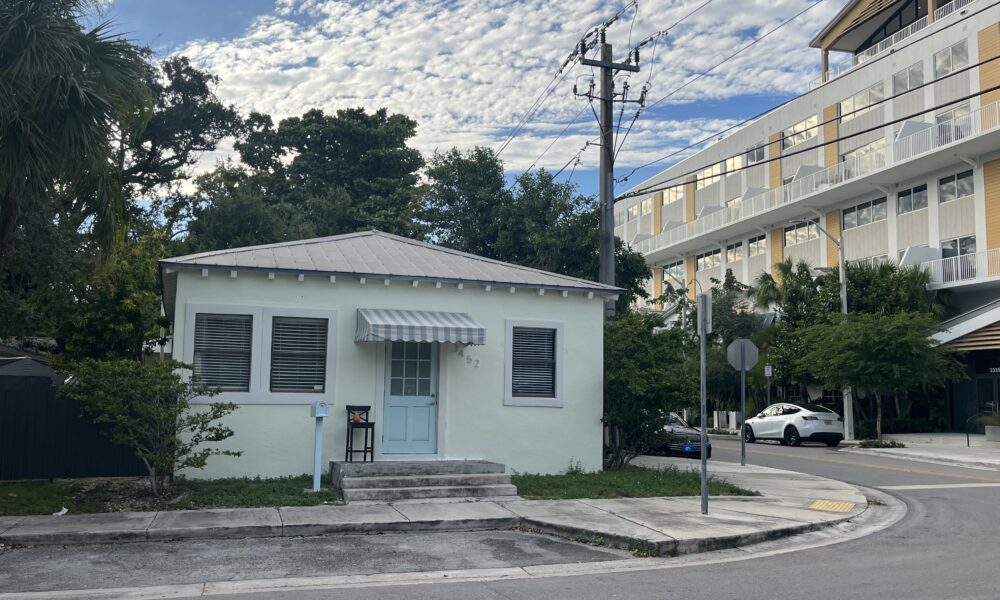
Consider a small house at 3452 Margaret St. in the West Grove, which sold for $890,000 a year ago to a company called RE1 Properties LLC.
Built in 1948, the single-story house sits on a 4,725-square-foot corner lot zoned for single-family, low-density residential use. Directly across the street on Thomas Avenue, properties are zoned T5-R, which permits multi-unit buildings five-stories or, in some instances as high as seven.
Under the proposed amendment, the Margaret Street lot would qualify for upzoning to T4, the next higher zoning category, which allows denser development, including townhouses and small apartment buildings. Some T4 designations also permit taller buildings and commercial uses.
The amendment would change one step in the rezoning process, not automatically authorize more intensive development.
Another property illustrating the potential impact of the proposed change is 2961 Aviation Ave. in North Grove, a parking lot serving an adjacent five-story office building. The lot also borders three single-family homes zoned T3. Under the proposed amendment, the parking lot could qualify for rezoning to T4, opening the door for neighboring property owners to seek similar changes
But critics warn of a domino effect, with each rezoning allowing neighboring properties to follow suit, gradually pushing higher-density development deeper into residential neighborhoods.
George da Guia, a Coconut Grove resident and licensed urban planner, raised that concern in written comments last June to the Planning, Zoning and Appeals Board, which voted narrowly to advance the proposal to the City Commission.
“One lot at a time. Each one too small to trigger the normal scrutiny,” he wrote.
The ordinance before commissioners Thursday would make several other changes to the rezoning process.
It would eliminate the twice-yearly March and September filing windows for private rezoning applications, allowing property owners to apply year-round.
And, more controversially, it would also ease the requirements for justifying a rezoning. Currently, applicants must explain both why their proposed zoning is appropriate and why the existing zoning is inappropriate. Under the amendment, they would no longer have to justify changing the existing zoning, only explain how the proposed change meets Miami 21’s objectives.
The ordinance is scheduled for its first reading Thursday, Nov. 19. If approved, it would require a second commission vote before becoming law.
This reporting is made possible through a partnership between Coconut Grove Spotlight and The Florida Trib with support from The Miami Foundation, John S. and James L. Knight Foundation, Report for America, and other generous donors.