




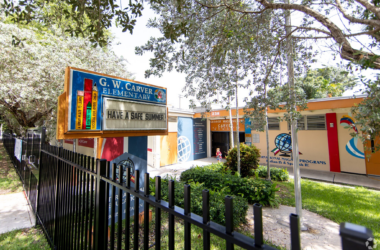
A proposal to remove 75 trees from a Leafy Way property in a South Coconut Grove Environmental Preservation District was deferred for a fifth time in less than a year, frustrating residents who say repeated postponements are wearing down public oversight.
A proposal to remove more than 90 percent of the trees from a Leafy Way home in a South Coconut Grove Environmental Preservation District has been deferred by the city’s Historic and Environmental Preservation Board (HEPB) — for a fifth time in less than a year.
A handful of residents who attended the board meeting last Tuesday walked out exasperated.
“This is the third time I’ve come to City Hall to try to speak up for the trees and every time it’s been postponed,” Coconut Grove resident Cynthia Fleischmann said.
The proposal — to remove 75 trees to make way for a 9,000-square-foot home — requires approval because of its location within an Environmental Preservation District — a zoning overlay intended to protect areas with dense tree canopy or distinctive landscape character by requiring heightened public review.
Property owners first submitted the project for HEPB review last April, but skeptical board members advised them to return with a revised plan that preserved more trees and reduced the extent of the hardscape.
But the plan presented in city records in advance of Tuesday’s board meeting revealed few, if any changes, prompting the city’s Preservation Office to recommend that the board deny the request.
The removal plan, “does not sufficiently take into consideration the protected status of the character-defining Tree Cluster within Environmental Preservation District #74,” a reviewing officer wrote as part of the city’s staff analysis.
The house slated for demolition was once the home of Helen W. Lester, an early Coconut Grove entrepreneur and the founder of the Leafy Way subdivision.
The item was deferred Tuesday after a roughly 30-second presentation, continuing the matter to the board’s March 3 meeting.
“We have been working with staff and also environmental resources. It’s a lot of work,” Carlos Diaz, a representative for the 3939 Leafy Way project, told the board. “We want to get it right and come to you next month.”
City records show the Leafy Way property is owned by Jan Vlietstra, who purchased it in 2022 for $2.6 million.
Sandy Moise, director of policy at the Miami-based Urban Paradise Guild and a founding member of Miami’s Trees Matter coalition, said the repeated deferrals are disrespectful of residents’ time.
“Some people may have taken off work or arranged for a babysitter or elder care, then maybe sat in traffic only to hear it was deferred again,” she said.
Moise suggested the pattern risks discouraging public participation altogether.
“With the City of Miami, typically when there are constant deferrals, they’re just waiting for the public to give up and go away before pushing it through,” she said.
Moise compared the process to a long-running effort by residents to block proposed changes to the city’s tree ordinance, which was ultimately pulled from the City Commission agenda in 2025.
Ahead of Wednesday’s meeting, the Leafy Way item circulated widely on social media and community group chats. At the meeting, several audience members stood and left the chamber after the deferral was announced, while others appeared to be arriving to offer public comment.














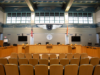
I was one of the dozen residents who attended the HEP Board meeting to speak on this item, only to see it deferred.
It is most inconsiderate to not let the public know in advance if an item is going to be deferred.
The rules should be changed to allow for that advance notice of a deferral.