

Residents packed a city workshop Thursday with concerns about tree loss and weak protections. But a new city analysis suggests that throughout much of Coconut Grove tree canopy is actually growing.
Genevieve Block Apaza doesn’t need much convincing that Coconut Grove must do a better job protecting its trees, for shade and other environmental benefits.
“Just walk anywhere in the Grove, and there’s definitely spots where it can be pretty uncomfortable,” she said recently. “I still don’t think we have enough mature canopy.”
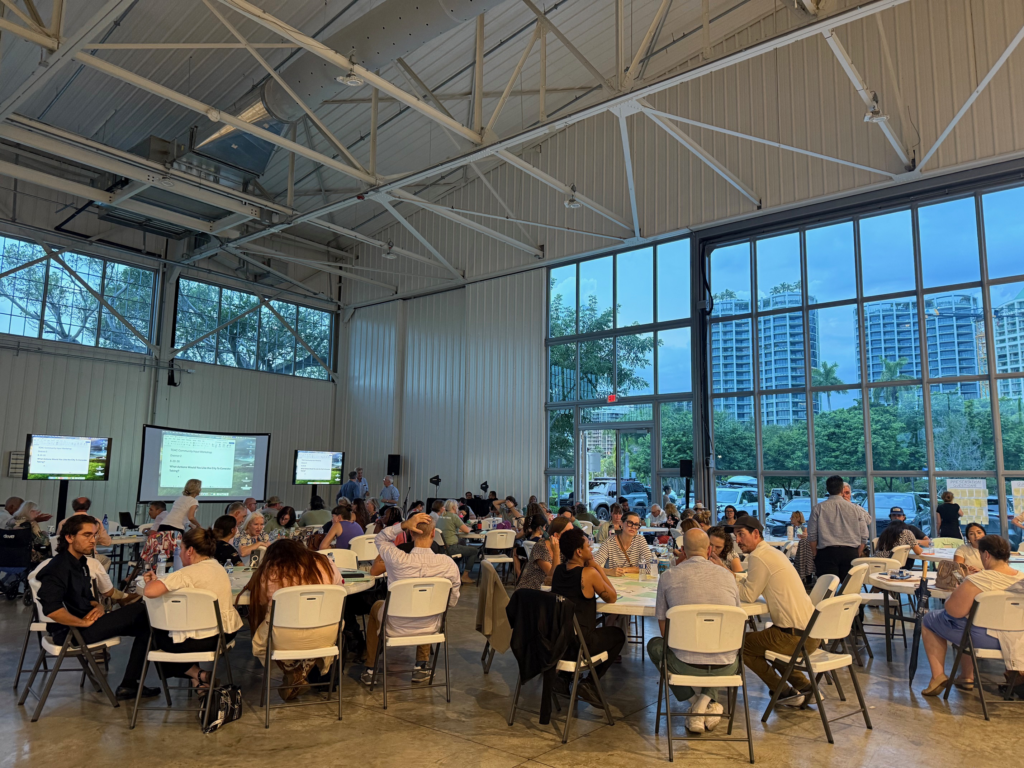
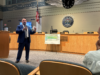
Apaza was one of about 50 people who gathered Thursday night at The Hangar at Regatta Grove to weigh in on Miami’s tree regulations. For nearly three hours, they voiced concerns about illegal tree cutting, weak enforcement, costly appeals and the continuing loss of large, mature trees as new construction overwhelms much of the village.
But despite an overwhelming belief among those in attendance that Coconut Grove’s tree canopy is under assault from development pressures and lax city enforcement, their concerns met a surprising counter-narrative: The Grove — and other nearby neighborhoods — may actually have gained tree canopy in recent years.
According to a new
analysis conducted by the City of Miami and posted last week on District 2 Commissioner Damian Pardo’s website, canopy increased between 2023 and 2025 across most of the 12 District 2 neighborhoods studied, including large portions of Coconut Grove.
Pardo, who welcomed the crowd Thursday for the fifth and final community workshop on the city’s proposed rewrite of its tree protection ordinance, made a point of highlighting the new analysis, calling the data “super important information for us to have.”
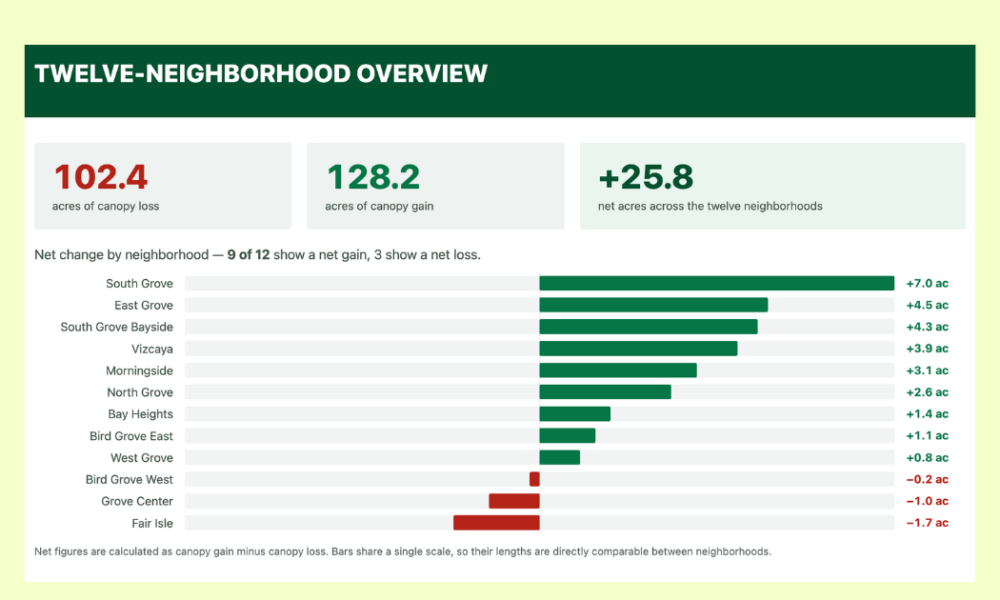
Prepared by the city’s Office of Resilience and Sustainability, the analysis found an estimated 128.2 acres of canopy gain and 102.4 acres of loss across the areas studied — a net increase of 25.8 acres.
South Grove showed the largest net increase, an estimated seven acres, followed by East Grove at 4.5 acres, South Grove Bayside at 4.3 acres and North Grove at 2.6 acres. Even West Grove, where redevelopment and tree removal have generated considerable concern, showed a 0.8-acre net gain.
But whether the new numbers provide a reliable measure of what is actually happening to Coconut Grove and nearby neighborhoods is far less certain.
The last comprehensive scientific assessment of the area’s tree canopy was conducted using 2020 imagery as part of Miami-Dade County’s Urban Tree Canopy Assessment, produced by researchers at the University of Florida and Florida International University. It found roughly 20% of the county covered by tree canopy, virtually unchanged from a similar 2016 assessment.
The data is broken down by municipality rather than neighborhood, but researchers have estimated Coconut Grove’s canopy at about 39%, making it one of the county’s most heavily forested areas. They have also pointed to evidence of significant canopy loss in portions of the Grove in recent years.
The last official county assessment is now more than five years old. As development has accelerated and tree-removal disputes have multiplied, tree advocates have repeatedly called for a new scientific survey to determine how much canopy remains — and where it is being lost or gained.
But the city’s in-house District 2 analysis is a very different kind of study.
Rather than a field-verified canopy assessment conducted by university researchers, the city analysis relies on Google’s Environmental Insights Explorer, a free online tool that uses artificial intelligence and aerial imagery to estimate areas covered by tree canopy.
Through a spokesperson, Pardo declined to answer questions about the analysis, saying his office is “waiting for other studies to be completed” before addressing the findings.
Miami Chief Resilience Officer Sonia Brubaker, whose office prepared the analysis, did not respond to questions from the Spotlight about its methodology, accuracy or whether the findings had been independently reviewed or field-verified.
But a city spokesperson cautioned that the estimates should be considered only “moderately reliable,” noting that apparent changes in canopy could result from tree growth, trimming or other changes in the landscape.
“This analysis shows where broader patterns of canopy growth or loss may be occurring,” the spokesperson said.
Those limitations concern Chris Baraloto, director of Florida International University’s International Center for Tropical Botany at The Kampong, who has conducted extensive research into Coconut Grove’s tree canopy.
In comments he shared with the Spotlight, Baraloto said the online tool used by the city has important limitations, including an inability to distinguish trees from shrubs because it does not incorporate LiDAR, a laser-based technology that measures vegetation height and is widely considered the standard for accurately measuring tree canopy.
He also noted apparent errors in the city’s data, including seagrass patches misidentified as tree canopy.
Baraloto was more critical of the District 2 analysis itself, saying it appears to have “cherry-picked information” and does not provide enough detail about its methodology for outside researchers to reproduce or verify the findings.
Baraloto said his FIU team also conducted a quick comparison using its own imagery that “casts some doubt on the conclusions presented in this report.”
Others in attendance at Thursday’s workshop shared that skepticism.
Sandy Moise, conservation co-chair of the Sierra Club Miami Group and a leader of Miami’s Trees Matter Most coalition, said she examined Google’s imagery for her own neighborhood, in the northern reaches of District 2, and quickly found areas classified as canopy that she says were not.
“Places where it indicated I had trees, there weren’t trees,” she said. “There were shrubs.”
In another location near her home, she said, a large patch of Mexican petunia — an invasive plant — appeared as canopy.
Moise challenged the underlying suggestion that canopy is expanding and called the report “disingenuous” at a time when residents and city officials are deeply debating the future of the city’s tree protection rules.
Thursday’s workshop, held on a steamy summer evening in a historic former seaplane hangar without air conditioning, left little doubt where resident concern lies. Asked to rate Miami’s performance on tree-related issues, participants overwhelmingly said the city was doing “too little,” citing illegal tree cutting, weak enforcement and the continuing loss of mature trees to development.
Thursday’s gathering was the fifth and final community workshop in the city’s eight-month review of its tree regulations. Organizers say feedback from the meetings will now be presented to the newly created Tree Ordinance Advisory Committee, which is expected to develop recommendations for possible changes to the city’s tree ordinance, perhaps as soon as March.
Read more: Miami Begins Review of Tree Rules as Removal Battles Intensify
Despite the concerns voiced Thursday, Apaza found encouragement in the turnout itself.
“There were a lot of people there, and they stayed for a long time,” she said. “I think that really shows that people are really interested and also passionate about the subject.”








This is one of the most troubling articles I have read. The question of “why” looms large. Why present such non-scientific analysis to a large audience if for no other reason then to justify what you are doing? This seems to imply that they know they are decimating the canopy and yet are trying to deceive their audience with bogus data. Commissioner Pardo needs to explain what the intent of this messaging was.