
To the Editor:
For the past 25 years, Miami has increasingly treated public land as a revenue source — selling, leasing or committing it to private development for decades at a time. Some deals have brought benefits. Some have been approved by voters. But taken together, they show a troubling pattern: major decisions about finite public property are being made without full disclosure of the consequences to voters.
Miami Riverside Center — the publicly owned city administration building in downtown Miami also known as MRC — is the clearest example.
In 2018, voters approved a 99-year lease of the MRC site. The ballot listed rent terms, a riverfront development, workforce housing and a new city administration building. It did not disclose the price tag. Only months later, in June 2019, did taxpayers learn that the city would need roughly $150 million in bonds to build its new headquarters on a separate parcel.
Then the plan changed again. In 2022, the city abandoned the approved Miami River site and moved the administration building project to Freedom Park — at a cost subsequently estimated to have grown to $250 million, with the same developer overseeing construction for a fee. Voters were never presented with this option; never told the cost; never asked to approve a fundamentally different plan than the one they supported in 2018.
Miami’s City Charter is clear: If a voter-approved development on city-owned land does not proceed within four years, the city must return to voters. That safeguard exists for exactly this situation — when the project voters approved is replaced by something materially different.
The city has followed this rule before. When the Hyatt/Knight Center deal was restructured in 2022 — with new terms, expanded development rights and a 99-year lease — the city went back to voters. That precedent matters. It shows the city understands when a major change requires renewed public approval.
So why was MRC treated differently? Why did the city proceed with a larger, costlier, relocated project — one that involves something as significant to residents as moving City Hall itself — without the voter authorization its own charter contemplates?
Before the city sells MRC to finance a project materially different from that approved by voters, at a price negotiated eight years ago, it should address the referendum question. Voters should be given another chance to vote on a failed development deal that has held public land hostage for eight years — and to reject it if necessary.
And that brings us to Dinner Key.
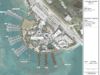
Dinner Key is not simply another city parcel. It’s not just “real estate.” It’s the crown jewel of Miami public lands, a waterfront oasis that contains historic City Hall, the former Pan American Airways terminal that helped establish Miami as the international Gateway to the Americas. Now City Hall is slated to move to Freedom Park — a decision made and announced by city officials without so much as a “by your leave” to voters and residents, much less a referendum.
Before that happens, Miamians deserve to know — and have a voice in — what is planned for this iconic site. Any decision to change its use or remove any portion of it from the public domain should be fully disclosed, debated and approved by Miami voters.
The question is simple: As Miami continues to grow, what will happen to its finite and diminishing supply of public lands? Will they be shaped by transparent, voter-driven choices — or by deals the public only learns about — and has to pay for — after the fact?
Deborah Stander
Miami











Excellent points from Deborah Stander.
Miami is not famous for taking good care of its public lands and buildings.
Great points made by Ms. Stander, and great reporting by the Spotlight trying to unravel how the City’s budget works…or doesn’t. Obviously, something is working. Construction is happening everywhere. But there are so many questions.
Is there a lack of transparency, and if so, is that on purpose? What is Miami’s “Rainy Day Plan” if the Homestead Tax Exemption Increase passes in November? Would there be a possible sell-off or lease-off of public assets like our parks or even City Hall when our Commissioners move to their $350M new offices at Mel Reese/Freedom Park? Why isn’t there an Independent Financial Oversight Review Board that instills trust in any proposed budget or bond deal? Is it possible the City could declare bankruptcy? And what would that mean if it did? Is DREAM (Dept of Real Estate Asset Mgmt) getting full value on all City leased properties? Who audits DREAM? What happens with all the Impact Fees? Or when the construction boom slows down? The list is endless.
“Trust but Verify” is supposed to be the answer to these questions. Because ordinary citizens can’t be expected to do the verifying, we need trusted independent verifiers. If we have them already, show us. If we don’t, where and how do we find them? What are other cities doing? Or do we just continue to trust?