

If county voters don’t renew a property tax that funds teacher salaries, Miami-Dade officials project average pay could fall by more than $15,000. At Coconut Grove’s Carver Middle School, a veteran teacher fears an exodus of experienced educators.
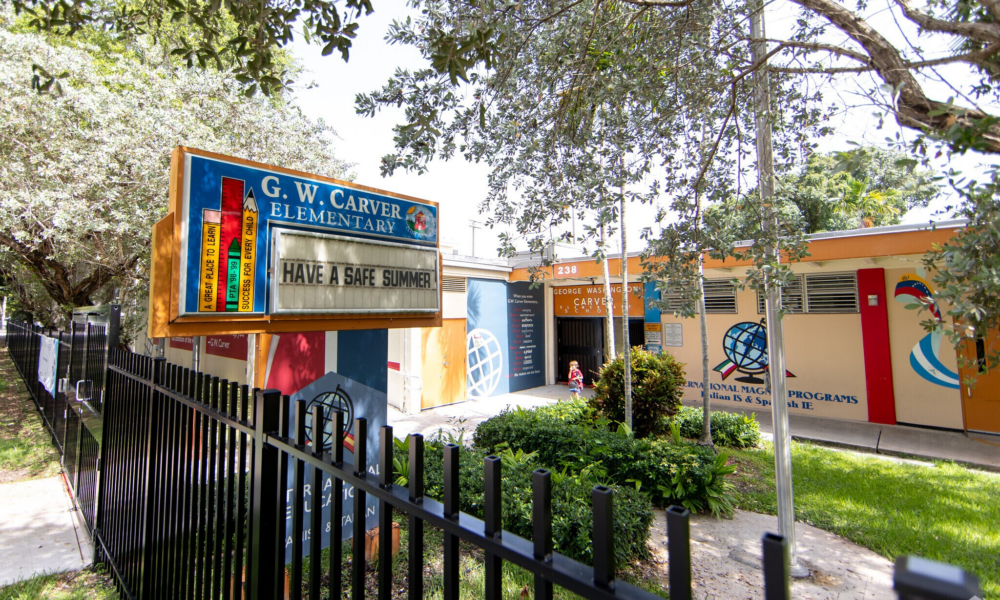
For 25 years, Madelin Vinat has taught at George Washington Carver Middle School in Coconut Grove, helping students develop the skills that have made the school’s world languages magnet program a destination for families across Miami-Dade County.
Now, like thousands of other Miami-Dade public school teachers, she faces the possibility of a substantial pay cut.
The decision rests, in large part, with voters.
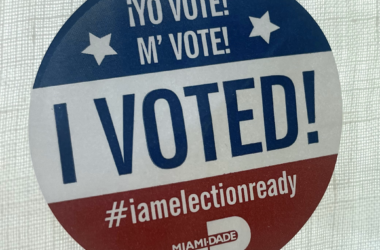
On Nov. 3, Miami-Dade voters will decide whether to renew an existing property tax that helps supplement teacher salaries and pay for school safety and security. If the referendum fails, the district would lose a major source of funding for salary supplements that have become part of teachers’ regular compensation.
District officials estimate that without those supplements, average teacher pay could fall by $15,216 annually, from $73,030 to $57,814.
That does not mean every teacher would automatically lose more than $15,000 in annual salary. The figure represents the district’s projected decline in average compensation if the referendum-funded supplements disappear. Whether school officials could replace any of that money from other sources remains uncertain.
Without the supplements, Miami-Dade teachers would earn less, on average, than their counterparts in Broward and Palm Beach counties, according to the district.
School officials and union leaders warn that losing the money could drive experienced educators out of Miami-Dade, worsening an already difficult struggle to recruit and retain teachers in South Florida’s expensive housing market.
“We would have a very hard time recruiting, and retaining and maintaining those highly qualified teachers that have given us all of this success,” Miami-Dade Schools Superintendent Rafael Villalobos said at a recent town hall meeting at Hialeah Gardens Senior High School.
For Vinat, the consequences could be felt directly in Carver’s classrooms.
The school’s world languages magnet program offers advanced instruction in several languages, with some students taking college-level Advanced Placement examinations by eighth grade.
“We have a teacher that teaches math in Spanish, and we have another teacher that teaches it in French,” Vinat said. “We need to have the proper funding to ensure that we can compete and bring in teachers that are passionate, that are willing to do the work.”
Even with the salary supplements, Vinat said, Carver has lost teachers to charter and private schools offering better pay and benefits. Losing those supplements, she fears, would make it harder to retain the experienced teachers the program depends on.
“That referendum has now become part of our salary structure,” said Vinat, who also serves as the school’s union representative. “So, if that referendum fails, it would be devastating … there might be a major exodus from Miami-Dade County.”
The tax, first approved by Miami-Dade voters in 2018 and renewed in 2022, is scheduled to expire June 30, 2027.
It amounts to one mill, or $1 for every $1,000 of taxable property value. A homeowner with $300,000 in taxable property value, for example, pays $300 annually toward the school tax.
The referendum would maintain that tax for another four years, from July 1, 2027, through June 30, 2031. A yes vote would renew it; a no vote would allow it to expire.
District officials estimate the tax generates more than $560 million annually, with revenue shared between traditional public schools and charter schools.
The money pays for salary supplements above teachers’ base pay, rather than simply contributing to the district’s general payroll budget. The supplements have helped Miami-Dade offer more competitive compensation, but their continued funding depends on the tax.
United Teachers of Dade President Antonio White said traditional public schools receive approximately $400 million of the revenue.
The Secure Our Future Advisory Committee, which oversees how that revenue is spent, said in their annual report that 88% of referendum funds support teacher compensation, while the remaining 12% goes toward school safety and security.
Villalobos said the tax is expected to cost the average Miami-Dade homeowner $349.71 in 2027, about $11 more than the previous year.
Miami-Dade is not alone in relying on a voter-approved property tax to supplement school funding. Broward and Palm Beach counties have similar measures, and voters in both counties are also being asked to renew them this November.
If those measures pass but Miami-Dade’s fails, the district’s average teacher salary would fall below both neighboring counties, according to Miami-Dade school officials.
“We simply cannot expect excellent teachers, school employees and safety personnel to stay in Miami-Dade County if they simply cannot afford to live in the communities in which they serve,” White said.
Parents also worry about what losing experienced teachers could mean for their children’s education.
Tania Alonso, whose two children attend George Washington Carver Elementary School, said she fears losing the educators who have helped make the school a strong community institution.
Alonso, a Coral Gables resident and president of the school’s PTA, described getting to know her children’s teachers as a “pleasure and honor.”
“They’re not just teachers. They’re compassionate leaders that want the best for our future generations,” she said. “Those are the kind of teachers that care and we should fight to keep them in our public schools.”
Vinat said the stakes extend beyond families with children in public schools. Strong schools, she argued, benefit surrounding neighborhoods by supporting property values and preparing the future workforce.
The referendum has attracted support across political lines.
In November 2022, more than 65% of Miami-Dade voters approved renewing the tax.
More recently, Republican Miami-Dade County Commissioner René Garcia publicly supported another renewal.
“As a Republican, I’m one that doesn’t really like taxes,” Garcia said at a press conference for Secure Our Future, a political committee advocating for the referendum.
“The reality is that this tax has worked.”
For Vinat, the concern is not simply how much teachers would lose in their paychecks. It’s whether Carver and other Miami-Dade schools could continue attracting and retaining the experienced educators their students need.
Anita Li is a Spotlight reporter and Report for America corps member covering government accountability in Coconut Grove and Miami City Hall. She joins us through our partnership with Report for America, a national organization that places journalists in local newsrooms across the United States.