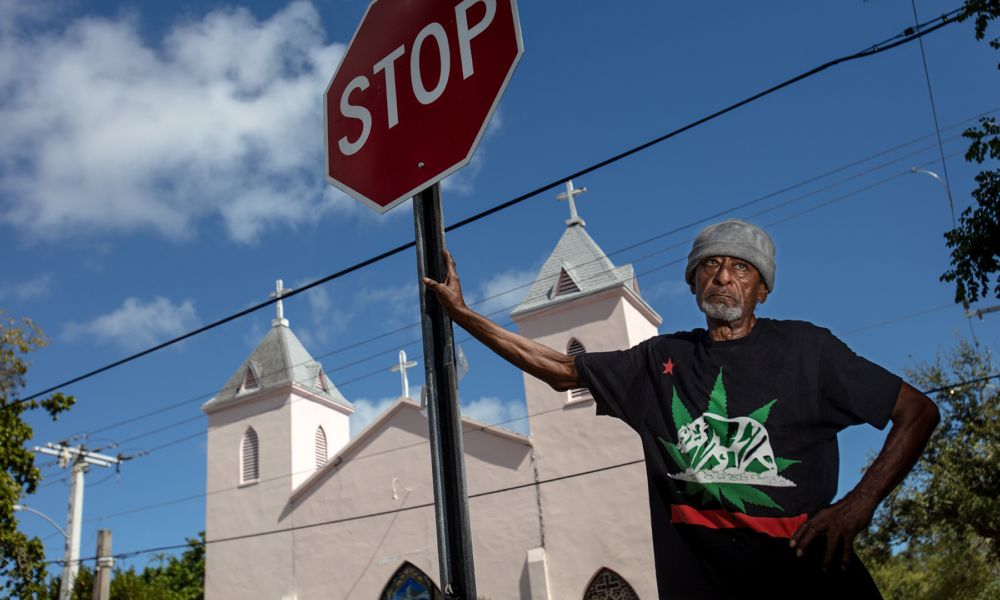


When Prince Johnson returned to Coconut Grove after an absence of 44 years, he found a world he barely knew.
The Ace Theater was closed, and the Chinese spot in the Tikki Club he went for takeout shrimp and rice was gone.
The long-haired kids who hung out in Peacock Park under a veil of patchouli and weed smoke had scattered into old age.
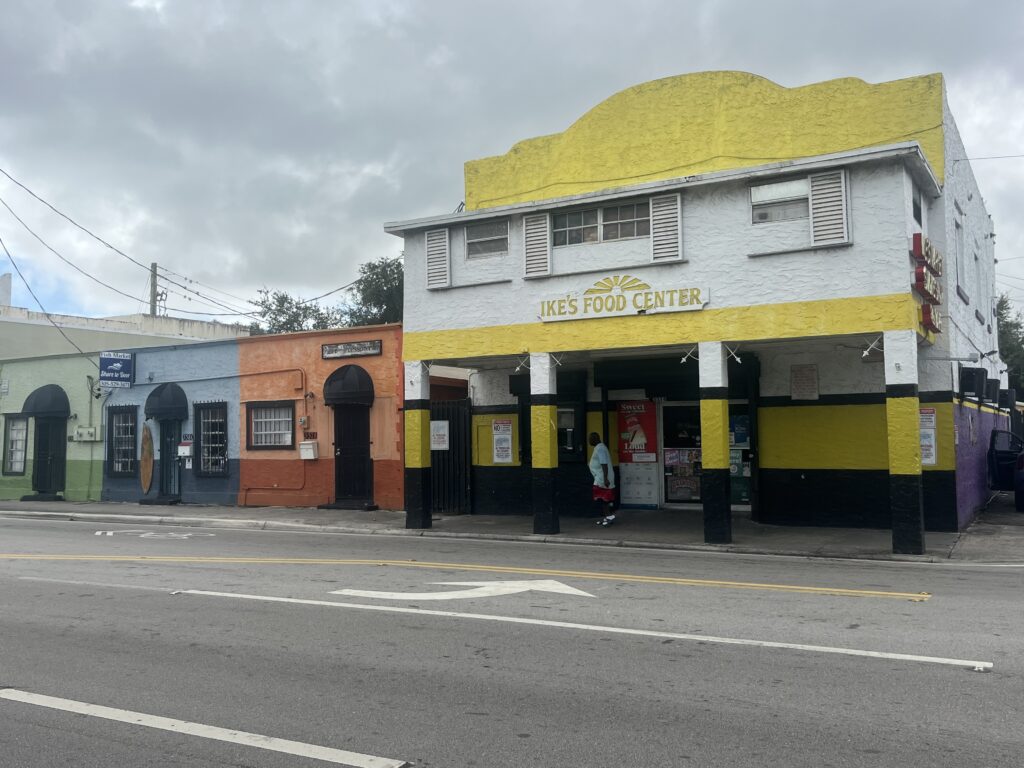
Ike’s Food Center was still there on Douglas Road, but Ike had died.
Even the layout of the streets confused him. “I didn’t remember that Grand Avenue ran the way it does,” Johnson said. “It was like I didn’t know where I was.”
Yet the biggest difference Johnson confronted was the man he saw in the mirror. No longer a teenager headed to his sophomore year at Coral Gables High School, Johnson was a graying man struggling to find his way after spending more than four decades in prison following a conviction of first-degree murder.
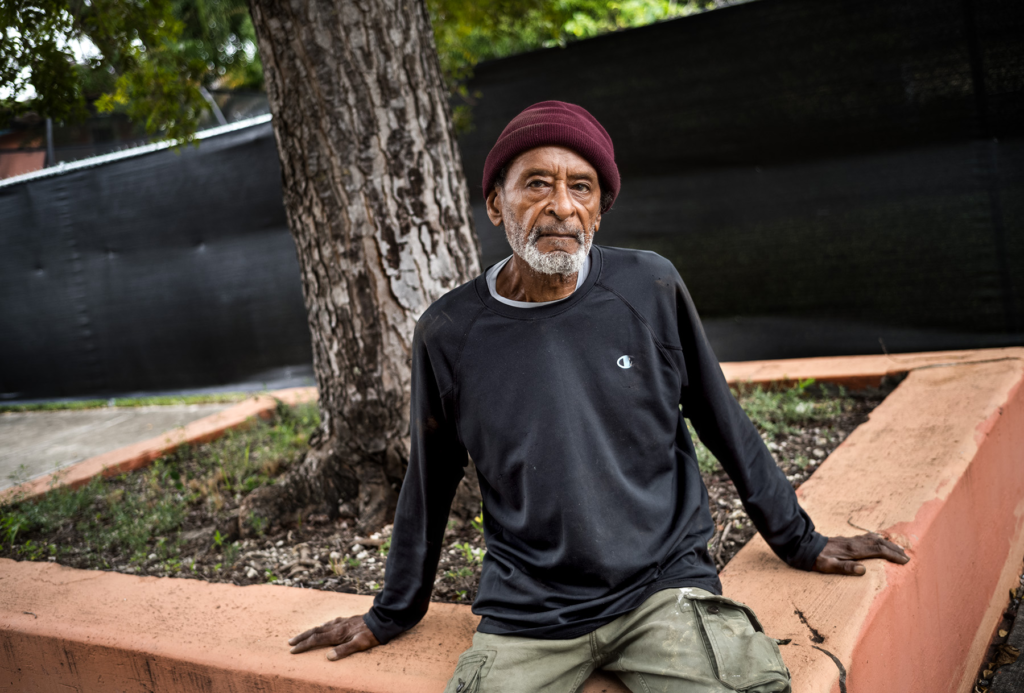
“To be frank, sometimes when I am by myself, I reflect on my prison life, reflect on my growing up: what if I had done this, or done that?” Johnson said recently as he sat at a picnic table under the live oak trees in Virrick Park, the same park where he remembers playing crack the whip as a child.
“Could I have been a baseball player? Would I have been a millionaire or what? Working construction? Or would I have been a drug boy, a drug man, selling dope, or a junkie?
“When you’re young,” he said, “you don’t know if you’re headed for greatness or badness.”
The story of Prince Albert Johnson, known in the West Grove by the nickname Bally, is hard to fathom. He spent more than half his life behind bars for a crime he said he did not commit. He has never told his story before. But now, at 71, he’s ready.
The events that put Johnson in prison for more than four decades took place on a hot Sunday in late July 1971, in the old Coconut Grove, when neighborhoods mattered, when the world seemed partitioned by a black-white divide.
As Johnson prepared to enter 10th grade, following his sister Olive to Coral Gables High School, the world seemed to be exploding around him. The Vietnam War was raging. In the wake of the legislative victories in civil rights in the previous decade, racial tensions were rising. The Black Power movement was ascendant.
In the Grove, Carver Junior High, a few blocks from the Johnson home on Franklin Avenue, was desegregated following a court order. Another court ordered the closing of “Old Smokey,” the Washington Avenue trash incinerator that had been pumping toxic ash into the West Grove air for decades.
Read more: The Lingering Shadow of Old Smokey in Coconut Grove
A year earlier, after racial violence flared in Miami’s Brownsville neighborhood, disturbances broke out in the Grove, too. The city imposed a curfew.
And then there was a murder.
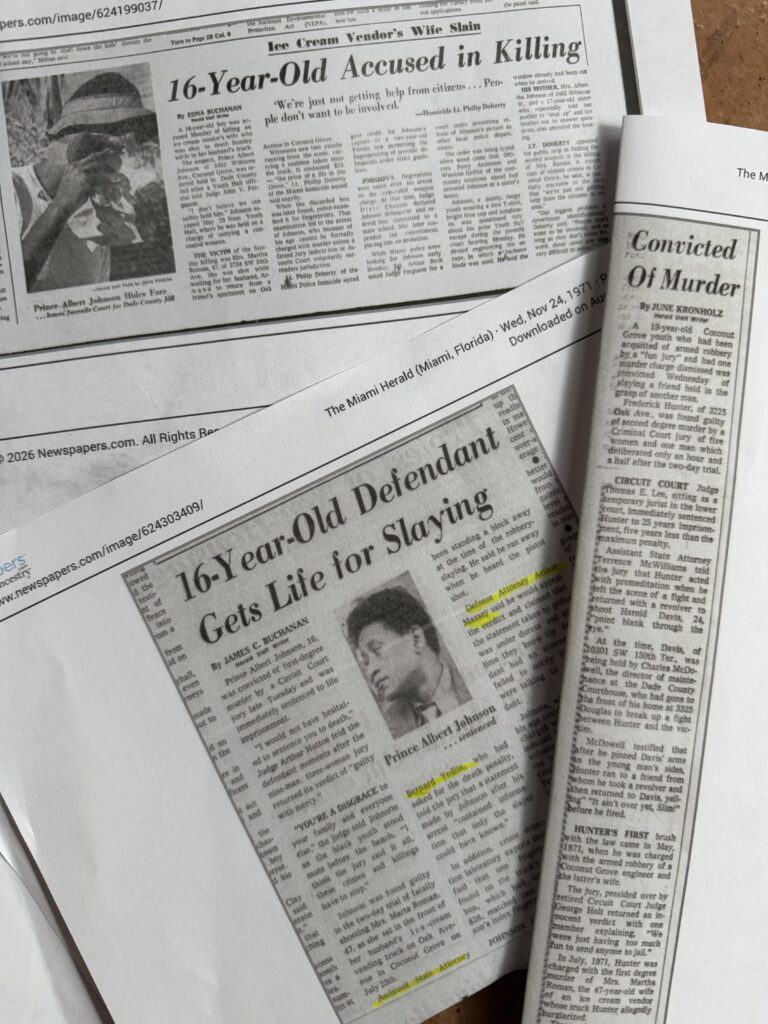
Forty-seven-year-old Marta Roman, sitting alone outside her husband’s ice cream truck parked on Oak Avenue near Douglas Road, was shot dead by a robber who made off with a cash box containing $28. “The price of a life in Coconut Grove,” Miami homicide detective Lt. Phillip Doherty would tell the Miami Herald.
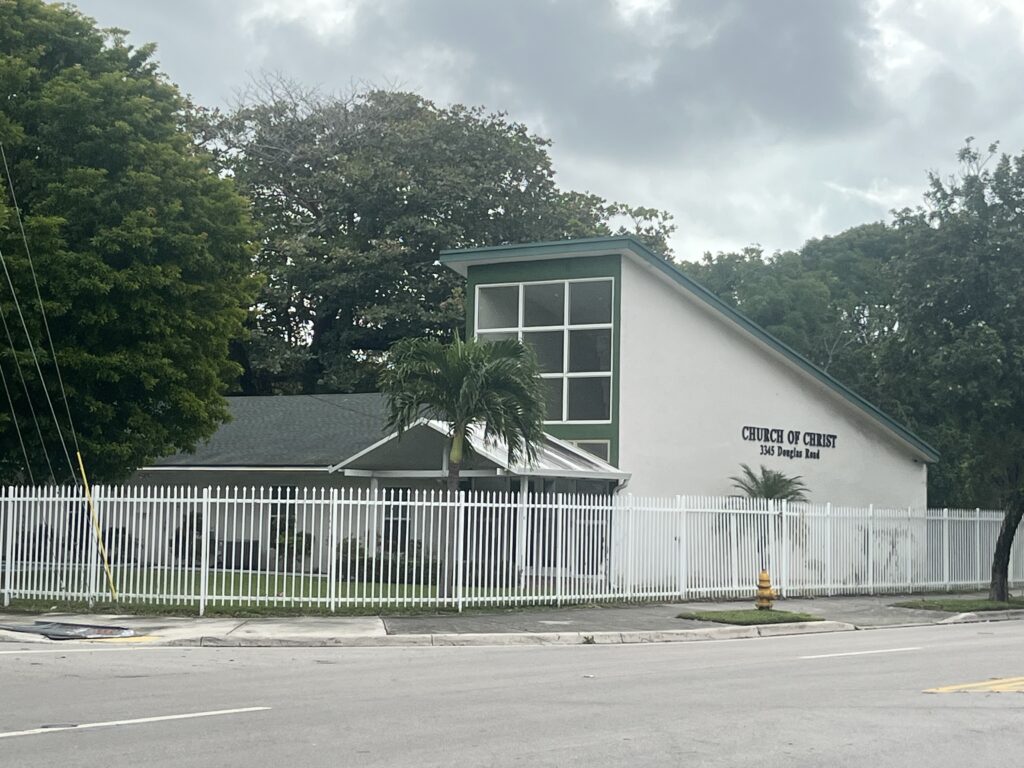
Johnson has always insisted he was not involved in the crime. But after he saw another neighborhood teen hide something under a rock behind a nearby church, he says, he went to look, opened the cash box and left an incriminating fingerprint.
Johnson was arrested the day after the shooting, and less than four months later the skinny kid who had rarely ventured outside the community where he was born had been tried and convicted of first-degree murder and sentenced to life in prison without the possibility of parole.
Had the jury not recommended mercy, Circuit Judge Arthur Huttoe told him, “I would not have hesitated to sentence you to death. You’re a disgrace to your family and everyone else.”
Johnson was never accused of killing anyone. He did not use a gun to commit a crime. The police and prosecutors agreed on that from the start. However, they alleged, Johnson was involved in a crime, a robbery, that resulted in a death. And in 1971, that was sufficient to send a child away for life.
“It’s an atrocity what the state did to him,” says his sister, Olive Johnson Coley, 72, who still lives in the Grove. “He was locked up for 44 years. It is hard for him to stay focused on anything. He is always getting pulled back into the past.”
Johnson was born in 1955, the sixth of 12 children. His mother, Albertha, a small woman whose forceful personality earned her the moniker Big Bertha, was a homemaker. His father, Willie Clarence Johnson, worked as a handyman. Albertha’s mother, Olivia Flowers Brown Johnson, a native of the Bahamas, also lived with the family in an apartment on Franklin Avenue.
The family was well known in the Grove, with a reputation for loyalty that was constant and fierce. “We didn’t let nobody disrespect us,” said Prince Johnson. “If one of us had a fight, we all had a fight. We were not looking for trouble, but we stuck together.”
The kids attended Frances S. Tucker Elementary School. Johnson recalls a happy childhood of fishing, playing baseball, cowboys and Indians, spinning tops and shooting marbles. “I was the marbles king,” he said of his prowess with a glass shooter.
When hard rains came, he and his siblings would catch crabs that came up from the ground by the thousands. “We’d call where we lived the Crab Hole,” he said. “My mom and grandma would cook the crabs and we’d eat ‘em with rice.”
At Carver Junior High School, he was an average student, Johnson said, but threatening to become “a bad, bad boy,” joining teenage friends in shooting birds with a slingshot, stealing candy from stores, getting into playground fights.
“We were like family,” recalls Leon “Beau” Leonard, 72, who recently retired as a sergeant after 33 years with the Miami Police Department. “We ran together. Bally was a good kid, just an average boy. Our parents were very strict. If we did something, they would give us a whupping.”
Johnson’s arrest for murder stunned his family and friends.
“Everybody was shocked by it,” recalled Parnice Lee, two years behind Johnson in school. “His mom was a good mom, and he wasn’t that type of person. But he was running with the wrong crowd, getting into trouble.”
“We couldn’t grasp it,” says Leonard.
When Johnson made his first appearance in court, the press was there. The Herald’s star crime reporter Edna Buchanan described the 16-year-old as “a jaunty, rangy youth wearing a torn T-shirt, a bright blue cap and sunglasses …” A photographer caught him holding up his hand to shield his face.

A Youth Hall official told the judge, “I don’t believe we can safely hold him,” a reference to Johnson’s escape from the juvenile facility in May 1971 after he was picked up on a concealed weapons charge, the Herald reported.
Johnson admits he had been sent to Youth Hall — a couple of times, he says, once for breaking and entering — and did escape, but denies he ever had a weapon.
“Right now, I couldn’t tell how I processed (the murder charge),” Johnson says of the legal jeopardy and glare of publicity he faced. “Yes, crying, but basically crying from the inside. I was trying to be strong. It went haywire, so I couldn’t say nothing.” His mother, sister and grandma were there in the courtroom.
Press coverage often emphasized race and reports of rising violent crime in the West Grove, allegedly abetted by the community’s silence. During Johnson’s first court appearance, Doherty, the Miami homicide detective, complained that police were hampered in their investigation because “we’re just not getting help from the witnesses in the area.” The Herald referred to Johnson as “the black youth.”
A headline over an opinion column by the Herald’s Charles Whited asked, “Can the Grove Be Safe Again?” Whited described another recent Grove murder in which a resident answering a knock at the door during a dinner party was fatally shot by a would-be robber — a “black youth” who fled on a bicycle.
“Killers, robbers, rapists and thieves, operating with the tacit aid of witnesses who wouldn’t talk, have spread fear behind the tall hedges and spreading banyan trees,” wrote Whited. “Some residents have sold their homes to find safer living elsewhere.”
The case against Johnson proceeded rapidly. After his indictment in November 1971, an attorney hired by Johnson’s family asked for 30 days in which to file motions. The judge denied the request.
The trial lasted two days. The prosecution relied heavily on the testimony of two 6-year-old girls who said they saw Johnson fleeing the scene. The prosecutor asked for the death penalty. Johnson’s attorney called no witnesses.
A jury of nine men and three women found Johnson guilty but recommended his life be spared.
Eight days after Johnson’s arrest, 18-year-old Fredrick Hunter was also picked up and charged with first-degree murder in the ice cream truck slaying. But the charges were dropped weeks later when the 6-year-olds could not identify Hunter in a police lineup.
(Nine months later Hunter was convicted of second-degree murder in the death of a man killed during an argument near Ike’s Food Center, just two blocks from the Roman murder. He was sentenced to 25 years in prison. In yet another case, months before the ice cream truck murder, Hunter was found not guilty of the shotgun robbery of a Coconut Grove couple in their home. Hunter is believed to have died in prison.)
When Prince Johnson might have been two months into his 10th grade year in high school, he was handcuffed, shackled at the ankles and loaded onto a Florida Department of Corrections bus that took him to Sumter Correctional Institution in Bushnell, Florida, 300 miles from Miami.
Unlike the entrance to hell that Dante describes in the “Divine Comedy,” there was no inscription over the gate warning “Abandon all hope, ye who enter here.” But that is how Johnson — 5-foot-11, 120 pounds — says he felt.
“I thought I’d never get out. But I had seen movies about prison, and I said, ‘If I ever get locked up, I go in as a man. And that is the way I come out, if I ever come out.’”
Orientation for arriving inmates included guards warning the newcomers just how dangerous prison is.
“Prison is really rough,” said Johnson, known behind bars as inmate 032605. “You have to be careful, the way you talk or look at people. You look at somebody too long, you gotta fight. Certain words you use — you can get stabbed right there.”
Sexual predation was rampant and Johnson said he was quickly tested. On the first day, a Tuesday when the new arrivals go through the cafeteria line, Johnson said a prisoner whistled at him. He took his metal tray and “slapped him in the face,” he said. He says he did not get tried again.
Assigned a bunk in an open bay dorm, Johnson discovered that several people he knew from the Grove were also behind bars. “We got together. We were called the Miami Boys,” he said. “But I have always basically been a loner. I never liked to hang out with more than two or three people. I liked to work, keep my body moving, my mind at ease.”
Within weeks of his arrival in prison, Johnson said he enrolled in classes, including Spanish. But he soon dropped out, he said, choosing fun over academics.
“School was good for me in prison, but I didn’t stay long,” he said. “I was young, foolish. I said, what am I going to school for? I got a mandatory life sentence. The compound was my thing. I liked hanging out in the compound. Play cards, gamble, shoot craps, for cigarettes or money.”
Of course, gambling led to fights. During the time he was locked up, Johnson said he had two teeth busted with a pipe, was stabbed in the chest and suffered numerous cuts and black eyes.
In more than four decades in state custody, Johnson was moved to other facilities several times. Some of the transfers followed requests from his relatives to house him closer to Miami. His record shows only one infraction in the joint, possession of an illegal weapon in 1979 while at Union Correctional Institution at Raiford, known as the Rock.
Johnson says the weapon was a switchblade knife he pulled when he got into a fight in the laundry after a coworker welched on a $30 bet over who could press more clothes during a morning shift. The other man also had a knife, but neither was cut, Johnson says.
In the early 1980s, while in Martin Correctional Institution in Indiantown, Johnson got into another fight over money and hit a man in the head with a metal pipe. For that he spent more than four years in solitary confinement, he said.
As the years piled up, so too did his love of reading. He read romance novels, history, and, during the 1970s, many books about the black liberation movement. He especially appreciated “Soledad Brother: The Prison Letters of George Jackson,” by the Black revolutionary killed by guards at California’s San Quentin Prison in August 1971.
“When I need strength, Mama,” Jackson wrote to his mother in March 1966, “I reach down within myself. I draw out of the reserves I’ve built—the necessary endurance to face down my opposition. I call on myself; I have faith in myself. This is where it must always come from in the end — yourself.”
Johnson says that he, too, reached inside himself to survive prison by adopting a tough demeanor and an attitude of defiance.
“I was small, but I wanted to stay in the compound, even though I was scared to be in the compound,” he said of the yard, where inmates hang out, play basketball or pump iron when not working prison jobs. “But you can’t show fear. I didn’t run from nobody. You have to hold your ground.”
Raised a Christian, Johnson became a practicing Muslim for about 15 years and then returned to Christianity. “Now, I’m universal,” he says. “I respect all religions.”
Johnson was well looked after by his large family. Coley said she or other relatives visited an average of twice a year and regularly put money into his commissary account. “I always liked to go and hug and kiss him, let him know he was in our lives,” said Coley, who worked as a licensed practical nurse before retiring.
They also talked frequently by phone. “I would read him Bible verses, like the 23rd Psalm,” Coley said, referring to the oft-quoted passage that begins, “The Lord is my shepherd; I shall not want.”
When their mother was dying in 2007, Coley said, “She told me, ‘Don’t stop trying to get him out. Never lose your faith. God’s always in charge.’”
In 2012, 41 years after shipping off to prison, Johnson was in Apalachee Correctional Institution in Sneads, Florida, cleaning an office, when he spotted a discarded copy of a law journal.
An article discussed the U.S. Supreme Court decision, Miller v. Alabama, issued earlier that year, which held that mandatory life sentences without the possibility of parole for juveniles were unconstitutional, a violation of the Eighth Amendment ban on cruel and unusual punishment. The decision required states to hold resentencing hearings.
With the help of a fellow inmate known as a “chain gang lawyer,” Johnson went to work on a handwritten habeas corpus petition that, more than a year after it was filed, led to a resentencing hearing in Miami on May 22, 2015.
Miami-Dade Circuit Court Judge Richard Hersch ordered Johnson, then 60 years old, released immediately after both the Miami-Dade state attorney and Gale Lewis, his public defender, argued that the sentence was unlawful. They agreed that he should be resentenced to 50 years and freed based on credit for time served.
Ed Griffith, a spokesman for the State Attorney’s Office, told the Associated Press at the time that prosecutors supported the release. Even though Johnson was technically a “principal” participant in the robbery, he was not the actual shooter, he said.
Lewis concurred. “The state knew that there was another person involved, they couldn’t connect it,” NBC 6 quoted Lewis as saying. “Prince was never alleged to be the shooter in this case. He was a kid who possibly got swept into this incident.
“This is what being a public defender is all about,” Lewis said, according to CBS Miami. “This means redemption. This means second chances.”
Prince’s sister Olive, who was in the courtroom with several other relatives, was ecstatic. “I’m so happy and I want everyone to know there is a God up above,” she said, according to NBC 6. “He missed his whole life. He was only 16.”
Johnson thanked his family for standing by him and giving him moral support. And then, changing into clothes Coley had brought to the courthouse, he went home to a party in the Grove.
“The day I got out I was so happy,” he recalled. “I was praying to God, to my savior, to my family, everything I could think of, I prayed about it. It’s a feeling you can never feel unless you’ve been in prison as long as I was. It’s indescribable.”
Johnson is one of more than 1,200 people sentenced to life without parole as juveniles who have been freed from prison following the Supreme Court’s Miller v. Alabama decision, according to the Campaign for the Fair Sentencing of Youth, a national nonprofit advocacy group. The organization reports that another 412 people nationwide were still serving such sentences as of April 2025, down from approximately 2,800 before the court’s ruling.
Few had been locked up as long as Johnson, who was given little preparation for reentry into the world he left when Richard Nixon was president.
Sabrina C. Pearce, a researcher with The Sentencing Project, a Washington, D.C., advocacy group, recently co-authored a study of the problems faced by 33 former prisoners who had been released after serving at least two decades behind bars. None had served as long as Johnson.
“The struggles we found had to do with accessing documents like IDs, finding jobs, health insurance, coping with technology, cell phones, credit cards, the banking system,” she said. “One thing all those facing reentry need to know when they come home is that it’s okay to ask for help. We really need each other.”
Johnson admits that even now, 11 years after his release, he is not completely trusting of the world. He has few close friends. He is reluctant to ask for help. “I don’t want to be a big, tough guy,” he says. “It’s just that I don’t want to be vulnerable. I’m already hurting. So, if I open up, all it’s going to do is destroy me. And I’m not afraid to admit it.”
Beau Leonard, the retired cop and a childhood friend, says, “Bally is a classic case of endurance and survival. He’s a unique individual. He’s a smart gentleman. He reads. I know he’s finding his way. He doesn’t talk about prison. I don’t inquire.”
When he first came home, Johnson stayed with his sister Olive but now rents a room from a nephew near Virrick Park in West Grove. From his monthly Social Security check, he pays rent, his cellphone bill and buys food. And he works all the odd jobs he can get, from cutting lawns to digging graves.
Warren Hamm, the sexton at Christ Episcopal Church, has hired Johnson several times to do chores at the church and he always does them well, he said. Hamm said he’d describe Johnson as a “normal, regular guy.”
Yet Johnson remains a frustration to his family. He is not a good steward of his money. More than once he has overdrawn his bank account.
He splurges on Wendy’s hamburgers, $10 packs of Newport cigarettes and lottery tickets. He is often broke. He has no driver’s license, and no interest in getting one. He has no long-range ambitions other than to be happy.
“He had 44 years in prison, but never got his GED,” says Coley, his sister. “He did not take classes that were offered. He could have been a lawyer by now.”
Johnson acknowledges that he could do better. “I know I’ve been frustrating them a lot,” he said of his family. “I know there are a lot of things I should be doing that I’m not doing.”
As he walks around the Grove, Johnson still feels like a stranger. He is home but not at ease. He is watchful, wary. Asked if he has post-traumatic stress disorder (PTSD), Johnson says, “I don’t know. But being in prison is just like being in a war. You got to always be alert. The free world is just like prison; it’s just got a lot more hiding places. Trouble can come at the drop of a pin.”
He said he realizes he is a subject of fascination. “I know people talk about me. Every day for the last 11 years that I’ve been out, people trying to figure me out,” he says. “But there’s nothing to figure out. Figure out yourself, and then you’ll know me.”
Most of the West Grove residents who were around when Johnson was convicted are long gone. Of those who do remember him, like Parnice Lee, who was two years behind Johnson in school, many wish him well.
“I have told him, ‘I’m glad you were able to come home,’” said Lee, now 69. “We support him. He’s working, taking responsibility. We’re proud of him.”
The best thing that has happened to Johnson recently – and what gives him hope for the future – is his connection to the Coconut Grove Crisis Food Pantry.
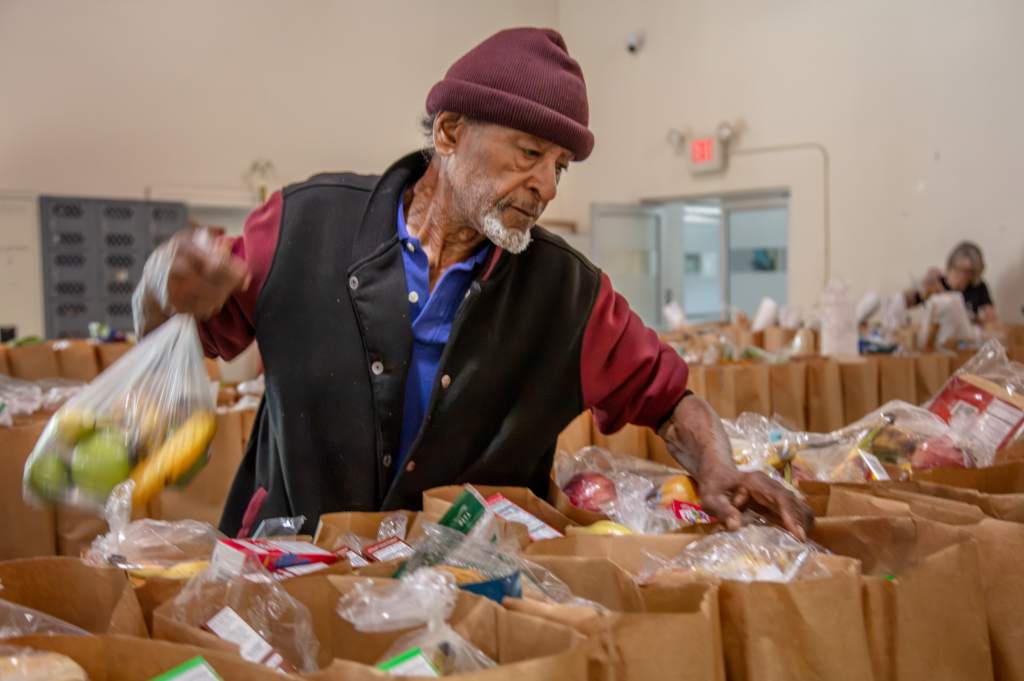
Every Tuesday for the last four years he arrives early at Christ Episcopal Church in West Grove to help volunteers prepare more than 200 bags of groceries for area residents in need.
Among Johnson’s duties are organizing the fresh produce donated by supermarkets, helping to deliver the groceries and then, when all others are gone, sweeping and mopping the floors of the hall.
“The help he gives us is priceless,” says Deb Dolson, the pantry’s outreach director. She calls Johnson “the kindest man you can imagine.”
The one-day-a-week job seems to have sparked a new-found sense of purpose in Johnson.
“I love working there,” he says of his labors with the pantry. “I love all the people I’m working with. They treat me so nice, like I am someone. It’s a blessing. God couldn’t have treated me no better.”