

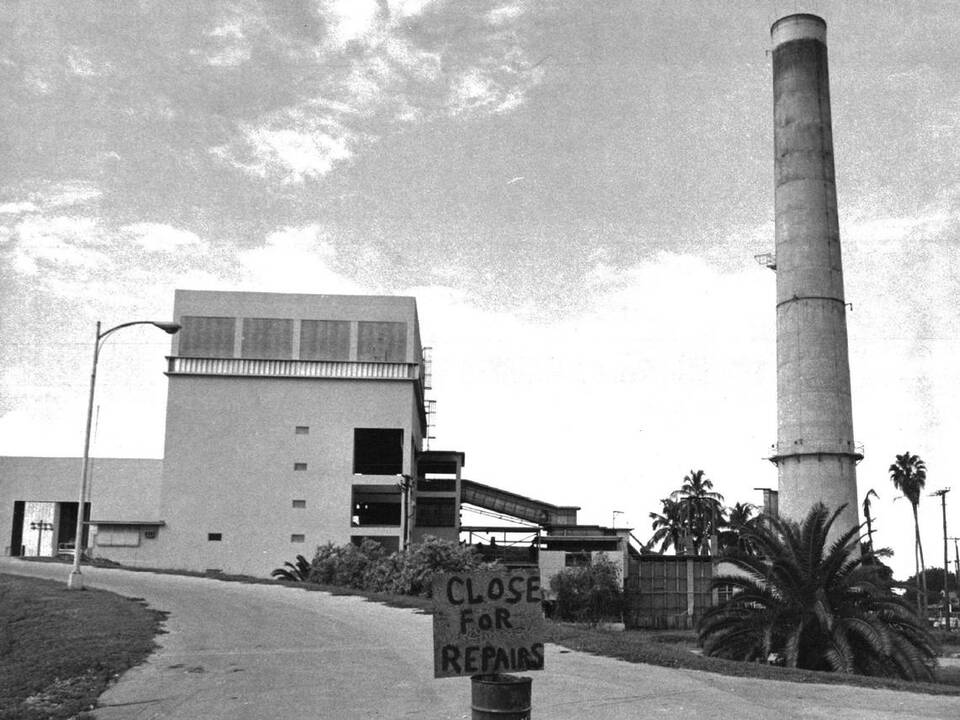
The trash incinerator’s smokestack was demolished in 1974, but Old Smokey continues to cast a shadow over the lives of Grove residents who grew up near the City of Miami solid waste facility.
Editor’s Note: This story was originally published on April 15 by Caplin News at Florida International University. The Spotlight is republishing the story through a collaboration with the Lee Caplin School of Journalism & Media at FIU.
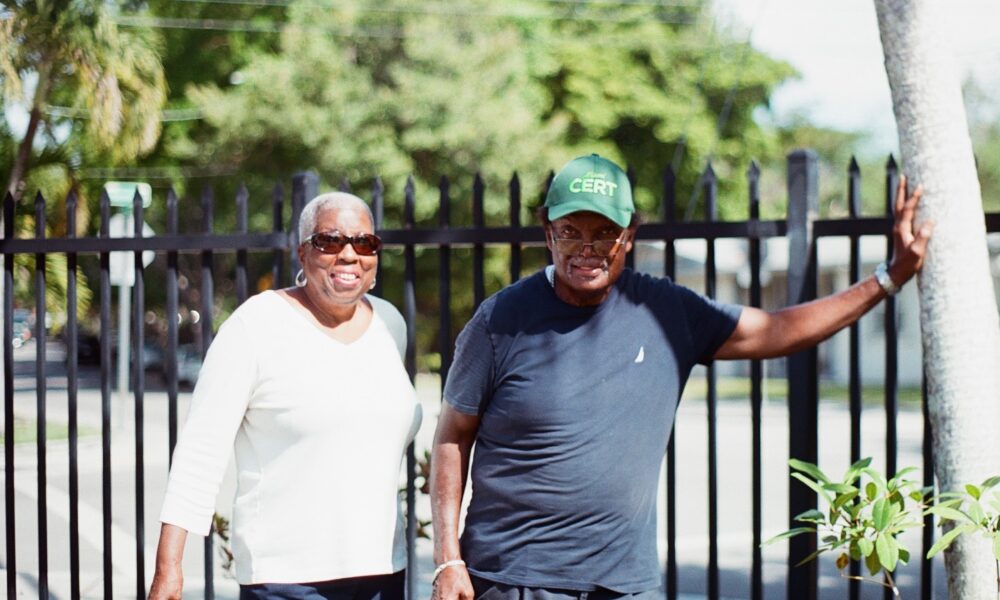
Reynold Martin and Clarice Cooper have been friends since kindergarten.
They remember the acrid smell that hung in the air on their daily walks as children to George Washington Carver Elementary and Middle School in the late 1950s and early 1960s. There was a thick smog that stained their school clothes.
That smell and smog came from Old Smokey, the City of Miami’s municipal waste incinerator that burned trash for 44 years in the West Grove. “It was so pervasive,” Martin says today. “We just got used to the smell.”
After more than eight years of litigation, a state judge recently certified a class action lawsuit against the City of Miami.
The ruling could allow thousands of people who were exposed to the incinerator’s smoke and ash to gain access to medical monitoring and to win damages for any illnesses or health problems that resulted from that exposure.
“It’s huge,” said Douglas Ruley, one of the plaintiffs’ attorneys and director of the Environmental Justice Clinic at the University of Miami’s School of Law. “This is a very significant step for us. Thousands are now eligible for medical monitoring.”
Read more: Grove Residents Cheer Judge’s Decision in Old Smokey Lawsuit
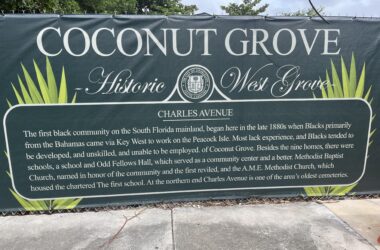
The incinerator opened in 1926 on the corner of Jefferson Street and Washington Avenue in the West Grove, a historically Black neighborhood. In 1970, the incinerator was declared a public nuisance and closed, but the site and surrounding neighborhoods were never fully cleaned, leaving contaminated ash buried in the surrounding soil.
That buried history resurfaced in 2011, when the city conducted environmental testing at the site, but the findings were not disclosed until 2013, when the Environmental Justice Project led by University of Miami law students unearthed and shared the data.
That effort helped to spur the creation of the Old Smokey Steering Committee (OSSC), led by UM law professor Anthony Alfieri, founding director of the Center for Ethics and Public Service at the university’s school of law.
Alfieri assembled a group of West Grove residents, activists and volunteers to form the Old Smokey Steering Committee to pressure city and county officials to address the contamination and its health impacts.
It was then that Martin and Cooper joined the fight. They became part of the OSSC board, organizing community meetings, conducting a grassroots health survey and preparing to petition federal agencies for a formal investigation.
“The city has known about the contamination for decades,” said former Miami City Commissioner Ken Russell, who worked for years with the OSSC. “It’s time for them to finally act responsibly.”
Cooper has lived in Coconut Grove her entire life. As the years went by, several members of her family died of different cancers. “Nobody at the time knew the full effect of breathing that smoke in every day,” said Cooper. “Until people started dying.”
Her childhood friend, Reynold Martin, trained and worked as a firefighter at the City of Miami training center, which was built on the property where Old Smokey once stood.
As a child, Martin remembers biking around the neighborhood when it was raining ash, and he recalls members of the community who were once strong and full of life, becoming sick and weak. “Many of us dealt with young parental deaths,” he recalled. “There’s a lot of stories of misery because of Old Smokey.”
In September 2017, a group of current and former residents who lived within a mile of the former incinerator filed a lawsuit against the City of Miami alleging negligence and seeking medical monitoring.
In March, Miami-Dade Circuit Court Judge Spencer Eig certified the litigation as a class action open to current and former residents within that one-mile radius whose health may have been affected, or whose property may have been contaminated.
The ruling came as a relief to residents like Cooper.
“I feel exuberant that we can now go forward as a class of people. Fighting this for 10 years was so much harder as individuals,” she said.
“That’s where we are with Old Smokey. It takes a lot of patience, but this is a big step for us. It didn’t happen overnight.”