
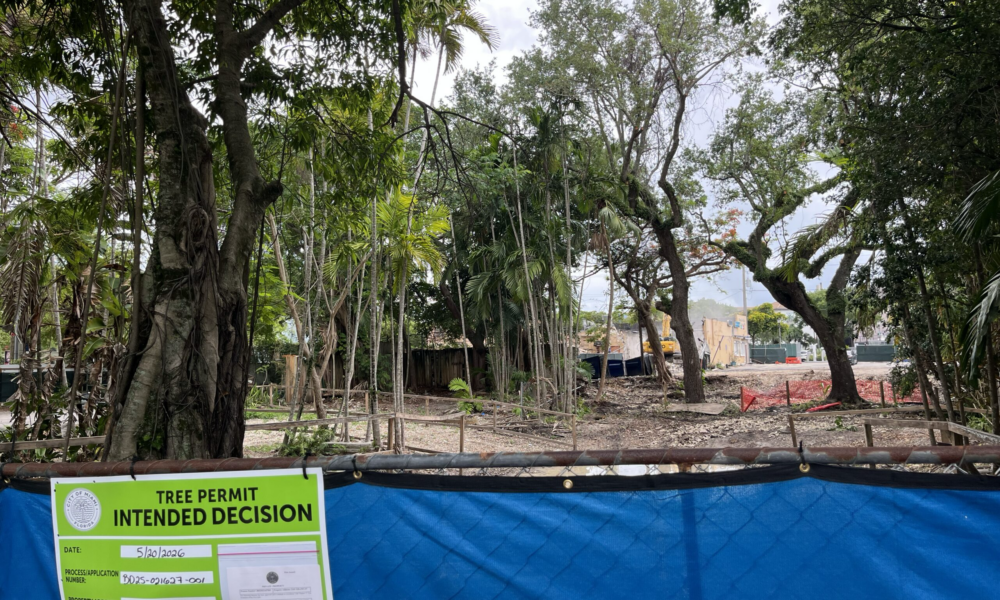

An eight-hour hearing of the city’s Historic and Environmental Preservation Board stretched into Wednesday morning as board members, residents and developers grappled with a tree permit appeal process many said needs reform.
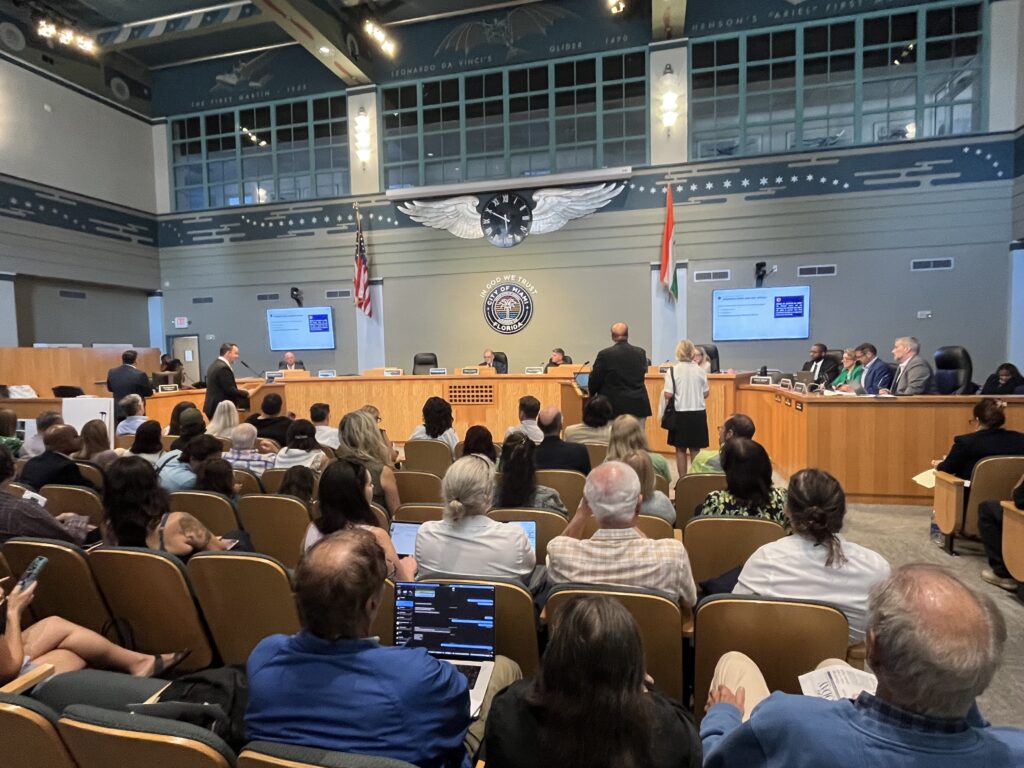
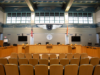
Facing an unprecedented wave of challenges to city-issued tree removal permits, Miami’s Historic and Environmental Preservation Board spent more than eight hours Tuesday hearing eight appeals before a standing-room-only crowd of more than 100 residents, developers and attorneys, as board members and participants alike voiced frustration with a process many agreed needs reform.
The special hearing, added to the board’s regular monthly meeting to accommodate a growing backlog of appeals, began at 5:40 p.m. Tuesday and did not adjourn until 1:45 a.m. Wednesday.
“The fact that we were there until 2 a.m. is a glaring spotlight that this is not working,” said Genevieve Apaza, whose appeal of a tree removal permit for a property on Irvington Avenue was the only one granted during the meeting.
The unusually heavy agenda reflected a sharp increase in appeals this year. After receiving just one tree-removal appeal in all of 2025, the board has already seen at least 14 since January, prompting city staff to expand HEP Board meetings from once a month to twice monthly to keep up with the caseload.
Read more: As Tree Appeals Surge, Critics Question City’s Permit Practices
The surge follows a contentious HEP Board meeting in May when board members overturned two city-issued tree removal permits in Coconut Grove. One of those decisions is now before the Miami City Commission, the next level of appeal, which on Thursday deferred the case until Sept. 10.
A third appeal in May, involving a proposed Grand Avenue sports complex, was dismissed after city officials determined the appellant lacked legal standing.
Tuesday hearing came as Miami begins reexamining its tree protection policies. The city’s newly formed Tree Ordinance Advisory Committee held its inaugural meeting last week and is expected to recommend changes to the city’s tree ordinance and permitting process sometime early next year.
Read more: Miami Begins Review of Tree Rules as Removal Battles Intensify
But much of Tuesday’s meeting focused less on the trees themselves than on whether residents had the legal standing to challenge the permits.
Under city regulations, appeals may be filed only by the property owner, the permit applicant or an “aggrieved party.” Board members repeatedly expressed frustration at being asked to resolve legal questions before considering the merits of the appeals.
“It puts us in a funny spot,” Board Member Christopher Cawley said. “We’re not here to be lawyers. We’re here to talk about the environmental resources… We’re just debating a total technicality right now.”
The board ultimately dismissed appeals involving the proposed Ziggurat project on Grand Avenue and a McDonald Street property after determining the appellants lacked standing, preventing any discussion of the tree removals themselves.
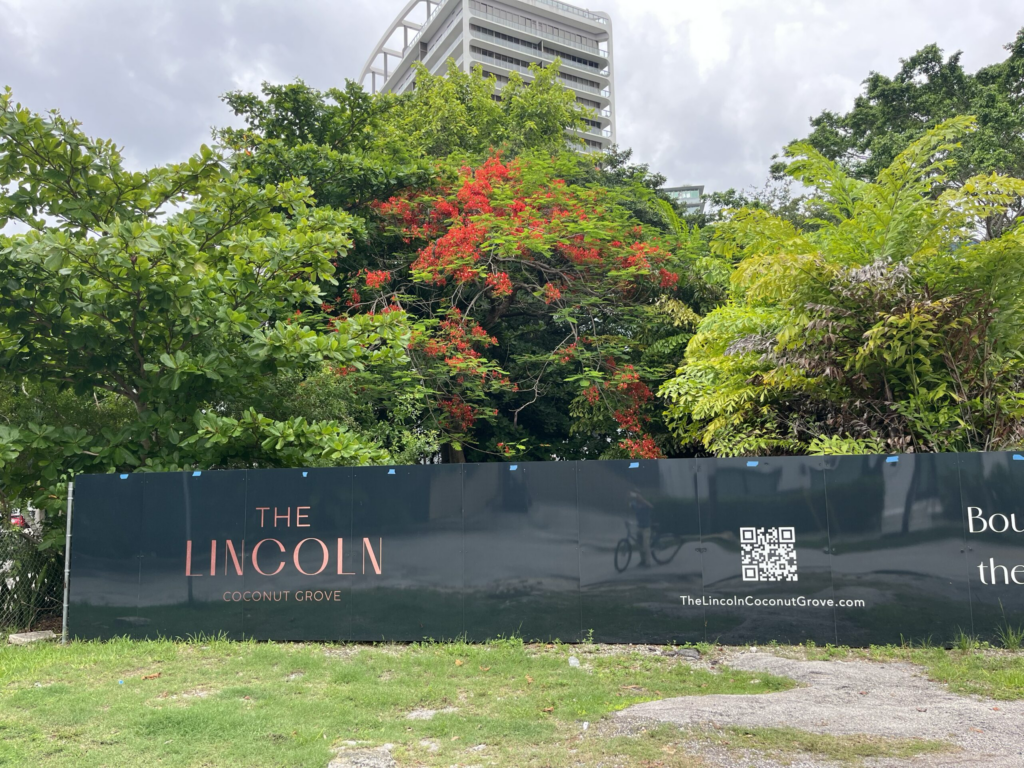
Three appeals — two for the same Gifford Lane property and another for the proposed Lincoln condominium project on SW 27th Avenue — were continued until September after board members directed developers, residents and city staff to work toward possible compromises on tree preservation and mitigation.
Apaza’s challenge to a permit issued for 3736 Irvington Ave. was the only appeal granted Tuesday. When she learned a large oak tree across the street from her home had been approved for removal, she paid hundreds of dollars to file an appeal.
“This should be happening much, much earlier in the process,” Apaza said after the meeting, referring to Miami’s process for appealing tree removal permits. “This system is not structured in a way that works for anyone. Everyone loses.”
The board denied one appeal, involving a property in the city’s MiMo District, after the developer agreed to preserve additional trees under a compromise. The status of an appeal involving a property in Allapattah was not immediately clear after both the property owner and appellant left Tuesday’s meeting before the board adjourned at 1:45 a.m. Wednesday.
Throughout the appeal hearings, developers argued they had spent months —sometimes years — working with city staff and designing projects to comply with existing regulations, only to have permits challenged after approval.
Residents countered that increasingly intensive development is eroding Coconut Grove’s signature tree canopy.
“They have built out every square inch of possible space on that lot,” resident Todd Friedman said during the hearing regarding proposed new construction on Gifford Lane.
Attorney David Winker, who represented several of the appellants, said responsibility ultimately rests with the city rather than developers.
“The developers aren’t doing anything wrong,” Winker said. “The city is who should be holding their feet to the fire on these issues.”
Anita Li is a Spotlight reporter and Report for America corps member covering government accountability in Coconut Grove and Miami City Hall. She joins us through our partnership with Report for America, a national organization that places journalists in local newsrooms across the United States. David Villano contributed to this report.








Thanks to all of you fighting to protect our canopy. It is a huge part of what makes our village the most beautiful & desired community in all of Miami.