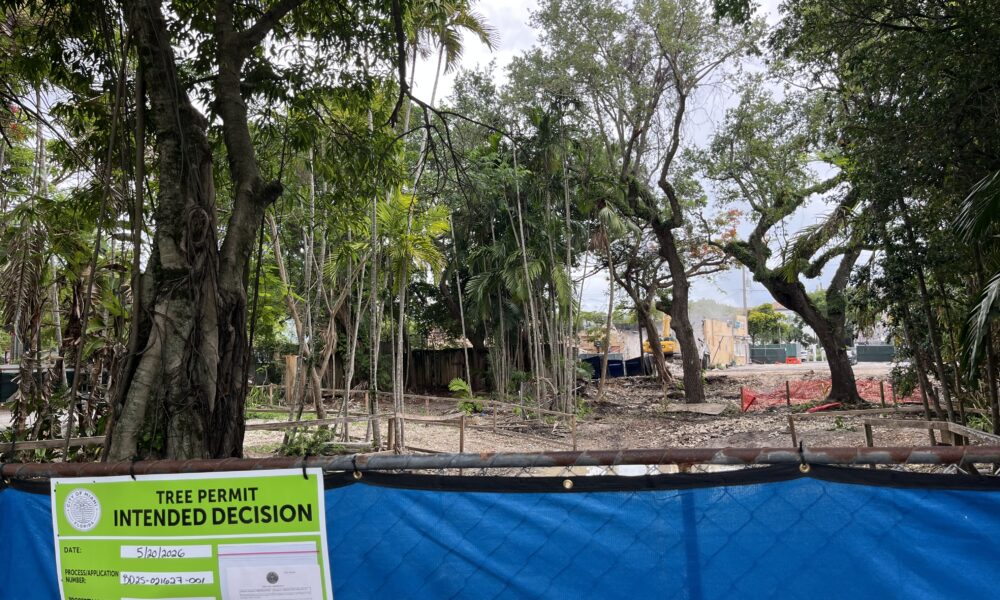


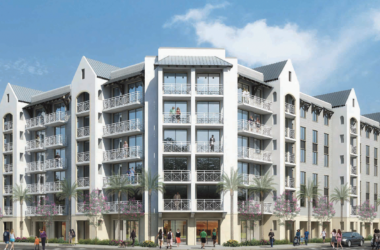
Miami residents are mounting a growing challenge to city-issued tree removal permits, with at least 14 appeals now in process, as critics accuse city officials of adopting an increasingly permissive approach to enforcing Miami’s tree protection laws.
City of Miami officials are bracing for a wave of formal appeals challenging their decisions to issue tree removal permits — part of a broader campaign in recent months by a coalition of residents and civic groups pushing back against what they perceive as a lax, if not deliberately permissive, approach to enforcing the city’s tree protection laws.
At least 14 appeals are currently in process, Assistant Planning Director Sevanne Steiner told members of the city’s Historic and Environmental Preservation Board (HEPB) on Tuesday, with six scheduled for review by the board at its July 7 meeting.
In all of 2025, only one appeal was filed seeking to overturn a city-issued tree removal permit.
“This is the third month in a row that we’ve seen an uptick in these appeals,” Steiner said. “We’ve been working internally, trying to determine how best to address it.”
Residents opposed to city-issued tree removal permits can appeal those decisions to the HEPB. To handle the increased volume, Steiner has asked the board to increase its meeting schedule from once to twice per month.
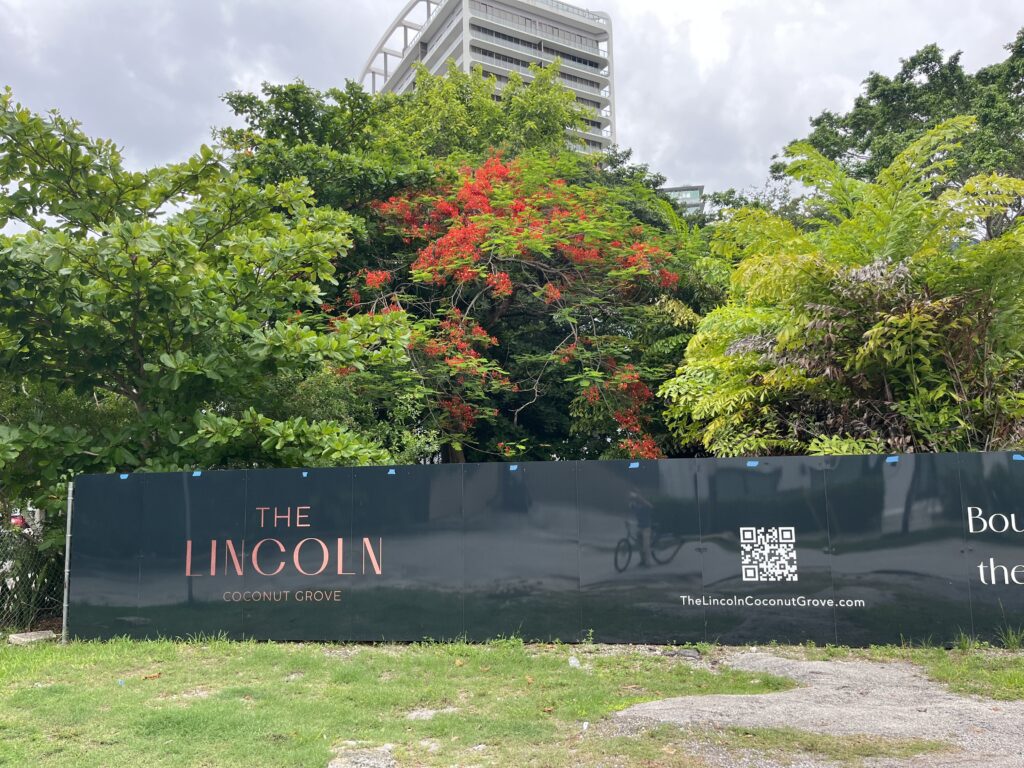
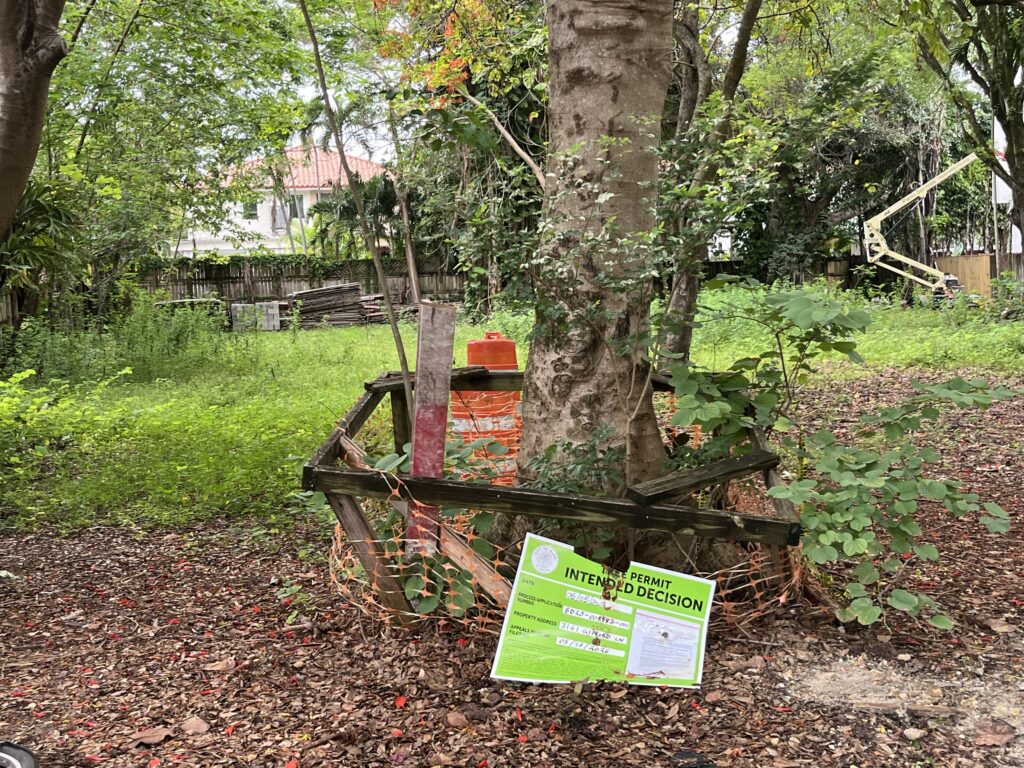
Of the six appeals scheduled for July, five involve properties in Coconut Grove: 3101 Grand Ave., the site of the proposed Ziggurat mixed-use project; 3151 SW 27th Ave., the site of the proposed Lincoln condominium project; and properties at 3161 Gifford Lane, 3301 McDonald St. and 3736 Irvington Ave.
At the HEPB’s April meeting, resident groups successfully challenged tree removal permits issued for properties slated for single-family development on Swanson Avenue in North Grove and El Prado Boulevard in South Grove. A third appeal was dismissed after city officials determined that the appellant lacked standing to pursue the challenge.
Read more: City Board Tosses One Tree Appeal, Grants Two Others
At Tuesday’s meeting, two appeals — both challenging a removal permit for the same Edgewater property — were resolved before a hearing after a developer agreed to withdraw his request to remove four mature mahogany trees located on a city-owned right of way bordering the construction site.
That outcome, announced by Steiner at the outset of the meeting, derailed plans by tree-protection advocates who had hoped to use the hearing to highlight what they describe as a pattern of city officials approving removals that initially drew objections from the city’s Environmental Resources Division staff.
Emails obtained by the group — and reviewed by the Spotlight — show that city reviewing officers initially opposed the removal of the four mahogany trees at the Edgewater property.
But months later, Environmental Resources Coordinator Shawn Smith (now its acting chief) forwarded an email from a project representative asking reviewing officer Ruben Colon to “take a look at this project and expedite” the application. The permit was then granted.
A similar reversal was highlighted during the Swanson Avenue appeal in April, when records showed that an Environmental Resources reviewer initially concluded a specimen tree should remain because it was not impacted by the proposed construction and was “grandfathered” from traffic sightline provisions cited by the property owner as a rationale for its removal.
The city later revised its determination, siding with the property owner — a decision the HEPB subsequently reversed on appeal.
Smith did not respond to the Spotlight’s request for comment.
Both reversals occurred earlier this year, at a time when some activists — and even some city insiders — say newly enacted internal policies are streamlining the permitting process by prioritizing permit approvals over careful review.
Read more: Tree Overhaul Returns as Quiet Changes Take Root
Those internal changes coincided with the sudden reassignment of longtime Environmental Resources Division Chief Quatisha Oguntoyinbo-Rashad to another role within city government.
City officials have declined multiple requests from the Spotlight to make Quatisha Oguntoyinbo-Rashad available to discuss tree permitting policies and procedures at City Hall.
The surge in appeals reflects growing public awareness of a process that many residents find difficult to navigate, said Tatiana Oystacher, a Coconut Grove resident who has helped neighbors file challenges to tree removal permits.
“It’s really not that difficult,” Oystacher said of the appeals process. “They always say the same thing: ‘Had I known how to do it, I would have done it earlier. I wouldn’t have missed the intended decision.'”
David Winker, an attorney representing appellants in five active appeals, agreed that residents deserve credit for the recent surge in challenges, saying neighbors have taken it upon themselves to help one another navigate what can be an intimidating and costly process.
Appeal fees typically range from $500 to $700 per case.
“There’s this total resistance coming from residents,” said Winker. “The overall strategy is just resistance.”
Among those resisting is Felicidad Aveleyra, the Center Grove resident appealing the permit issued for the removal of 44 trees that would make way for the Lincoln luxury condo project on SW 27th Avenue.
“If we don’t step up, who’s going to do it?” Aveleyra said. “I’m very glad that there’s something that we can do as city residents.”
On Wednesday, Winker filed, on behalf of a nearby property owner, yet another appeal, challenging the removal of nine trees slated to make way for a downtown city construction project, including a gumbo limbo, a mango tree and several mature ficus trees.
The address of the permit applicant — and the location of the proposed tree removal — may be recognizable to Miami residents, Winker noted: 444 SW 2nd Ave., the City of Miami’s administrative offices.