




Former Miami City Attorney Victoria Mendez argues a $100,000 pension cap adopted during Miami’s 2010 financial crisis became unenforceable after many of the emergency measures were struck down in court — a position the city’s civilian pension administrators say has left the retirement system underfunded by the City of Miami.
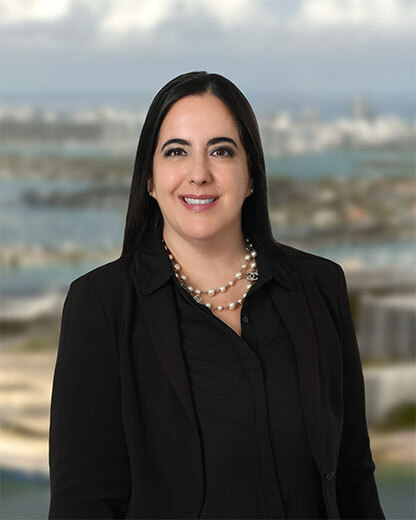
Former Miami City Attorney Victoria Mendez has sued the City of Miami and its civilian retirement system, arguing a $100,000 annual pension cap adopted during the city’s 2010 financial emergency became unenforceable after the Florida Supreme Court struck down many of the emergency labor measures that created it.
The lawsuit, filed July 14 in Miami-Dade Circuit Court, seeks a declaration that the pension cap is void and asks the court to order payment of retirement benefits Mendez alleges have been improperly withheld, along with the correct benefit amount going forward. If successful, the case could increase pension costs for the city and potentially affect other retirees whose benefits remain subject to the cap.
Mendez served as Miami’s city attorney from 2013 until April 2024, when the City Commission voted 4-1 to remove her from the position two months before her contract expired. Commissioners cited a loss of confidence in her leadership following a series of controversies, while Mendez characterized her ouster as politically motivated.
Mendez is now in private practice in Miami, representing clients in land use, zoning and local government matters.
At the center of the lawsuit is a pension provision the city adopted in September 2010 after declaring a “financially urgent situation” under state law.
Facing severe financial pressures, the City Commission unilaterally reduced employee wages and pension benefits without bargaining with labor unions, including imposing a $100,000 annual cap on retirement benefits for participants in the General Employees’ and Sanitation Employees’ Retirement Trust, known as GESE, and other city-linked pension programs.
Last May, the City Commission approved a rollback of 2010 pension reforms affecting Miami firefighters.
Read More: Miami Eyes New Firefighter Pension Expansion Without Public Cost Estimate
The pension cap triggered years of litigation that culminated in a 2017 Florida Supreme Court ruling finding Miami violated its contractual obligations by imposing the changes without collective bargaining and failed to demonstrate the cuts were legally justified.
Following the ruling, the Florida Public Employees Relations Commission ordered the city to restore employees to the status that existed before the unlawful changes. According to Mendez’s lawsuit, the city rescinded several provisions adopted during the financial emergency but left the $100,000 pension cap in place.
GESE Pension Administrator Edgard Hernandez told the Spotlight that it is the position of the retirement system’s board that the $100,000 cap is no longer valid. He said the retirement system began adjusting benefits in 2025 for retirees affected by the disputed cap but declined to discuss Mendez’s individual claim because GESE is a co-defendant in the lawsuit.
Although GESE has begun making supplemental payments to retirees affected by the cap, Mendez contends the additional payments still fall short of the full pension she earned because the City has refused to provide all of the funding the retirement system says is required.
Mendez alleges the City has refused to fully fund those additional benefits despite GESE’s belief that the cap is no longer valid, leaving her pension underfunded. She is asking the court to declare the cap unenforceable, order payment of all benefits she claims are owed and require the City to fund the payments prospectively.
The lawsuit also references a separate pending lawsuit filed by GESE against the City concerning the City’s funding obligations to the retirement system.
Payroll records obtained by the Spotlight through a public records request show Mendez currently receives a monthly base pension of $7,833.79, a $66.66 monthly cost-of-living adjustment and a $7,739.63 payment categorized as a “Non-COLA Adjustment,” for a total gross monthly retirement benefit of $15,640.08, or $187,680.96 annually — the highest retirement payment received by any former general employee in the city’s civilian pension system.
Hernandez said Non-COLA Adjustments serve several purposes, including paying amounts associated with disputed benefits. In Mendez’s case, he said the adjustment represents “the original accrued benefit” calculated under the retirement formula before application of the disputed pension cap. He said the retirement system applied similar adjustments to all retirees affected by the cap rather than handling requests individually.
A Spotlight review of the June 2026 GESE payroll register found only 26 of 1,856 retirees receive Non-COLA Adjustments. Hernandez said those repayments were likely tied to recipients subject to the disputed $100,000 cap.
Hernandez declined to comment on whether GESE believes Mendez is currently receiving the full amount to which she is entitled, citing the pending litigation. He also declined to discuss the merits of GESE’s separate lawsuit against the City, saying only that it seeks judicial clarification regarding the City’s funding obligations.
Mendez’s attorney did not respond to a request for comment. A City of Miami spokesperson declined to respond to a list of submitted questions.
Although the lawsuit seeks relief only for Mendez, a ruling in her favor could have broader implications if other retirees remain subject to the disputed benefit cap.
According to the retirement systems’ annual financial reports, Miami’s two pension systems received approximately $182.4 million in city contributions, $38.0 million in employee contributions and $268.1 million in net investment earnings during fiscal year 2025. Together, the city’s retirement systems carry approximately $2.5 billion in long-term pension liabilities.
Read More: Inside City Hall: The Rise of Six-Figure Public Safety Pensions
The lawsuit does not estimate how much additional money Mendez claims she is owed or what the total financial impact on the city would be if the pension cap is ultimately declared unenforceable.