
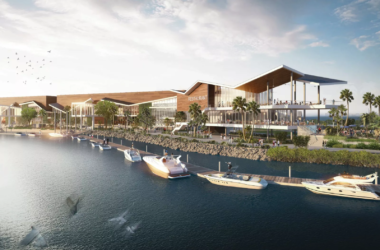

County officials heard community feedback this week and shared updates on their redevelopment plan for the Coconut Grove Playhouse.
Miami-Dade County officials met with West Grove residents this week to collect feedback on the county’s Coconut Grove Playhouse development plan, a project that has long faced community pushback.
Attendees on Tuesday included representatives from three neighborhood organizations including Preserve the West Grove, a group that recently challenged the Playhouse plans in Miami-Dade Circuit Court.
The organization’s petition argues that the city approved the project without adequate evidence of its impact on some of the oldest residential streets in the Grove’s historically Black community.
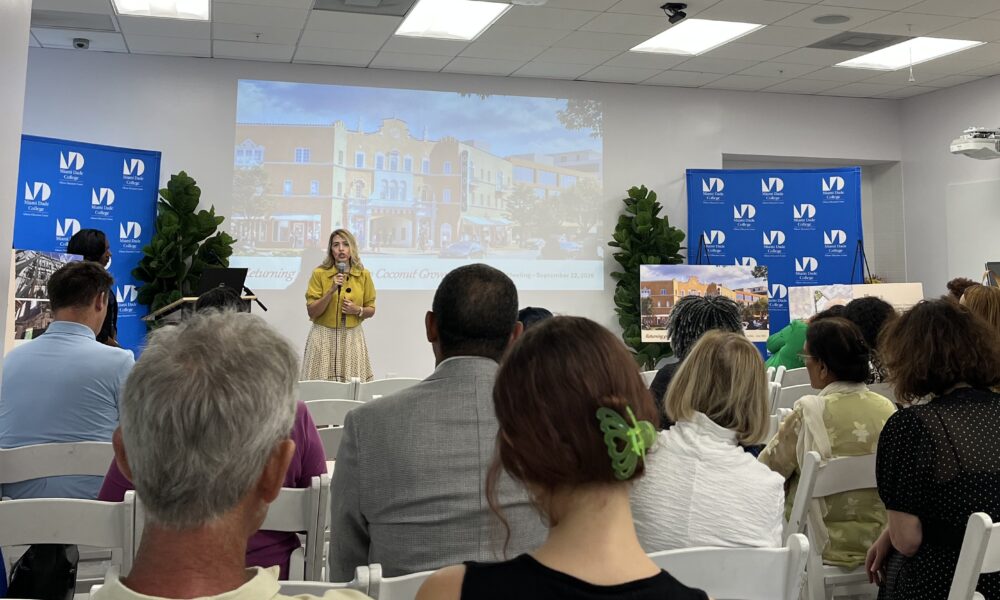
Ashlee Thomas, director of the Miami-Dade County Department of Cultural Affairs, led the meeting at the Miami Dade College Gibson Education Center. Also attending were District 2 Commissioner Damian Pardo, District 7 Miami-Dade Commissioner Raquel Regalado and Miami Parking Authority Director Angel Diaz.
“You have all the ears in the room today from every stakeholder, so they’ll be able to hear you,” Thomas told residents.
Thomas outlined six conditions attached to the project plan approved in July by the Miami City Commission, including limiting retail frontage towards residentials streets, building a buffer wall next to homes, and preparing an updated traffic study and mitigation plan with neighborhood participation.
Residents had the opportunity to share their feedback on each condition.
Thomas shared a few updates on the county’s progress, including that the county’s updated traffic study is currently under city review. When residents asked how their feedback would be incorporated, she said the county will eventually present the study to the community after the city finishes its review.
Traffic concerns dominated the discussion. MPA Director Diaz said the Playhouse’s new garage will include “a little over 300 parking spaces” and ground-floor liner space, adding that structured parking should eventually reduce parking pressure on nearby residential streets.
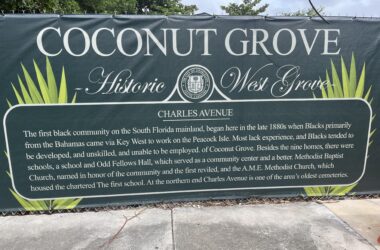
Residents countered with existing concerns about speeding, construction trucks on Charles Avenue, valet drivers cutting through residential streets and rideshare congestion, saying their earlier complaints have gone largely unenforced.
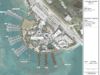
Officials also addressed a major concern with the county’s earlier designs: a pedestrian walkway that would have connected the Playhouse campus to the residential blocks behind it. After receiving sustained community opposition, Thomas said the county is working with its architect to design an enclosure that would seal off direct access to the neighborhood.
On cultural programming at the Playhouse, officials said they are drafting a cultural resource plan highlighting Bahamian and West Grove history through exhibits, markers and partnerships. Based on the community’s feedback, Thomas said the county would return with a rough plan for further review.
However, Thomas cautioned that a new state law may restrict how much government funding can support some of that work. Florida Senate Bill 1134, set to take effect in January, bans Florida counties and municipalities from funding or supporting programs related to diversity, equity, and inclusion, or “DEI.”
Thomas said the county hopes to complete restoration of the historic facade and reopen the sidewalk and street in front of the Playhouse by the end of 2027, but said that the timeline is ambitious.
Preserve the West Grove board member Anthony Vinciguerra told the Spotlight after the meeting that neighbors appreciated the county’s effort to engage the community. Still, he remains concerned about the city’s commitment to enforcing the community protections.
“We’re hopeful — but the past experience of Village West has taught us that promises are often made, but much less often kept,” he said.
Sinclair Holian is a Spotlight reporter and Report for America corps member covering gentrification and development in Coconut Grove. She joins us through our partnership with Report for America, a national organization that places journalists in local newsrooms across the United States.