




Alexis Calatayud, the architect of the state’s controversial Live Local Act, won another four-year term in Tallahassee by narrowly defeating a challenger who made opposition to that law a central part of his campaign.
For critics of Florida’s Live Local Act, Tuesday’s Senate District 38 election offered a chance to vote out the state lawmaker who wrote the controversial housing law.
But in a race decided by less than a percentage point, Republican Alexis Calatayud narrowly held onto her seat, fending off Democratic challenger Richard Lamondin, who hoped to turn public frustration with the law into an electoral upset.
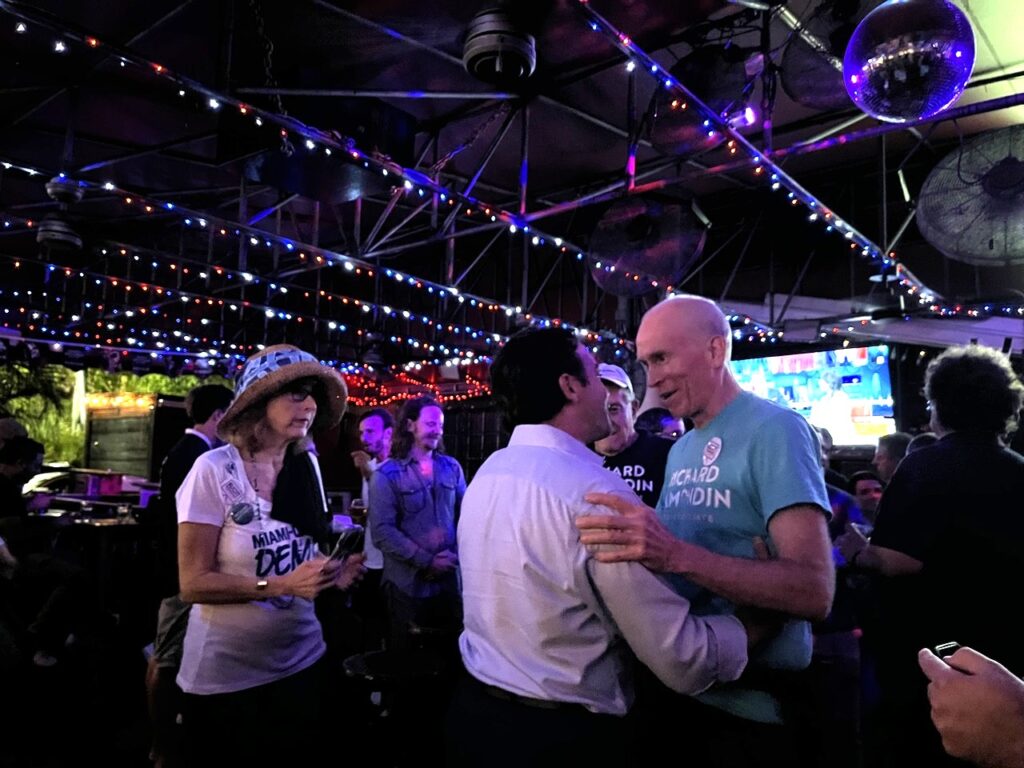
As final results trickled in Tuesday night, supporters at Lamondin’s South Miami election party watched anxiously, refreshing election updates and hoping the razor-thin margin might trigger a recount. When it became clear he had fallen short, Lamondin grew emotional as he announced his concession.
But even in defeat Lamondin found something to celebrate: “What I take away from this is we made some f—— noise, didn’t we?” he said, drawing cheers from the crowd.
Throughout his campaign, Lamondin became a leading critic of the Live Local Act and Calatayud’s role in passing it. The law gives qualifying developers additional building rights in exchange for reserving 40% of their apartments for affordable or workforce housing.
Calatayud has defended the law as a way to address Florida’s housing crisis. But Lamondin argued that it gives developers a rubber stamp to build denser, luxury-style housing without providing meaningful relief for low-income families.
District 38 covers parts of southeastern Miami-Dade County, including Coconut Grove, where many residents are grappling with a rush of new development and rising costs.
Read more: Live Local Act Takes Center Stage in Senate District 38 Race
In an interview with the Spotlight after the election, Lamondin said he was disappointed by the result, particularly after coming so close to unseating the incumbent. Still, he hopes the razor-thin margin sends a message about residents’ frustrations with the law.
“I hope that Senator Calatayud has taken note of the dissatisfaction around this law,” Lamondin said. “People want to have their say, and they deserve their say, and I think that Live Local represents the most egregious stripping of people’s say.”
The final numbers point to a tightening political landscape for Calatayud. She received 49.5% of the vote, while Lamondin finished with 48.7% — just 1,576 votes behind. Independent candidate Jeffrey Solomon received 1.8%.
That result marks a notable decline from Calatayud’s first Senate victory in 2022, when she captured 54% of the vote against challenger Janelle Perez.
Calatayud did not respond to the Spotlight’s request for comment after the election.
Before Election Day, the Spotlight asked Calatayud whether she planned to address residents’ concerns about Live Local in a second term. She responded that she would continue working with local government leaders to refine the policy.
“I am working with Coconut Grove neighbors to craft additional strategies to both honor neighborhood conservation districts and also provide more low-income affordable housing needed for generational Grovites cost-squeezed out of the area,” she said.
Sinclair Holian is a Spotlight reporter and Report for America corps member covering gentrification and development in Coconut Grove. She joins us through our partnership with Report for America, a national organization that places journalists in local newsrooms across the United States.















Waiting for re-elected State Senator Calatayud to work with Coconut Grove neighbors to craft an additional solution to honor neighborhood conservation districts is a waste of time.
The City Commission’s strategy of waiting for the Hillsborough County case challenging the constitutionality of the Live Local Act to be decided is another waste of time. There is a 10-minute Case Management Conference which will be held on Zoom on December 14, 2026. The Live Local Act passed the State Legislature 140-6. No way the case which is being heard in Tallahassee (Leon County court) will hold the Live Local Act unconstitutional.
Richard Lamondin was correct in his thinking that the best way to address the Live Local Act is by having the State Legislature amend it to limit its application in Neighborhood Conservation Districts. The City Commission’s current “waiting” strategy is based on the advice of the City Attorney. It’s a strategy that is a waste of time… time that could be better spent through a lobbying effort initiated by the City Commission to have the scope of the Live Local Act limited in its application through an amendment by the State Legislature.