

By the time Miami notifies residents of proposed tree removals, city officials have already issued its approval. Residents and some developers say earlier notice could help avoid costly appeals, construction delays and neighborhood disputes.
By the time Kristin Dacey and her neighbors learned that seven trees could be removed from a property on Gifford Lane, the developer had already spent 14 months working with the City of Miami on construction permits.
The neighbors had just 10 days to challenge the proposed removals. They appealed in May, and when the two sides finally sat down to discuss the trees during the city’s appeals process, something unexpected happened: They reached a compromise.
Instead of seven trees, just one would be removed.
But getting there required two separate appeals costing the neighbors nearly $1,500, months of uncertainty for the property owners, and a construction project that remains under review.
For Dacey, the outcome was bittersweet: Six trees were saved, but only after neighbors resorted to a costly appeals process to negotiate changes that might have been worked out much earlier.
The dispute illustrates a growing concern among City of Miami residents, environmental advocates and even some developers: Miami’s tree removal permitting process may be making conflicts more expensive and contentious by bringing neighbors into the conversation only after construction plans are largely complete.
The issue has taken on new urgency as tree removal appeals have surged across Miami. Residents have filed at least 22 appeals this year, prompting the city’s Historic and Environmental Preservation Board (HEPB) to add a second monthly meeting specifically to handle tree disputes. In all of 2025 the board heard only a single appeal.
And while developers and tree advocates often find themselves on opposing sides of those hearings, some agree that the timing of public notification makes compromise more difficult than it needs to be.
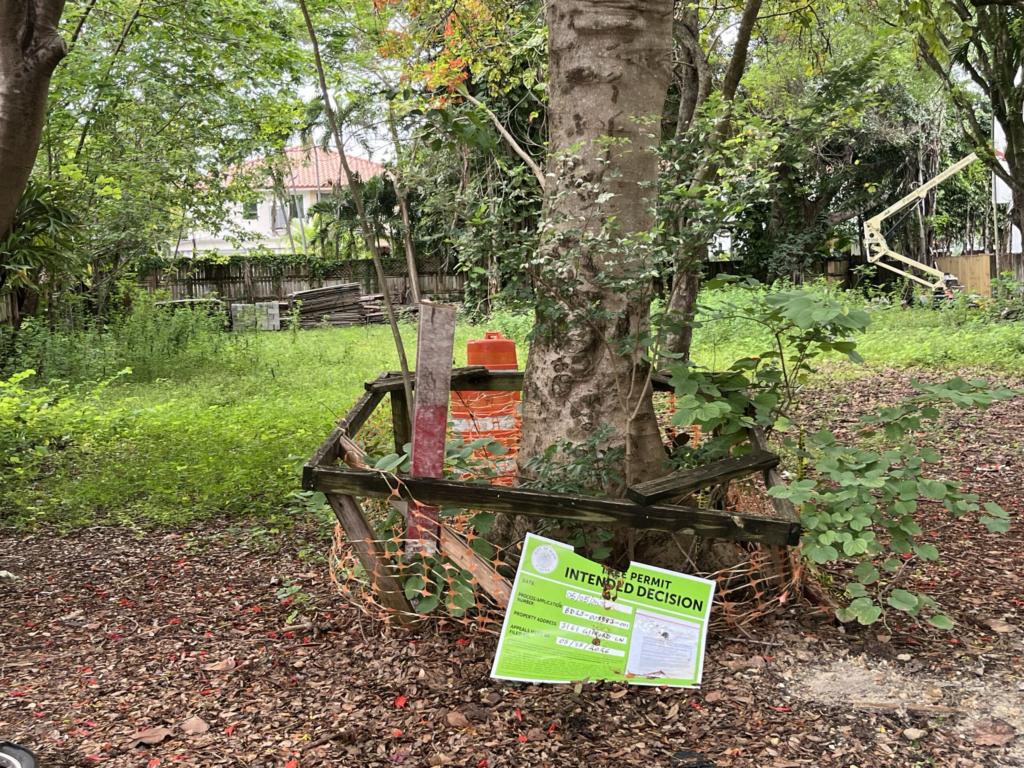
Under the city’s current procedures, public notice of a proposed tree removal — typically the first opportunity for neighbors to learn which trees are slated for removal — comes late in the development process, after the city has reviewed construction plans and issued an “intended decision” to approve the removal permit.
But the term “intended decision” is something of a misnomer. The city has already decided to allow the tree to be removed, subject only to a possible appeal.
The city then posts the notice on the property and online, triggering a 10-day window for appeals. If nobody appeals, the decision becomes final and the permit is issued.
By that point, developers may have spent months — and substantial sums — preparing architectural, engineering and landscaping plans around the trees they intend to remove.
Alex Uribe, an attorney representing property owners on Irvington Avenue whose tree removal permit was challenged, said the process puts developers in a difficult position.
“Once you’ve already committed all those resources to get your design to the very end, you’re going to defend that…much harder than if we move this earlier in the process,” Uribe said.
The HEPB ultimately denied the Irvington appeal, allowing the tree to be removed.
David Winker, an attorney who has represented residents challenging tree removals, sees the same problem from the other side.
He argues that decisions about which trees should be preserved ought to come before developers finalize their construction plans, rather than after.
“The trees need to drive the design,” Winker said. “I think it would eliminate a lot of the problems because everything would be addressed up front.”
Lindsay Cain, who challenged proposed tree removals for a new single-family home on South Moorings Way in the South Grove, said she understands why developers become frustrated when construction plans are delayed.
But she said neighbors have few alternatives when they learn about proposed removals so late in the process.
“Lately the appeals, I know that they’ve been frustrating some people in the city, but that’s been our only way to get a conversation going and make these negotiations,” Cain said.
Cain ultimately reached an agreement with the property owners that preserved more trees, and her appeal was withdrawn. She believes an earlier opportunity to discuss the plans might have produced the same result without the time and expense of filing an appeal.
“I believe some of these developers, if they knew the public was so upset about certain removals, would try their best to keep them,” she said.
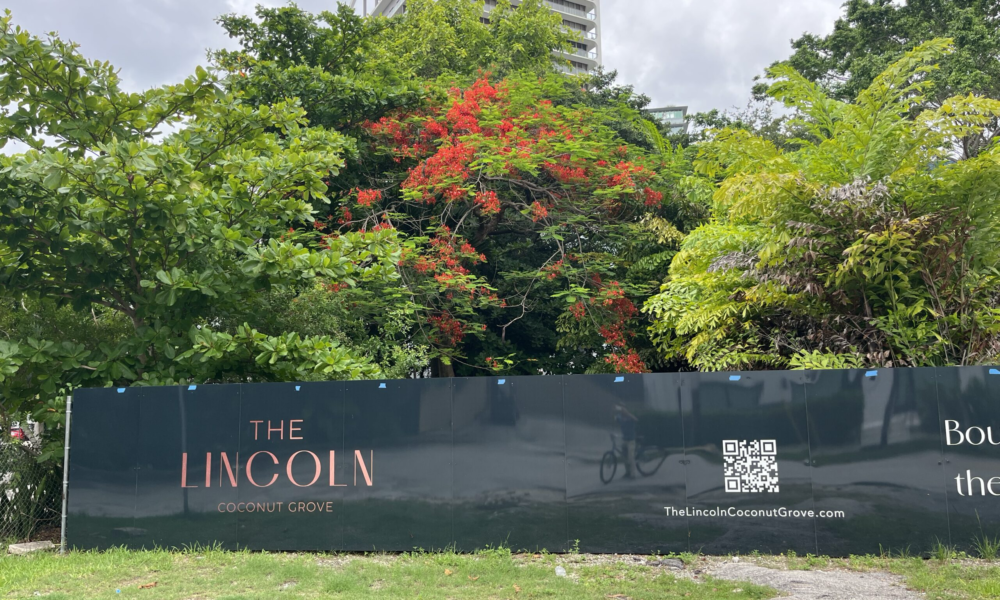
A similar compromise emerged from a dispute over The Lincoln, a proposed eight-story condominium development on Southwest 27th Avenue.
Felicidad Aveleyra and her husband, Luis Alvarez, appealed the proposed tree removals, joining dozens of Coconut Grove residents who spoke against the plans at a public hearing before the city’s Historic and Environmental Preservation Board.
The board encouraged the residents and the developer to negotiate. After several weeks of discussions, the two sides reached an agreement that would preserve a large strangler fig, relocate a healthy gumbo limbo tree to the 27th Avenue side of the property and add six live oaks, each approximately 30 feet tall.
The agreement also calls for 15 other trees on the property and 16 to be planted at nearby Kennedy Park, according to Alvarez.
Alvarez said he went through the appeals process because the possibility of delaying construction gave residents leverage to negotiate. No tree removals can occur on a property facing an appeal.
“They knew they really needed to compromise and to reach a deal with us, otherwise it was going to delay their project,” he said.
That leverage, however, comes at a price.
On Gifford Lane, Dacey said two neighbors filed separate appeals, each costing $704.92 in fees and notification expenses. All appellants must also identify property owners within 500 feet of the disputed property and pay to notify them of the appeal hearing by certified mail.
The neighbors also spent $40 obtaining public records to determine precisely which trees were slated for removal.
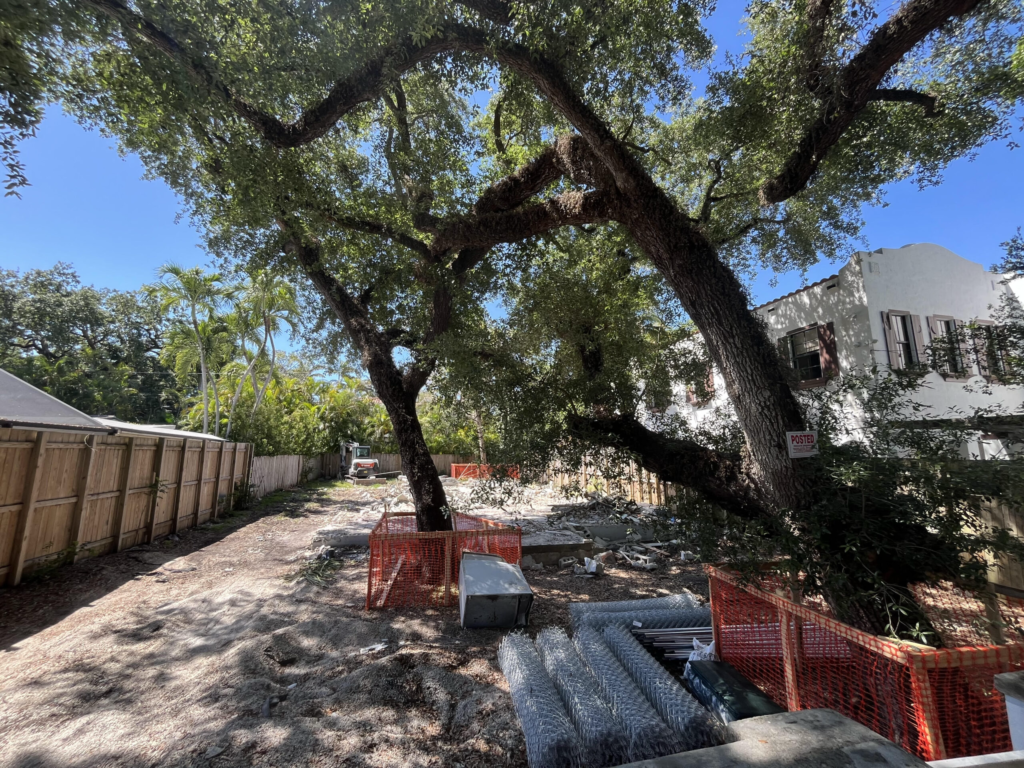
“The posted notice doesn’t tell you which trees are coming down, so you can’t evaluate what you’re objecting to without requesting the records – and paying for them,” Dacey said.
Some residents say the notification requirement gets things backwards. Rather than making appellants pay to notify neighbors after challenging a tree removal, they argue, property owners should be required to notify surrounding residents before seeking city approval. That could open the door to negotiations long before construction plans are finalized and appeals become necessary.
Not everyone believes involving neighbors earlier would improve the process.
A developer involved in a disputed project on Day Avenue said property owners should be able to rely on the city’s professional review of their construction and landscaping plans.
The developer, Luis Marin, said the tree removals on his property complied with city regulations and had been approved by city staff. Yet an appeal by neighbors could delay construction by three to four months, he said.
“If a city approves a landscaping plan, that should be enough, you are meeting the city requirements,” Marin said. “In most cases, where you are just working on your property, I don’t think it’s necessary to get the neighbors involved if you are meeting the city requirements.”
City officials have also expressed reservations about introducing public feedback earlier in the permitting process.
In a written response to the Spotlight, a city spokesperson said an earlier comment period from residents could raise practical questions about how to handle applications that undergo substantial revisions and could lengthen the review process.
The city also emphasized that tree removal decisions must be based on municipal regulations, not neighborhood sentiment.
“An early comment period could create expectations that public input will decide the outcome,” the statement said. “The general public are typically not subject matter experts and do not hold degrees or certifications. They have not been trained in the review process in regard to trees and construction, safety concerns, and liability.”
But providing earlier notice would not necessarily mean giving neighbors authority to approve or reject tree removals, some residents argue. It could simply give property owners and residents more time to identify disagreements and explore alternatives before construction plans become difficult to change.
The question of whether Miami should change its procedures is now before the city’s Tree Ordinance Advisory Committee, which is reviewing regulations governing tree protections, permitting, notification and appeals.
The committee is expected to deliver recommendations to the City Commission by March.
At a September commission meeting, Commissioner Christine King questioned the logic of reviewing tree preservation only after developers have progressed through much of the construction approval process.
“They get the permits to build and then we look at the tree. And that’s backwards because that puts everybody up in arms,” King said. “It causes so much discontent between the community and us, which is what I’m hoping the committee will address.”
Ian Wogan, a Coconut Grove arborist representing Miami’s District 2 on the advisory committee, said any changes must balance environmental protection with property owners’ rights and the practical demands of permitting construction.
“It’s a bit of a can of worms. There’s private property rights to be considered, and there are also the environmental benefits that extend well beyond the individual property that any given tree provides,” Wogan said.
He hopes the committee can recommend “a more transparent process by which professionals can evaluate the potential impacts and associated mitigation of any given project.”
For residents such as Dacey, the Gifford Lane compromise demonstrates that developers and neighbors can find common ground over tree preservation.
“If we had known earlier, we could have sat down with the developer and worked through it directly,” Dacey said. “We reached a negotiated agreement in the end. We could have reached it months sooner.”
Anita Li is a Spotlight reporter and Report for America corps member covering government accountability in Coconut Grove and Miami City Hall. She joins us through our partnership with Report for America, a national organization that places journalists in local newsrooms across the United States.