



Newly obtained records reveal months of legal objections and procedural questions before Miami officials approved an unprecedented transfer of density credits between two luxury condo projects.
Months before Miami officials approved an unusual transfer of development rights that allowed a luxury Center Grove development to increase its housing units by 50%, city attorneys had concluded that the maneuver was not permitted under the city’s zoning laws, according to newly obtained emails.
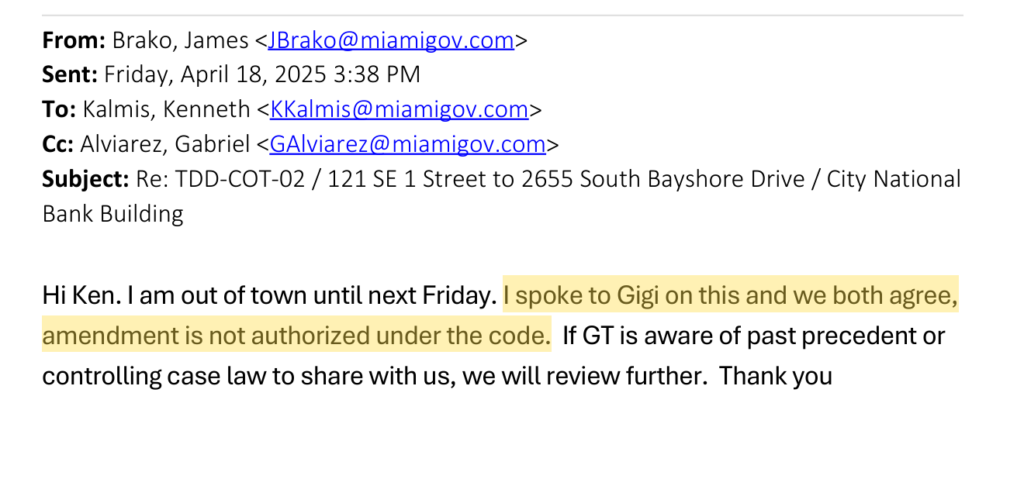
“The amendment is not authorized under the code,” Assistant City Attorney James Brako wrote in an April 18, 2025, email about the proposed changes to a development rights document, noting that another city attorney and land-use expert, Jihan Soliman, agreed.
That opinion echoed concerns raised weeks earlier by the city’s historic preservation chief, Ken Kalmis, the official responsible for approving the plan, emails show.
Yet less than eight months later, Kalmis approved the very amendment Brako had rejected, allowing The WELL Coconut Grove to add 66 condominium units by reassigning unused housing-density credits originally assigned to the nearby 21-story Mr. C Residences.
Both luxury developments are projects of Coconut Grove-based Terra Group.
Under Miami’s zoning code, developers can, in certain circumstances, increase the number of housing units permitted on their properties by purchasing development-density credits from other properties, most commonly historic buildings where development rights are restricted.
But those credits are not freely transferable. Once assigned to a “receiving” property, any unused credits cannot simply be moved to another development.
In an exchange with the Spotlight earlier this year, a city spokesperson explained that only the property originally designated to receive density credits could use them.
“If a property receives [transferred development density] units but uses only a portion, the remaining units cannot be used,” the spokesperson said.
In early 2025, city records show, Terra sought to get around that restriction by asking the city to reassign to The WELL, just a short distance away, unused density credits it had purchased years earlier for Mr. C Residences.
But the request raised legal and regulatory objections within City Hall.
“While perhaps unused, those rights now belonged to the receiving site [Mr. C],” Kalmis wrote in a March 19 message to the city attorney’s office, explaining that Mr. C Residences would have to qualify independently as a property eligible to transfer density credits elsewhere.
“It does not,” he concluded.
Why the city reversed course and approved the unprecedented maneuver remains unclear.
Brako did not respond to detailed questions from the Spotlight about what changed in the city’s legal interpretation, what authority ultimately justified the amendment or what new legal arguments supporting its approval.

But Brako’s April 18 email offers a possible clue to the city’s eventual reversal. Although he concluded that the reassigning density credits was not authorized, he left open the possibility of reconsidering if Terra’s attorneys could provide legal precedent supporting it.
Kalmis agreed, writing back that “This application is going to become a priority… Should we plan a call w/ GT?” — a reference to Greenberg Traurig, Terra Group’s outside legal counsel.
When that offer reached Iris Escarra, a veteran land-use and development attorney at Greenberg Traurig representing Terra, she took just six minutes to respond.
“Can we jump on a call to discuss?” Escarra wrote, acknowledging Brako’s legal objections to amending the transfer documents but offering a counterargument: “The Code does not preclude amendments either.”
Emails show that city officials and Terra’s attorneys subsequently arranged meetings to discuss the application. But the records do not reveal what was discussed or whether Terra provided legal arguments that persuaded the city to reverse its position.
In a recent email exchange with the Spotlight, Escarra declined to answer the Spotlight’s submitted questions, saying only that “We appreciate the City’s diligent review of our request and conclusion of the authority to process the Certificate of Transfer as was legally done.”
The emails — among more than 2,700 pages of records released by the city in response to a Spotlight public records request — offer a rare glimpse into the workings of Miami’s complex system of zoning incentives, which in some cases allow developers to exceed normal limits on building height, size or density in exchange for so-called “public benefits” such as affordable housing, historic preservation or improvements to public spaces.
Read more: Benefits Boom: How Miami Quietly Turned Bonus Height Into Big Money
In 2020, Terra tapped into one of those incentive programs, purchasing 74 housing credits for $10,000 each from the historic City National Bank building in downtown Miami and assigning them to Mr. C Residences in Coconut Grove.
But Terra subsequently redesigned the project, replacing a planned rental tower with a second condominium tower containing fewer, larger units. The redesign left most of the purchased housing credits unused.
By early 2025, Terra was pressing city officials to allow those credits to be reassigned — at no additional cost — to The WELL, another of its luxury condominium projects nearby, where preconstruction prices ranged from approximately $1.4 million to more than $8 million,
Despite its months-long objections, the city ultimately approved the transfer in December 2025, allowing The WELL to increase its planned number of condominium units from 130 to 196.
The Spotlight first reported on the unusual maneuver last May. A city spokesperson said at the time that the reassignment of the credits was the first of its kind in Miami.
Read more: The WELL, Mr. C and a Density Shell Game
Kalmis, who signed off on the transfer, did not respond to multiple requests for comment from the Spotlight.
But city records obtained by the Spotlight reveal his rationale: The decision was based not on legal considerations, but on “clerical” ones.
The WELL had always been an intended recipient of the density credits, he argued, but was inadvertently omitted from the original 2020 transfer documents. Kalmis characterized the amendment as a “corrective” measure to fix that oversight.
Escarra, in an earlier email to the Spotlight, supported that argument saying the transfer occurred after Kalmis “corrected the previous certificate.”
But the explanation contains a glaring flaw: The WELL did not exist — in name or concept — when the original certificate was approved in June 2020. The property on which it would rise wasn’t acquired by its future developer until March 2021, nine months later.
How city officials arrived at the “clerical error” explanation — or reconciled it with the fact that Terra did not yet own The WELL property when the original transfer was approved — remains unclear.
A detailed list of questions about the legal basis for the transfer and the process that led to its approval, sent repeatedly to city spokesperson Helena Poleo, has gone unanswered.
The newly released city emails contain no discussion among city attorneys, planning staff or Terra representatives establishing that such a clerical error occurred — or explaining why it would justify altering a certificate of transfer approved and recorded years earlier.
The density transfer is not The WELL’s only controversial zoning approval. The project has received permission by zoning staff to rise eight stories — three more than under the code would normally allow — after city officials quietly alternated the language of a 2023 zoning change moments before it went to vote by commissioners.
Read more: The WELL: How 5 Became 8
The city commission later repealed the ordinance but maintained that The WELL and several other projects had qualified before the repeal for the extra height. A Coconut Grove residents’ group is challenging that determination in court, arguing that the last-minute changes violated public notice requirements. The case remains pending.
Read more: Judge Asked to Halt Permits for The WELL in Height Dispute
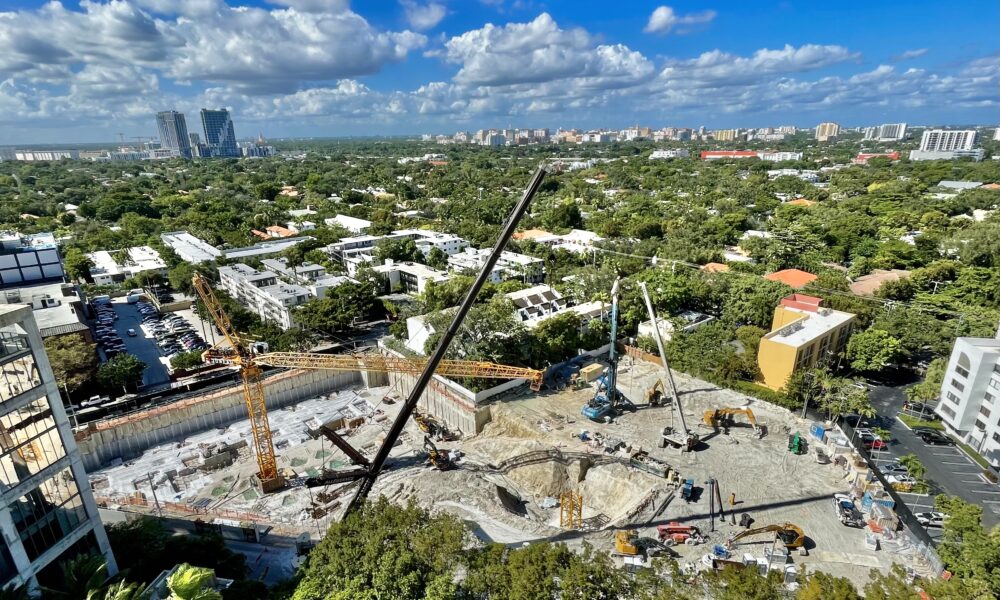
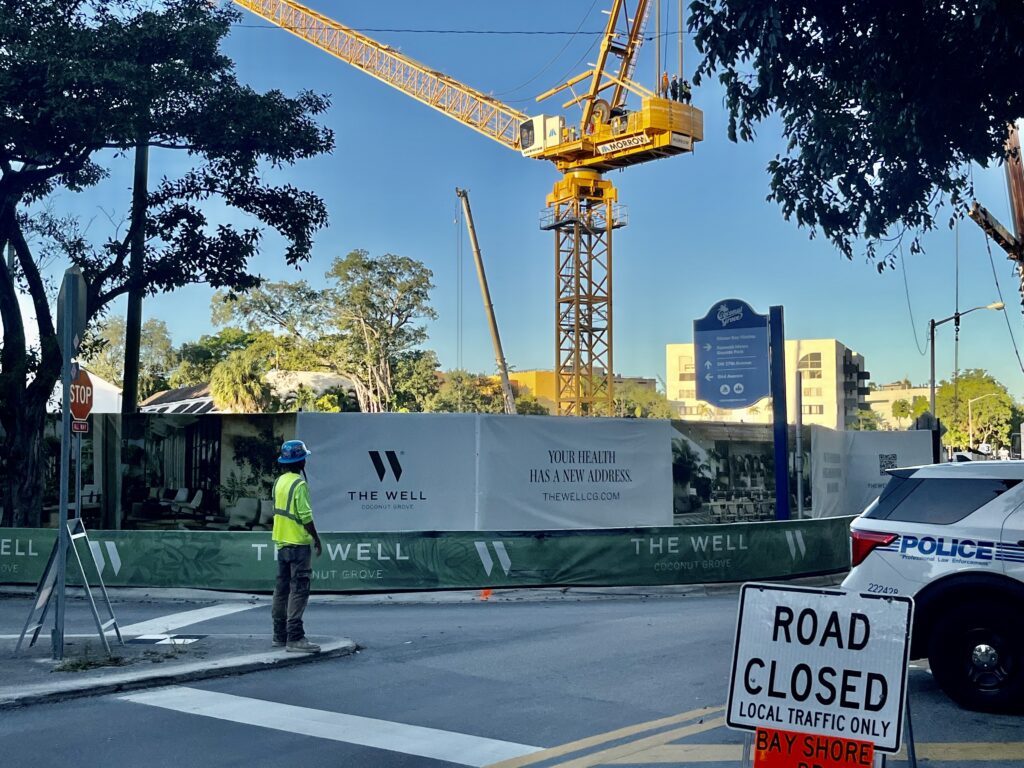
City officials have not responded to questions about the current permitting and construction status of The WELL. Site work has been underway for month and nearby streets were closed last week for crane installation.
The email records, requested by the Spotlight last April but only recently released, end with a flurry of exchanges among city attorneys, planning staff and Terra’s lawyers at Greenberg Traurig, finalizing an agreement signed by Terra’s representatives to protect the city against potential legal claims arising from the unusual density transfer.
“Please confirm that this is sufficient for [the city’s Historic and Environmental Preservation Division] to move ahead with approval,” Terra attorney Carlos Diaz wrote to city attorneys on November 10.