

As luxury towers rise across Miami, developers are paying millions of dollars into a little-known city fund that trades bonus height and density for cash — fueling parks projects, affordable housing deals and growing concerns about overdevelopment.
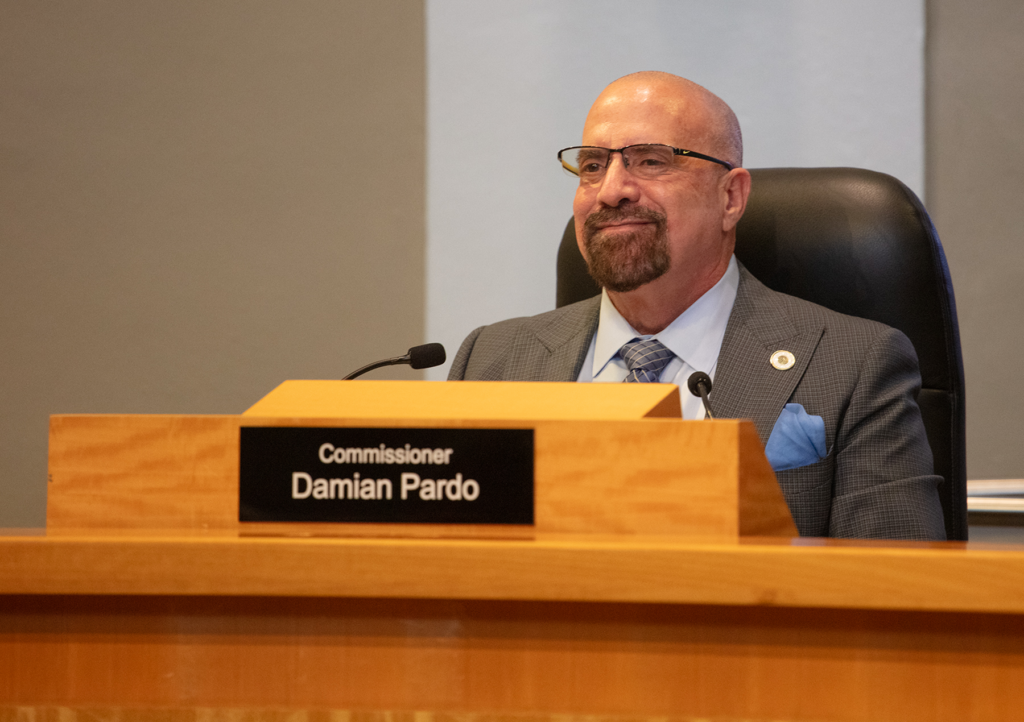
Last April, when Miami District 2 Commissioner Damian Pardo sponsored a resolution calling for $15 million to be tapped from a little-known city account he hoped to use for park improvements and affordable housing projects in Coconut Grove and elsewhere in his district, his fellow commissioners appeared to take something of a collective double take.
“This opened Pandora’s box, and now you see what you see,” Commission Chairwoman Christine King remarked during the debate over the funding request.
In the end, commissioners approved most of Pardo’s request — along with millions more for projects in other districts.
The expenditures — while only a small fraction of the city’s roughly $1.88 billion operating budget this year — pulled back the curtain on one of Miami City Hall’s most lucrative and least publicly understood financial mechanisms: a development-driven trust fund fueled by developers paying for the right to build taller and larger buildings than zoning would otherwise allow.
Known as the Public Benefits Trust Fund, the account was created in 2009 as part of the city’s sweeping Miami 21 zoning overhaul, but it was not widely utilized until recent years. Under the public benefits program that funds it, developers can obtain bonus building height and additional floor area by either directly providing public benefits — such as affordable housing, parks or civic improvements — or, in some cases, by making cash contributions to the fund in lieu of providing those benefits on-site.
Under Miami’s zoning code, new construction is generally capped by neighborhood zoning, with limits on building height and floor area. But those caps are not always hard ceilings. In a T6-12 zone, for example, a project normally limited to 12 stories can rise to as many as 20 stories through the public benefits program if a developer satisfies the city’s bonus requirements, including by contributing to the Public Benefits Trust Fund.
Read more: Whose Benefit? How Mr. C Got So Big
The program’s intent, the code states, “is to allow bonus Building Height” and additional development rights “in exchange for the developer’s contribution to specified programs that provide benefits to the public.”
In practice, the system allows the city to monetize additional development capacity — particularly in the high-density zoning districts concentrated in Brickell, downtown, Edgewater, portions of the Biscayne Boulevard corridor, and Coconut Grove’s high-rise corridor in and around South Bayshore Drive.
Under the program, developers effectively purchase additional building mass from the city through payments tied to the amount of bonus floor area they receive. The city currently charges between $10.81 and $17.82 per square foot of added floor area, city records show, depending on market conditions and the location of the project. Projects in Brickell’s financial district, for instance, pay more than projects in Overtown.
City rules require those rates to be adjusted annually, to keep them within just 10% to 15% of actual market rates.
And even at such a steep discount, the fees can add up.
Records obtained by the Spotlight through a public records request show the program has collected roughly $38.9 million since developers first began paying into the fund in 2015, with more than half of that — about $21 million — generated by projects in District 2.
The pace of collections has accelerated dramatically alongside Miami’s recent development boom: In the last two fiscal years alone, developers paid more than $31 million into the fund, accounting for roughly 80% of all revenue collected.
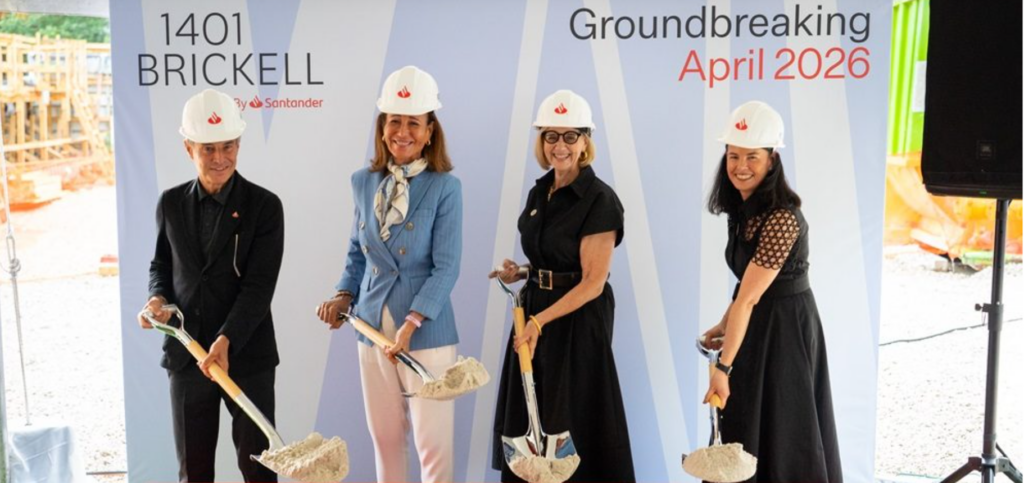
Among them: the 50-story 1401 Brickell by Santander office tower, now under construction, which paid roughly $6.4 million in public-benefit payments in October 2025 for 437,513 square feet of bonus development.
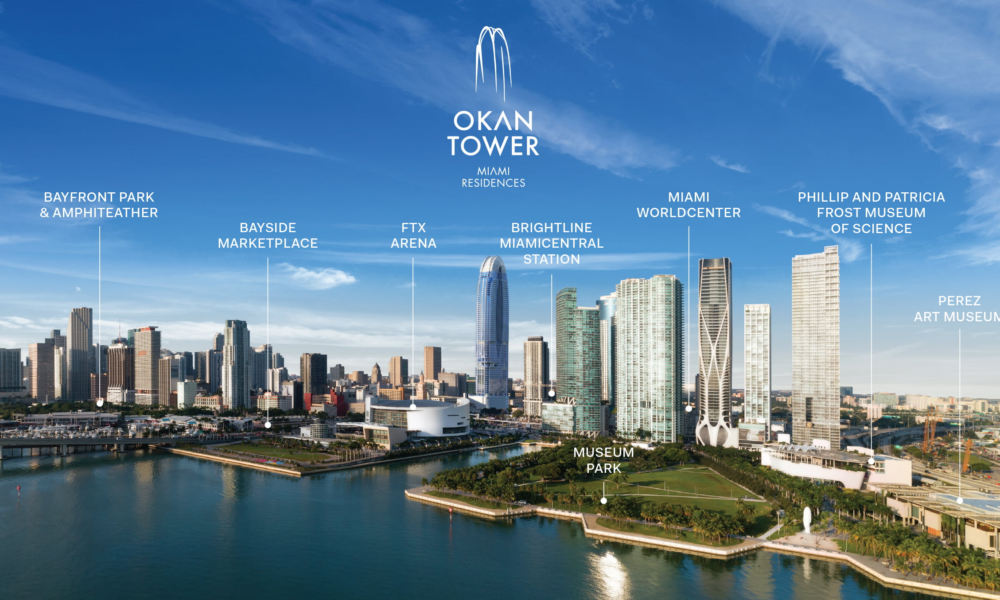
Also last year, the fund collected $3.48 million to expand development capacity by 344,585 square feet at Okan Tower, a luxury condo rising downtown at 555 N. Miami Ave. that, with the bonus floor area, will reach 70 stories.
And in 2024, a developer paid $3.67 million for 206,307 square feet of bonus floor area at 1420 S. Miami Ave., where the luxury 80-story Cipriani Residences Miami is scheduled to open next year.
With fees for added bonus area set at a fraction of market rate – at times even below the 10% bottom set by city code – the program can be lucrative for developers. Some class A+ office space, such as the Santander Bank building, is now inching above $200 per square foot.
The code, under the Public Benefits Program, permits some projects to increase dramatically beyond base zoning limits.
In certain T6 zoning districts, projects normally capped at 24 stories can rise to 48 stories through the program. In other zoning categories, 60-story projects can effectively rise without height limits if bonus requirements are met.
The resulting payments flow into the Public Benefits Trust Fund, which by code, the City Commission may allocate toward affordable housing, parks, open space and other projects. Since 2025, city records show, roughly $35.3 million of the fund has been allocated.
Among the largest expenditures is an $11.1 million allocation for an affordable housing-related project in District 3; $8 million for parks and open-space projects and $5 million for affordable housing in District 2; $5.3 million for the Carver Theater redevelopment project in District 5, and $3 million for a teacher housing and the Ludlam Trail project in District 4.
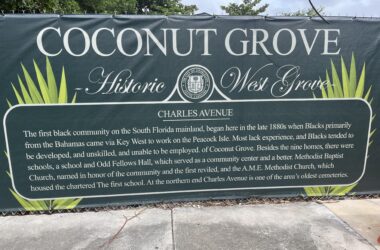
The records also show $1.15 million allocated for acquisition of land in West Grove for development of a new public park.
Read more: City Acquires Land for West Grove Park
During April’s appropriation debates, some commissioners appeared only vaguely familiar with the fund and how it operates.
“How long has this program been going on and how come I’m just finding out about it,” an irritated District 1 Commissioner Miguel Gabela demanded from city staff during a lengthy debate from the dais. “Some people were told, but we weren’t in the loop?”
King agreed. “This was created in 2009. I became elected in 2021. No one sat me down and said, ‘These are your options for funding.’ Staff doesn’t give you that information.”
The political dispute also exposed a deeper tension embedded within Miami’s development model: Who should benefit from the money generated when the city sells additional development rights?
District 2 — home to the relatively affluent neighborhoods of Coconut Grove, Brickell, downtown and Edgewater — has generated the largest share of Public Benefits Trust Fund revenue because it contains the city’s most intense concentration of high-rise development.
But during the April 9 meeting, King and other commissioners argued that each of the city’s five districts should share equally in the fund, especially in light of the greater needs for parks and housing in less-advantaged areas.
Pardo, who has said the bulk of his recent allocation will fund playground construction and refurbishment within the neighborhoods he represents, pushed back, describing the city’s pay-to-build program as a kind of Faustian bargain in which residents of District 2 — who are absorbing the brunt of the ongoing construction boom — should also be its beneficiaries.
“The residents in District 2 are fed up,” Pardo said. “They’re dealing with undue pressure — traffic that’s unbearable, construction noise waking people up at four in the morning, events that disrupt entire neighborhoods. If these developments are asking for concessions and generating public benefit money, then the communities absorbing that impact should also see the benefit.”
While Pardo’s commission colleagues acknowledged the quality-of-life impacts associated with the Public Benefits Program, there was no discussion of curbing its use.














a few things leap out: the ignorance of some of our elected officials about this slush fund. the absurd discounts the city of miami is giving to developers per square foot. why? and, finally, something i actually agree with: if district 2, or any other district for that matter, is affected by this give away, then those districts should reasonably benefit from this fund. here’s the thing… you cannot continue to add density when there are no more roads to absorb this density and there is no mass transit that people seem willing to use. miami has already proven that their so-called urban planning is a complete and utter disaster and rather than learn from cities all over america and the world what happens when you allow development with little to no regard for livability or infrastructure or mass transit, you end up with traffic that has nowhere to go and pollution your residents have to tolerate and all for a few extra bucks. great idea.
Legal vs Illegal Spot Zoning: One citizen’s view
What is Illegal Spot Zoning?
a.“Spot zoning occurs when a specific parcel… is reclassified with zoning regulations that differ significantly from surrounding properties…benefits a private owner… inconsistent with the established character of the larger, uniformly zoned area…(t)he planning commission then recommends to the city council…often challenged in court as an arbitrary or discriminatory…If the change deviates…without a clear public benefit, it may be deemed invalid.” LegalClarity Team
b. Obvious case: Property Owner gives cash to one elected official one time for one property and convinces other officials to approve upzoning.
What is Legal Spot Zoning?
a. Upzonings for specific properties have been approved by the Commission for years based on changed circumstances. Example: Developer/Owner of a busy corner wants a 12 story building where only 5 story buildings are allowed because of neighboring 2 story residences. Solution: Upzone the front to high-rise while upzoning the rear to 3 story residential (a townhouse “liner” ) to provide the Code’s required transition, while also requiring a “Public Benefit” (example, a public park improvement).
b. Transfers of Development Density (TDD) or Development Rights (TDR) means Density amendments (not always Transect category change) thereby upzoning multiple properties “that differ significantly from surrounding properties” that “ benefits a private owner.” In this case, the private owner is the entire high-rise development industry.
The BIG Debate: Is the announced Public Benefit—providing “Affordable Housing”—primarily an excuse for building more luxury high-rise condominiums where abutting neighbors do not want them?