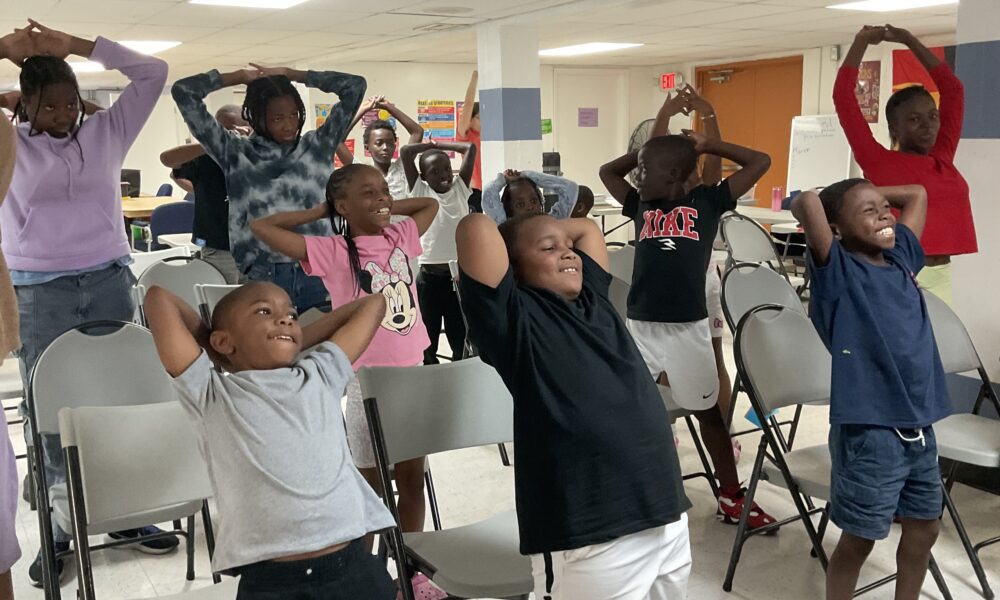


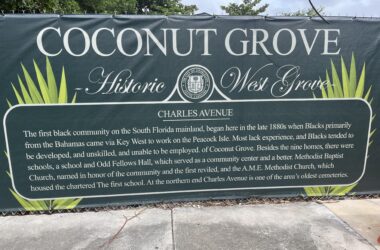

Now in its third year, the free six-week program blends education, enrichment and Black history as longtime residents navigate displacement and change.
The West Grove that Tashareayah Richards knew as a child is disappearing.
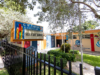
Sitting in the parking lot of Macedonia Missionary Baptist Church, the oldest Black church in Coconut Grove, Richards listed off the gathering places of her youth that no longer exist: a hair salon, a fish market, a convenience store, a Jamaican food stand, a Chinese restaurant and a laundromat.
As decades pass, Richards’ list has only grown longer. But one place remains standing: the church she and her nine siblings walked to every Sunday.
In a neighborhood contending with rapid redevelopment and displacement, Macedonia has served as an enduring pillar for Richards and many other West Grove families. Now, by enrolling her daughter in the church’s Freedom School, Richards is making sure she grows up with the same anchor to her community.
The third year of Freedom School at Macedonia, a free six-week program created in partnership with the Center for Ethics and Public Service at the University of Miami’s School of Law, came to a close on Friday.
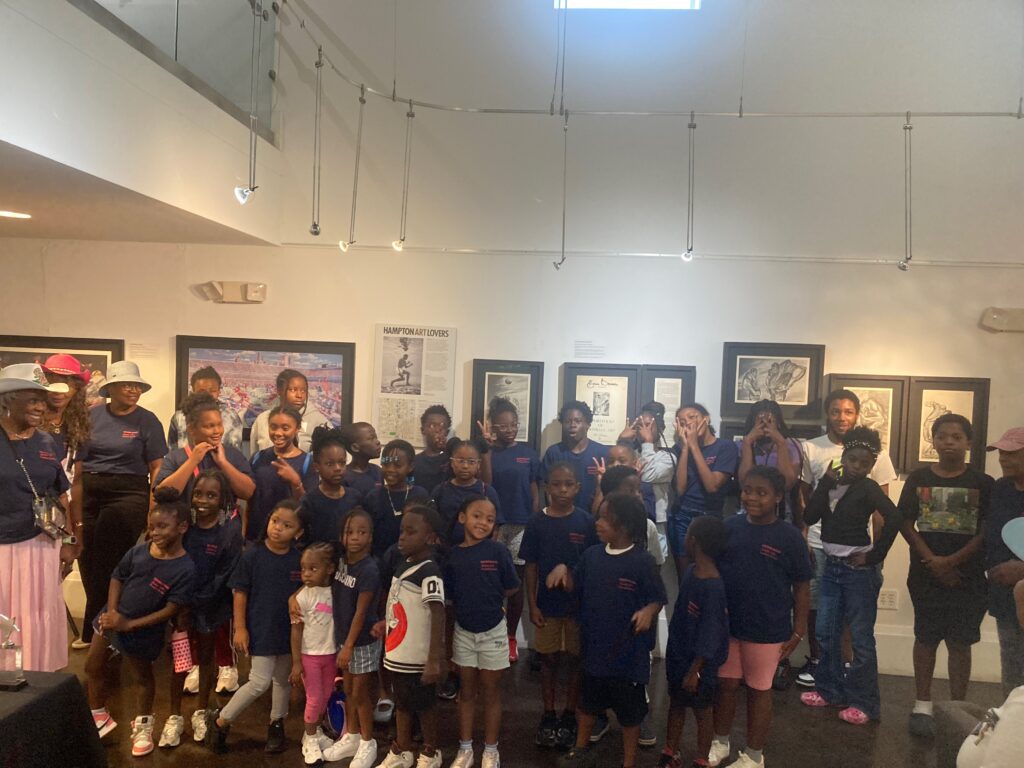
With 50 students enrolled this summer, the camp combines lessons in Black history and identity with literacy, STEAM (science, technology, engineering, arts and mathematics), music, enrichment activities and field trips — all at no cost to participating families.
Community leaders have embraced the program, saying they would like to see it expand, possibly through the support of other Black churches in the neighborhood. In the meantime, Macedonia itself has broken ground on a construction project that will add new classroom space for the existing program.
According to Kesha Merritt, senior program manager at the Center for Ethics and Public Service, new financial contributions have allowed the camp to accomplish “more than ever” this summer. This year, the Freedom School portion of the program received its first major grant: $5,000 from the Miami Dolphins Foundation.
The donation added to a pool of private contributions that cover the costs of Freedom School educational materials, field trips, reading workbooks, summer novels, a banned book library and other supplies.
The non-Freedom School elements of the program — childcare essentials like daily breakfast, lunch and snacks — are covered separately by The Children’s Trust, a Miami-Dade child services fund. Overall, Merritt said the camp spent a little more than $10,000 combined on resources and experiences for the children.
Merritt calls the free summer camp, with the depth and range of enriching activities provided by Freedom School, a “unicorn” in the West Grove.
“I don’t know if another program exists locally that provides all the things the kids at Macedonia are getting each summer,” she said.
Each week in the camp centers on a different theme in Black history, including athletics and activism, segregation and transportation and the power of education.
According to Loretta Scippio-Whittle, longtime director of Macedonia’s summer school and a former educator, Freedom School is the first time many students learn about important Black historical figures like Frederick Douglass, Harriet Tubman and Nelson Mandela.
Scippio-Whittle, who has lived in the area since the 1960s, said that passing on Black history has become especially important as the historically Black neighborhood around Macedonia continues to change.
Over the decades, Scippio-Whittle has watched rising housing costs push many of the church’s families out of the West Grove. Most of Macedonia’s membership now lives elsewhere, she said, settling in communities like Richmond Heights, South Miami, North Miami, Miami Gardens, Miami Lakes and Broward County.
Still, those families return to Macedonia every week: “It’s something about this church that they love,” she said.
The same is true for many Freedom School students, Merritt said.
“The camp itself remains a place in West Grove that the kids have roots in,” she explained. “Even those that have had to move away travel back to a place that is familiar and feels like home.”
But the commute to camp has proved challenging for some families — including two siblings who rode the Metrorail from Liberty City on their own. While 50 children were enrolled, average daily attendance hovered around 20 to 30 students. Merritt said she’s exploring ways to support students with long commutes next year.
“Unfortunately, traveling back means that they may not be able to attend each day because of the cost of transportation to and from camp,” Merritt said. “This was a sad realization this year for me.”
While Freedom School began with a primary focus on Black history, organizers say the program has evolved to address the wide array of challenges their students face beyond the classroom.
This summer, the program introduced the LifeLab, a block focused on building social-emotional awareness and practical life skills. Students practiced yoga, cooking and candle-making, explored different careers and practiced breathing techniques and positive affirmations designed to help them navigate adversity in their day-to-day lives.
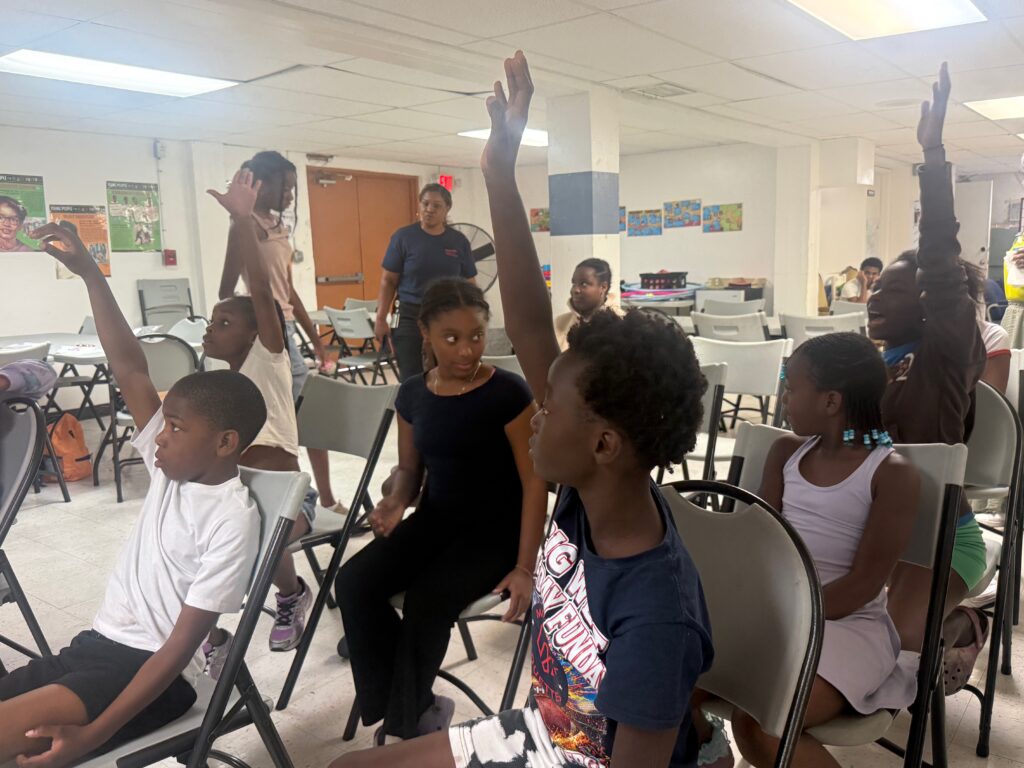
To Scippio-Whittle, those skills are just as important as the history lessons.
“I tell these kids: ‘It’s not where you’re located that makes you. It’s what’s located in you.’ And you gotta teach all of that because to me, you can’t teach Black history until you get your head all right,” she said.
While the program expanded this summer, it also had to adapt. Ongoing construction at Macedonia meant students spent all six weeks learning in the downstairs space, rather than throughout the building as in previous years.
The renovation is expected to expand what the church can offer during next year’s Freedom School, adding dedicated classrooms and a media room to the original building.
Looking ahead to the program’s fourth year, Merritt said she hopes to incorporate more technology into the curriculum — “tech is their language,” she said — while inviting members of the wider West Grove community to contribute ideas for future programming.
“I cannot wait to begin planning for next summer,” she said. “It takes a village and CEPS is so proud to be a part of that village.”
For West Grove families like Richards’, the Freedom School village keeps the youngest generation tied to their community — no matter what neighborhood they might move to.
“If I had to move somewhere, to be honest, I’d probably always come back here because it’s roots,” Richards said. “This is home. It’s like, we’re all we got here.”
Sinclair Holian is a Spotlight reporter and Report for America corps member covering gentrification and development in Coconut Grove. She joins us through our partnership with Report for America, a national organization that places journalists in local newsrooms across the United States.