

Opponents of The WELL Coconut Grove are seeking an emergency court order to block city permits, arguing a 2023 zoning change that created a short-lived loophole to allow taller buildings in some part of the Grove was unlawfully adopted.
An emergency motion filed early this week asks a Miami-Dade Circuit Court judge to block the City of Miami from issuing any building permits for The WELL Coconut Grove and other projects that rely on a disputed 2023 zoning change that briefly allowed taller buildings in parts of Coconut Grove.
The request for a temporary injunction escalates a lawsuit originally filed last August and amended last month, which challenges the legality of the city’s so-called bonus-height ordinance.
The lawsuit’s plaintiffs argue the law was invalid from the start because it was approved with undisclosed last-minute changes — in possible violation of Florida’s public notice requirements — that stripped Coconut Grove of height-limit protections included in the publicly-noticed version.
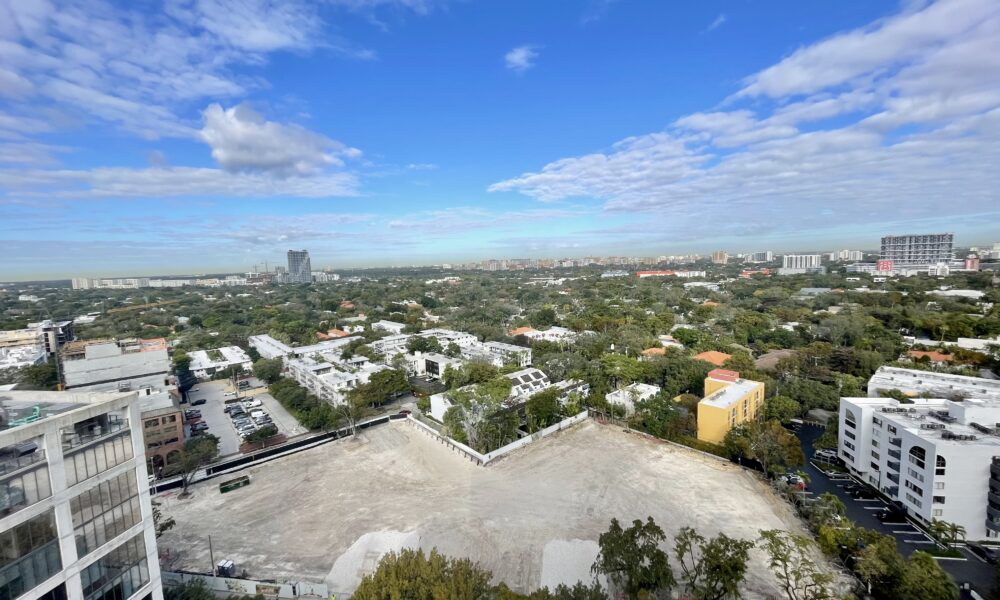
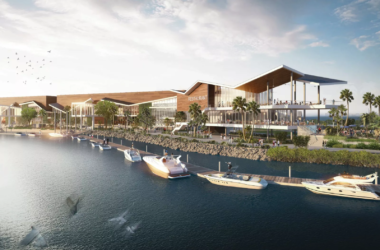
At the center of the dispute is The WELL Coconut Grove, an eight-story luxury residential project planned for Tigertail Avenue in Center Grove. The development is one of several projects the city has said qualified for three stories of additional height before the ordinance was repealed last June.
Bringing the suit is Grove Opposing Out-of-Control Development Inc., a nonprofit corporation formed last summer, according to state records.
David Winker, an attorney representing the plaintiffs, said the group’s members have asked to remain anonymous. In corporate filings, Winker is listed as the registered agent but no officers are named.
The injunction request, Winker told the Spotlight, is intended to force the city to follow its own zoning laws while the case is pending.
“This is really a continuation of residents trying to get the city to follow its own rules,” Winker said. “The [zoning change] was clearly a mistake, and the city revoked it as soon as it was brought to their attention.”
The injunction request seeks to bar the city from issuing any permits allowing buildings to access the “bonus height” within Coconut Grove while the court considers whether the 2023 ordinance was lawfully adopted and whether any vested rights exist.
Site work is currently underway at The WELL but a building permit has yet to be issued, records show.
“Developers are trying to take advantage of [the revoked law],” Winker said. “Residents are having to pay a lawyer just to get the city to do the right thing — which they acknowledged was a mistake, and that none of this should have happened.”
In a statement, Terra Group attorney Iris Escarra said construction of The WELL is proceeding.
“Development of The WELL Coconut Grove is ahead of schedule and moving full speed ahead, supported by strong sales and $410 million in construction financing,” Escarra wrote. “Once completed, The WELL Coconut Grove will be another transformational community delivered by Terra in Coconut Grove. While Terra is not a named party in the complaint, the record shows all zoning entitlement requirements were met prior to the start of construction.”
City officials have declined to comment on the pending litigation.
The dispute over The WELL traces back to a September 2023 zoning amendment approved by the Miami City Commission that created a new bonus height allowance in certain zoning districts, increasing maximum building height from five stories to eight for qualifying projects.
But as the Spotlight reported last year, the amendment was approved using a last-minute “substitution ordinance” that materially altered its scope moments prior to the commission vote authorizing it.
Published agenda materials circulated ahead of the Sept. 28, 2023 commission meeting stated that the bonus height provision would not apply within Coconut Grove’s Neighborhood Conservation Districts — zoning overlays intended to preserve neighborhood scale and character.
But city records show that the ordinance, as approved by commissioners, contained a key change — never publicly noticed — that opened much of Coconut Grove’s commercial corridors to taller buildings without any additional public notice.
The ordinance passed unanimously, without discussion, as part of a broader package of zoning changes.
Read More: The WELL: How 5 Became 8
In a series of reports, the Spotlight has revealed how Miami commissioners routinely vote on legislation that differs — sometimes significantly — from versions posted for public review, raising questions about transparency and compliance with Florida’s public notice law. At one meeting last summer alone, four zoning items contained undisclosed revisions prior to final approval.
Read More: City Measures Often Approved with Undisclosed Changes
Last June, city officials repealed the controversial 2023 bonus height ordinance, acknowledging growing concerns about its adoption. But the city has maintained that several projects, including The WELL, were entitled to the bonus height, having completed their zoning applications prior to the law’s repeal.
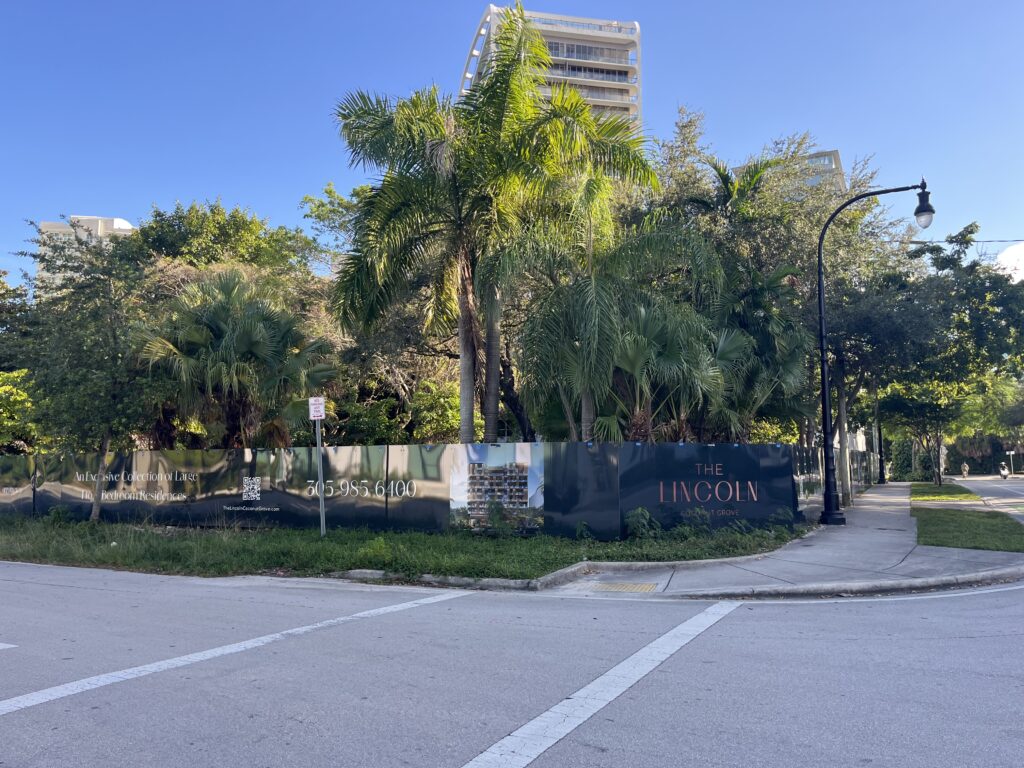
Other projects deemed to be eligible for the bonus height: The Lincoln, at SW 27th Avenue and Darwin Street; The Lennox, at SW 27th Avenue and Day Avenue; and an unnamed project within the Ritz-Carlton Coconut Grove’s property at SW 27th Avenue and Tigertail Avenue.
In addition to challenging the legitimacy of the 2023 ordinance, the lawsuit disputes the city’s assertion that it lacks the administrative authority to deny the bonus height to projects that requested it prior to the ordinance’s revocation.
Such entitlement, Winker argues, arises under Florida law only when a developer has obtained all required building permits and made substantial, good-faith expenditures in reliance on them.
Critics of The WELL also point out that the stated purpose of the bonus height ordinance — promoting higher housing density in proximity to transit hubs, like Metrorail – is undercut by the project’s target demographic: high-end buyers unlikely to swap their cars for public transit. Records show that The WELL did not pursue transit-linked parking reductions available to it under city rules.
Preconstruction condo prices range from roughly $1.4 million to more than $8 million.
Terra Group is forecasting completion of the project in early 2028.














Thank you to the people who have filed this lawsuit—requiring our D2 representatives to follow the law which is consistently undermined in the Grove to fill Developers pockets & using rationale that makes no sense nor applicable to expensive, luxury condos: “Records show that The WELL did NOT pursue transit-linked parking reductions available to it under city rules.“
This is another classic example of how the City of Miami bends over to make developers happy.
“Substitution memos” are a dishonest tactic the City uses to hide legislation language changes from public scrutiny, keeping those changes off the official, pre-published agenda.
Why does our City Commission allow ANY substitution memos? Shouldn’t they be looking out for the public’s best interest instead of developer profits?
It’s another reason why I don’t trust the City of Miami, and nor should any caring citizen.
It will be quite interesting to see how the City responds to this lawsuit. How can they possibly defend this dishonesty, then look themselves in the mirror or sleep at night?
Elvis Cruz, Morningside
To the plaintiffs in this lawsuit.
You do not stand alone.
You have an army of supporters standing in solidarity beside you.
Cases that have held that zoning ordinances that violate the 10-day advance notice requirement in Florida Statute 166.041(3)(a) are null and void are shown below. Section 166.041(3)(a) reads:
“… a proposed ordinance…shall at least 10 days prior to adoption, be noticed in a newspaper of general circulation in the municipality. The notice of proposed enactment shall state the date, time and place of the meeting; the title or titles of proposed ordinances; and the place or places within the municipality where such proposed ordinances may be inspected by the public. The notice shall also advise that interested parties may appear at the
meeting and be heard with respect to the proposed ordinance.
David v. City of Dunedin, 473 So. 2d, 304, 306 (Fla. 2d DCA 1985)
Coleman v. City of Key West, 807 So. 2d, 84, 85 ( Fla. 3d 2001)
HealthSouth Doctors’ Hosp., Inc. v. Hartnett, 622 So. 2d 146 (Fla. 3d DCA 1993)
Fountain v. City of Jacksonville, 447 So. 2d. 353 (Fla. 1st DCA 1984)
Anderson v. City of St. Pete. Beach, 161 So. 3d 548. (Fla. App. 2014)
Florida Attorney General’s Advisory Opinion (October 28, 1982)
AGO 82-93: “In sum, unless or until legislatively or judicially determined otherwise, it is my opinion that if any substantial or material changes or amendments are made during the process of enacting a municipal ordinance, the enactment process mandated by s. 166.041(3)(a) must begin anew with full compliance with the reading and notice requirements contained therein.”
Jim Smith
Attorney General
I hope Miami doesn’t get the chance to “Brickellize” the Grove. Unmanaged growth is an ugly sight to see. Wynwood used to be a great place to hang now it’s unrecognizable. The Grove is a treasure!
i have 3 words to describe this whole debacle: well well well.
David Winker, Esq. filed the following documents in the Grove Opposing Out-Of-Control Development, Inc. v. City of Miami case:
1. 8/6/25: Declaratory Judgment
2. 1/8/26: Amended Complaint for Declaratory and Injunctive Relief
3. 2/3/26: Plaintiffs’ Emergency Motion for Temporary Injunction
None of the above filings cited HealthSouth Doctors’ Hosp., Inc., 622 So. 2d146 (Fla. 3d DCA 1993, which is directly on point regarding the 10-day advance notice for an Ordinance required by Section 166.041(3)(a) of the Florida Statutes. The case indicated: “In the instant case, there was no newspaper publication of notice of the City Commission meeting which adoption of the ordinance took place. Accordingly, the ordinance is null and void because the City failed to follow the mandatory notice requirements of Section
166.041(3)(a). See David v. City of Dunedin, 473 So. 2d 304 (Fla. 2d DCA 1885); Fountain v. City of Jacksonville, 447 So. 2d 353 (Fla. 2d DCA 1984.)
The 2023 Bonus Height Creation Ordinance adopted by the City Commission on 9/28/23 included substituted language for which the 10-day advance notice was not published, in violation of Section 166.041(3)(a).