

Coconut Grove’s signature celebration of Bahamian culture returns this week, but organizers say growing attendance has not solved a lingering problem: finding the sponsors needed to secure the event’s future and reduce its reliance on city funding.
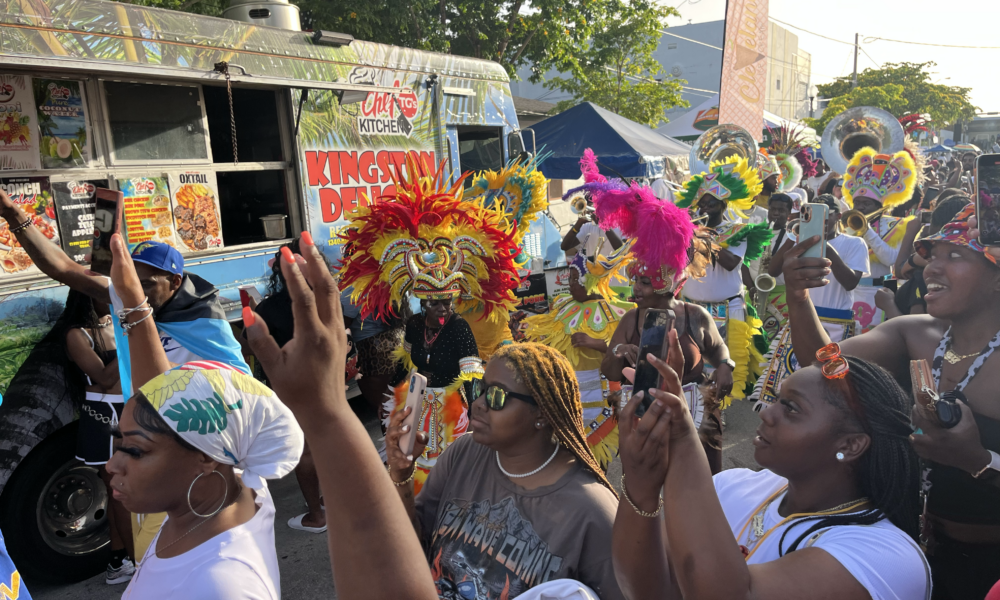
With the beat of Junkanoo drums echoing down Grand Avenue and revelers in bright Carnival costumes filling the streets, the Miami Goombay Festival returns to Coconut Grove this week with the color, sound and energy that have long defined the neighborhood’s celebration of Bahamian culture.
But as the three-day event enters its fifth year since organizers revived it in 2022, organizers say the festival’s long-term future depends on solving a persistent challenge: attracting enough private sponsorships to reduce its reliance on city funding and keep pace with rising costs.
Organizers say attendance and community support have continued to grow since Goombay’s return. Yet securing corporate sponsors has proven more difficult.
“Right now, we just have the city’s support,” Goombay Festival Planning Committee Chairwoman vonCarol Kinchens-Williams told the Spotlight. “Some committee members have reached out to potential sponsors but have not been able to get one because they can’t write off the sponsorship as a charitable donation.”
The festival, which celebrates the Bahamian roots of Coconut Grove’s historic Little Bahamas community, has largely relied on public support from the City of Miami to stay afloat. This year, the city allocated $143,000 from its special events budget to support Goombay, according to city records. Last year’s allocation was $150,000.
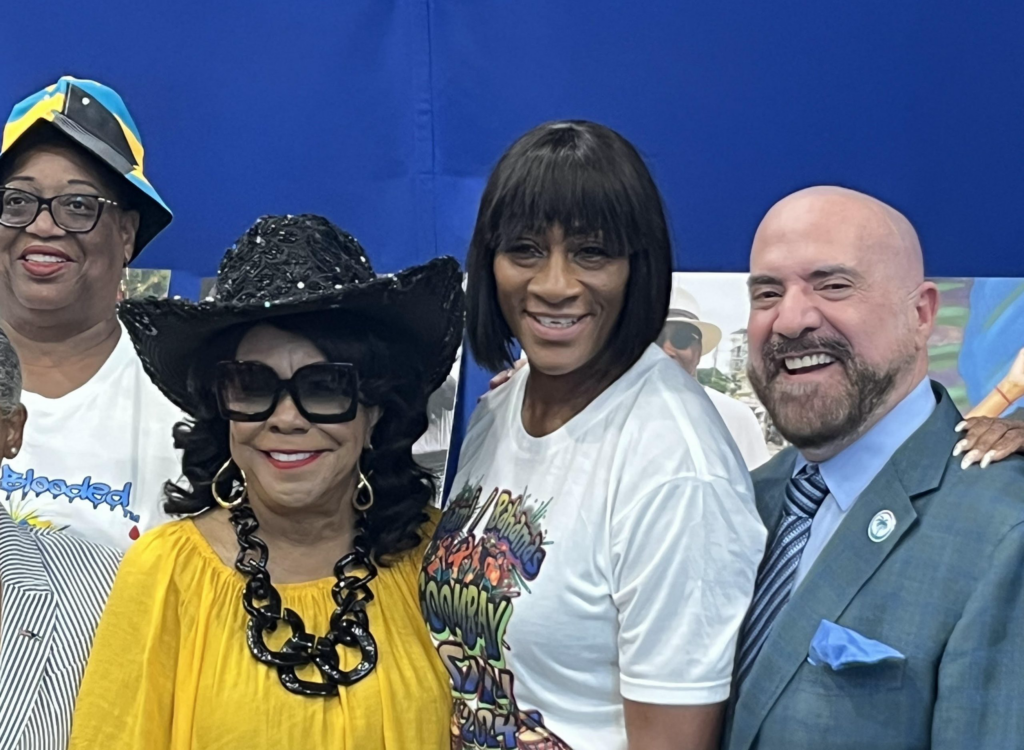
By comparison, Carnival in Little Haiti received $480,000 this year and $500,000 last year, while Calle Ocho Festival was allotted $95,000 this year and $100,000 last year.
Organizers had hoped to supplement the city’s contribution with private sponsors willing to contribute between $1,000 and $10,000 each. So far, however, none have been secured.
Still, Kinchens-Williams said the festival will move forward with a combination of city funding, vendor fees and volunteer labor. At the same time, organizers are already looking beyond this year’s event and pursuing changes they hope will put Goombay on a more sustainable financial footing.
Chief among those efforts is the creation of a 501(c)(3) nonprofit organization to make the festival more attractive to sponsors and donors by allowing contributions to be tax deductible. Currently, the planning committee operates as a nonprofit but has no formal structure as one.
“It is a matter of obtaining sponsors for an event of three days that is really costly,” Kinchens-Williams said. “I am thankful the City of Miami gives us money for this.”
She said Goombay enjoyed sponsorship support from its founding in the 1970s until it went (mostly) dormant in 2014. Since its revival, however, fundraising has become more difficult as inflation and other economic pressures have increased costs.
Kinchens-Williams said organizers are confident sponsorships will return as awareness of the festival’s revival grows and the nonprofit structure is put in place.
“We have enough coverage that Goombay is back and we should be able to pull some of those sponsors back in,” she said.
For now, the bulk of the festival’s funding comes from the city’s special events budget, along with additional support from Miami’s District 2 Commission office.
In 2022 and 2023, the city waived $37,196 and $47,381, respectively, in police, fire and sanitation fees tied to the festival. The District 2 office used its discretionary funds to cover roughly $100,000 in police services in 2024 and 2025 collectively, city records show.
District 2 Commissioner Damien Pardo said in a statement that his office remains committed to keeping the festival strong.
“Our office is fully aligned with the committee’s vision and plans for this year’s festival and remains committed to ensuring the continued success of one of Miami’s most historic and culturally significant events,” Pardo said.
Pardo said the office’s support extends beyond one line item in the city budget.
“Our support for Goombay extends far beyond a budget allocation,” he said. “We have consistently partnered with organizers on logistics, permitting, public safety, operational planning, and interagency coordination because we recognize the festival’s importance to the character and identity of the Little Bahamas community, as well as to the cultural heritage of Coconut Grove and the City of Miami.”
While Goombay organizers have struggled to line up sponsorships, it does have one reliable source of revenue: vendors.
The committee has signed dozens for this year’s festival, with fees ranging from $600 for a table to $1,800 for food trucks. Those payments help cover costs such as restrooms, carts and some entertainment expenses, Kinchens-Williams said.
She said the vendor response has been strong enough that the festival is close to full.
“I was still getting calls from vendors through the cut-off date,” she said. “Word of mouth has been good this year. I have up to 50 vendors. We can’t take any more at this point.”
That level of interest, she said, is one reason the committee believes the festival has real staying power, even if the funding model is top-heavy with government largess.
Planning committee members stress that Goombay is a labor of love more than an official production. Nobody on the planning committee gets paid.
“We do it from the heart,” Kinchens-Williams said, a 25-year veteran of Miami City Hall. “This is my fourth year since retirement from the City of Miami. I am still hanging in there. People don’t know about the time and effort that goes into this.”
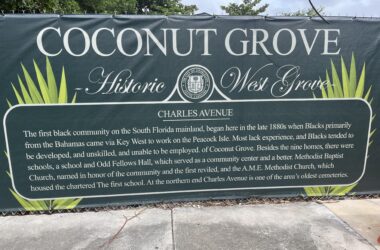
The Goombay Festival began in 1977 with support from the Bahamian government as a celebration of the island heritage that helped shape Coconut Grove. Visitors could browse Bahamian crafts, sample traditional dishes such as pigeon peas and rice, guava duff and conch fritters, and enjoy performances by the Royal Bahamas Police Force Band, Junkanoo groups and Bahamian singers and musicians.
At its height in the 1980s and 1990s, Goombay Festival attracted hundreds of thousands of spectators, organizers say. But attendance and sponsorship support waned in the years that followed, and by 2014 the festival had effectively run its course, lingering only through occasional smaller, unofficial gatherings. The event returned in 2022 after the City of Miami committed funding.
Kinchens-Williams said planning begins almost immediately after the previous year’s event ends. About 20 volunteers, many of them from Coconut Grove, oversee the operation. City departments also chip in.
“The city park departments help with setting things up. Solid waste makes sure the trash cans are out,” she said. “Absolutely, it’s a community effort.”
For some longtime Grove residents, the return of Goombay has been as much about restoring a sense of place and cultural identity as it has been about reviving a festival.
“I have been on the [planning] committee three years and I am a lifelong Grove resident,” said Joyce Sands. “My friend’s parents started Goombay years ago. We used to help out way back in 1977. We have been volunteering with them on and off for years.”
Sands said the festival had lost momentum before the pandemic, then struggled through its first attempt at a comeback, at West Grove’s Virrick Park, in 2022. Once it returned to Grand Avenue, she said, the event began to resemble its former self.
Like other organizers, Sands said the festival’s long-term sustainability may hinge on obtaining nonprofit status, opening the door to larger corporate sponsors and donors.
“We gain more attention and get more money allocated to do things,” Sands told the Spotlight. “That is how it used to prosper. We had Budweiser, Coca-Cola, major companies and stuff.”
Like others on the committee, Sands said the rising costs of public safety and compliance have changed the math around putting on a festival of this size.
“It is getting bigger and bigger,” she said. “A lot of the budget goes to public safety. The costs have gone up tremendously.”
Kinchens-Williams said organizers are already discussing ways to reduce expenses, including the possibility of shortening the festival in future years from three days to two.
“We are open to making changes for next year to kind of come down on the budget,” she said.
An admission charge — a strategy the organizers of the Coconut Grove Arts Festival adopted years ago to help offset rising costs and manage growing attendance — is decidedly off the table, Kinchens-Williams said.
The committee is open to other changes, in both location and format, if construction on Grand Avenue poses challenges for future editions of the event. “We are looking at other options to make sure the festival stays in place — and to do something to cut down on the city’s costs.” Kinchens-Williams said.
Beau Leonard, a retired Miami police officer and planning committee member, said Goombay is about more than music, food and entertainment. For many longtime residents, he said, it serves as one of the last public expressions of Coconut Grove’s Bahamian and African American heritage.
“We really worked hard to bring something back to Coconut Grove that is a real strength of the community,” Leonard said. “The African American community, it’s been shrinking.”
Leonard believes the festival holds special significance because of its historic ties to the Bahamas, relationships that continue today through support from Bahamian officials and tourism representatives.
For Joyce Sands, who has volunteered with Goombay on and off since its earliest years, the festival’s resurgence represents something larger than the return of a weekend event.
“It is coming together and we are going to pull it through,” Sands said. “I just hope it gets back to as big and grand as it used to be.”
Kinchens-Williams said that goal — preserving a tradition that has connected generations of Grove residents for nearly 50 years — is what keeps volunteers coming back year after year.
“It has been learning as we go,” she said. “But at the end of the day, it always falls in place and is always a success.”
Miami Goombay Festival
Three days of food, crafts, Junkanoo parades and live music to celebrate Coconut Grove’s Bahamian Heritage.
June 5, 2026 – June 7, 2026
Junkanoo Jump-Off:
Friday 6 p.m. to 10 p.m.
Armbrister Park, 400 Grand Avenue Coconut Grove
2026 Miami Bahamas Goombay Festival
Saturday 11 a.m. to 8 p.m.
Sunday 11 a.m. to 8 p.m.
Grand Avenue (Douglas Road to Elizabeth Street)
Grand Avenue will be closed beginning on June 7 at 6:00 a.m. and reopen on June 8 at 11:30 p.m.
Admission is free.