

With three new citizen advisory groups created this year, the city now oversees more than 50 committees, boards, panels and semiautonomous agencies — varying widely in autonomy, viability and relevance — leading some to question how committed City Hall truly is to meaningful citizen oversight.
Last month, when Miami Mayor Eileen Higgins made her pitch to skeptical city commissioners to back a proposed $450 million bond for new police and fire facilities, she pointed to a resident survey, deteriorating conditions inside city buildings, and safety risks to city residents.
Missing from the sales pitch, however, was an endorsement from the citizen advisory committee whose very existence is tied to weighing in on such matters: the City of Miami Finance Committee, whose primary responsibility is to review and make recommendations regarding the issuance and management of the city’s debt obligations.
So why the silence?
The committee wasn’t asked to weigh in.
“When you look at committees, some will be more important than other ones, and some don’t have much influence,” said Eric Zichella, a government relations consultant and longstanding chairman of the city’s citizen-led Finance Committee. “Could [we] have more responsibilities and be more engaged? Maybe. But it’s up to city commissioners if they want us to have more of a role.”
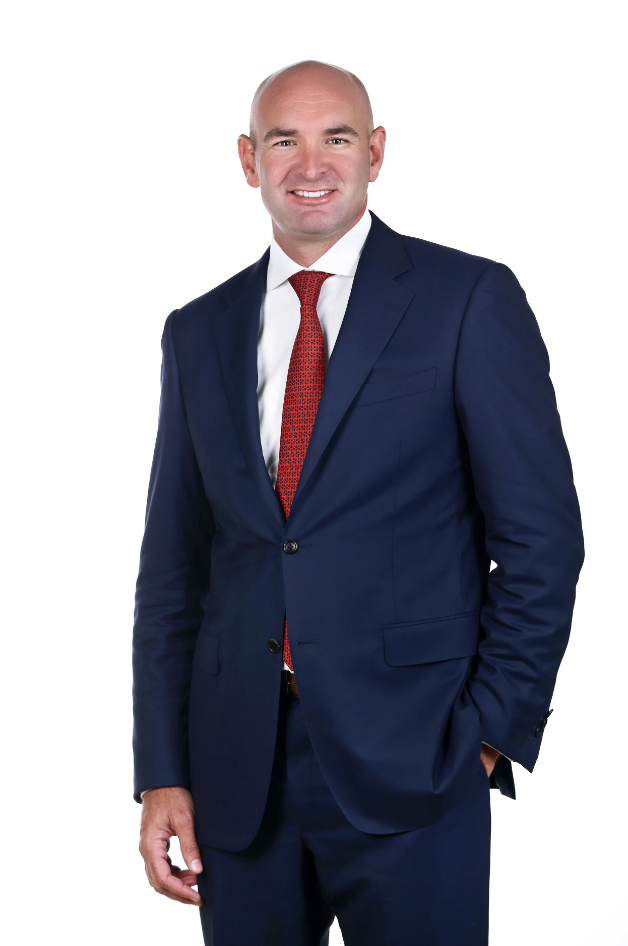
The absence of any meaningful role for Zichella and his Finance Committee colleagues in the ongoing debate over Mayor Eileen Higgins’ proposed $450 million bond offers a telling glimpse into the limited influence wielded by many of Miami’s more than 50 citizen advisory boards — a sprawling network of groups that, on paper, are charged with providing public oversight and policy guidance, but in practice are often sidelined, underused or left dormant altogether.
Take, for instance, the Audit Advisory Committee, which is charged with reviewing the annual audit of city accounts, as well as internal audit reports where fraud and criminal conduct may be involved. The five-member board, which currently has two vacancies, is only required to meet once a year. It hasn’t met since 2017, according to city records obtained by the Spotlight.
And there’s the 11-member Affordable Housing Advisory Committee, which is responsible for reviewing and recommending changes to the city’s affordable housing policies, procedures, ordinances and land development regulations.
The committee only holds meetings on an “as-needed” basis, city records show, at the sole discretion of the director of the city’s Department of Housing and Community Development. The committee has yet to meet this year. In 2025 it met twice for a total of 19 minutes.
The 13-member Housing and Commercial Loan Committee — which is required to meet monthly except in August — is faring marginally better. The group met four times in 2024 and seven times in 2025. This year, it failed to convene in February and April, but at its May meeting discussed staff recommendations for the allocation of city affordable housing funds to several real estate projects.
Some of the boards and committees listed on the City of Miami’s Boards and Committees web portal — including the Code Compliance Task Force, the Miami 21 Report Ad Hoc Task Force and the Overtown Advisory Board — appear effectively defunct.
Others, such as the Commission on the Status of Women, the Health Facilities Authority Board, the Miami Technology Council and the Mayor’s Council on Global Competitiveness, among others, show neither past nor future meetings on the city’s public calendar.
Meanwhile, the Finance Committee hasn’t met since Feb. 2. In March, city commissioners voted to merge it with the Audit Advisory Committee, a move District 1 Commissioner Miguel Gabela, the item’s sponsor, said was intended to address overlapping functions and ongoing difficulties recruiting residents willing to serve.
Zichella, the Finance Committee chair, is unconvinced.
“I hope that the city will provide the appropriate resources to the committee that allows it to carry out its duty in a way that will strengthen the city’s financial standing over the long term,” Zichella said. “If [city commissioners] want the committee to consider items instead of just reviewing them, then they should be prepared for the committee to take positions which may be different from staff or the city commission.”
Appointed to the Finance Committee in 2019 by then-District 3 Commissioner Joe Carollo, Zichella said the board regularly held monthly meetings during his first years as a member. That’s changed dramatically.
“It’s at the discretion of the administration to determine if they have any issues they want to bring to the Finance Committee,” Zichella said. “This particular advisory board doesn’t have actual power when you look at it.”
The last time a city elected official sought the Finance Committee’s input was in 2022, city records show, when the late District 1 Commissioner Manolo Reyes requested its opinion on the lease agreement between the city and Miami Freedom Park, the joint venture led by billionaire Jorge Mas and soccer star David Beckham to build a soccer stadium and mixed-use project on the city’s Melreese golf course.
The Finance Committee — which presently has three vacancies among its seven members — could play a larger role in scrutinizing the city’s day-to-day business dealings, including reviewing real estate transactions involving city-owned land and providing recommendations to city staff and elected officials, Zichella said.
To be sure, some city boards do wield a degree of built-in authority, including the Planning, Zoning and Appeals Board the and Urban Development Review Board, which can recommend approval or denial of real estate projects, zoning changes and other administrative matters.
A handful of semiautonomous agencies — including the Coconut Grove Business Improvement District, the Downtown Development Authority and the Bayfront Park Management Trust — maintain independent budgets and can award contracts for city-funded projects and services.
And yet, despite that inherent authority, not all function as true citizen advisory groups. The city’s three community redevelopment agencies, along with the semiautonomous Virginia Key Beach Park Trust, list only city commissioners themselves as board members.
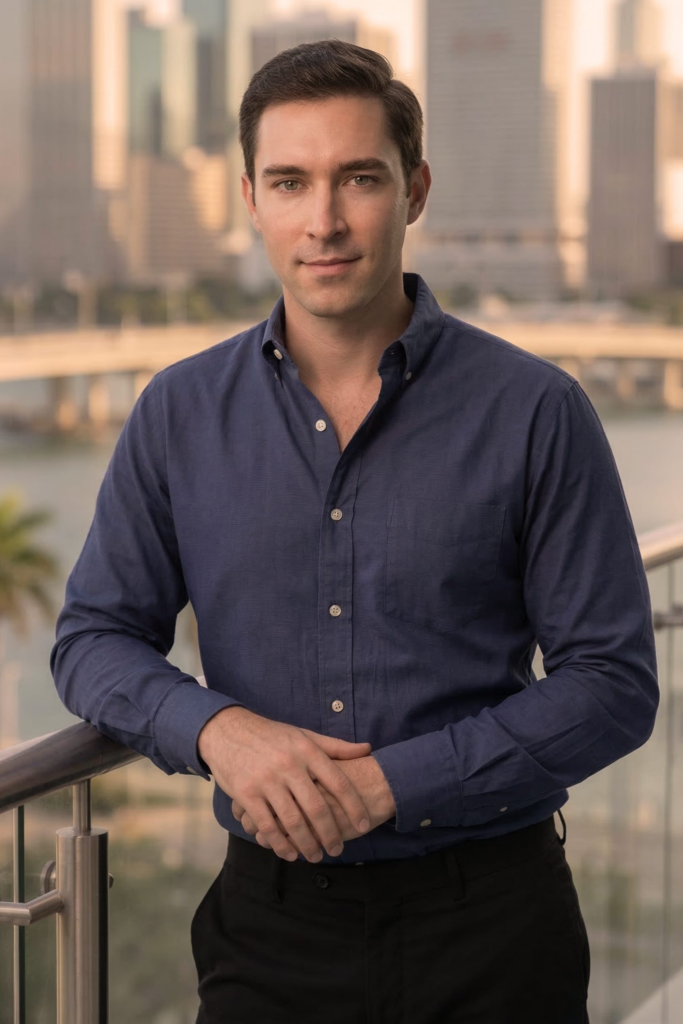
Most city boards serve a purely advisory function, offering recommendations on proposed legislation and policy changes. But even that limited role is often subject to the discretion of city administrators, as meetings typically must be authorized by the city manager or department heads, who can also largely control what gets placed on the agenda for discussion.
City control of board agendas and discussions can sometimes leave members questioning their role.
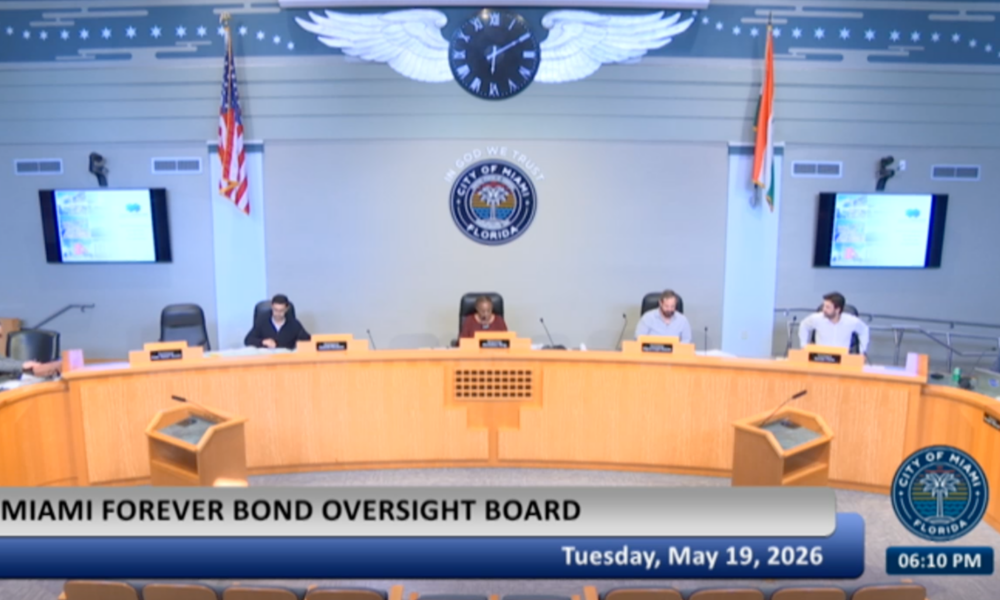
Coconut Grove resident Ruth Ewing sits on the Miami Forever Bond Program Citizens’ Oversight Board, which — despite its name — does little to provide actual “oversight” of the $400 million bond approved by voters in 2017 for climate resilience, affordable housing and other projects.
While the board is charged with monitoring bond expenditures, it has no authority to investigate potential waste or abuse, nor does it play any meaningful role in determining spending priorities — or receive much guidance from elected officials about what those priorities should be.
“We are the voice of our districts with respect to various projects that our communities want,” she said. “But we don’t have the same conversation with the district commissioner. I think it could be more cooperative where you work with your commissioner.”
That struggle for relevance within Miami’s citizen boards and committees is not new.
Upper Eastside resident Eileen Bottari served two terms on the now-defunct Parks and Recreation Advisory Board — first in the early 2000s, and again from 2010 until the board was abolished in 2019 — after what she described as a steady erosion of its responsibilities by city staff and commissioners.
“When it originally started, the parks committee had a lot of power,” Bottari said. “Then all of a sudden [staff] was showing us stuff after it was approved by the city commission. We didn’t have the power to change anything.”
Toward the end of the board’s existence, Bottari said, committee members resorted to filing public records requests — citing Florida’s open-records laws — to obtain documents that city staff refused to provide voluntarily.
With morale low, board members drifted away. “I stayed on so they could have a quorum,” she said. “It all adds up to an ineffective board. I think they wanted it that way.”
One board that appears to have found its footing within the shifting sands of Miami’s administrative politics is the Climate Resilience Committee, which was formed in 2019 through a merger of the Sea Level Rise Committee and the Waterfront Advisory Board.
The committee is charged with recommending code and policy changes aimed at helping the city and its residents prepare for and adapt to the growing risks posed by climate change. It also provides input, when asked, on proposed uses of city-owned waterfront land.
To remain relevant, committee chairman Aaron DeMayo told the Spotlight, the board has shifted from merely identifying problems to actively developing solutions. The committee routinely seeks guidance from industry experts and analyzes best practices being adopted by cities across the United States.
DeMayo points to a recommendation approved by the city commission in 2023 that doubled the amount of rooftop space commercial landlords can devote to amenities such as gyms, lounges and restaurants — from 20% to 40% under city code — provided the additional area incorporates a “green roof” with vegetation and landscaping designed to cool buildings and manage stormwater runoff.
But some initiatives have fallen flat with commissioners, including recommendations to improve the city’s recycling program, phase out gas-powered leaf blowers, and strengthen tree-planting practices.
The key, DeMayo added, is taking a proactive approach to committee service despite the inherent pitfalls and occasional aggravations.
“It’s more than just showing up to our monthly meetings,” he said. “It requires time beyond that to prepare, research, draft proposals and find the right presenters.”
Despite the challenges of both role and relevance, the city continues to create new citizen advisory groups.
Earlier this month, the City Commission approved the creation of the Accessibility Advisory Board, a seven-member panel tasked with advising the city on improving accessibility in public infrastructure, capital projects and city services for residents with disabilities. The board was sponsored by District 4 Commissioner Ralph Rosado.
Its creation follows the commission’s approval in March of two other Rosado-backed advisory groups: the Interfaith Advisory Council and the Education Advisory Board. Together, the three new committees will require city officials to recruit 21 residents willing to serve in unpaid advisory roles at a time when many existing boards are struggling to fill vacancies, according to city records.
The challenge is already apparent.
According to the city’s advisory board portal, only Gabela has filled his allotted seats on the interfaith council, while only District 3 Commissioner Rolando Escalona has named a member to the education board.
Rosado, who sponsored both committees, had not submitted his own nominations. He did not respond to the Spotlight’s requests for comment.
(David Villano contributed to this report.)














I hope the new Tree Board doesn’t suffer the same fate. To those serving – it’s up to you to make it work. The denuding of Miami is in overdrive.
To Chris and Ian, please get this going ASAP. It is a five alarm fire. This cannot wait. Push the city to issue a moratorium on any further clear cutting of lots. AND NO SPECIMEN TREES.