

After an April hearing at the City’s Planning, Zoning and Appeals Board was canceled for lack of a quorum, Miami officials are bringing back a controversial proposal that would allow taller and larger development near bike trails and pedestrian corridors — but with a significantly larger footprint than originally proposed.
A controversial zoning proposal that would allow developers to build vastly taller and larger projects near bike and pedestrian corridors is set to return to Miami’s Planning, Zoning and Appeals Board on Wednesday — this time in a substantially expanded form.
The measure, first scheduled for review on April 1 before a PZAB meeting was canceled for lack of a quorum, would create a new “Greenway Public Benefits Program” allowing developers to obtain bonus height and floor area in exchange for cash contributions, trail construction or other public improvements.
When the proposal was first unveiled earlier this year, eligibility was limited to properties within a quarter mile of designated “greenways.” The revised version now doubles that radius to one-half mile, potentially bringing a far larger number of properties into the program.
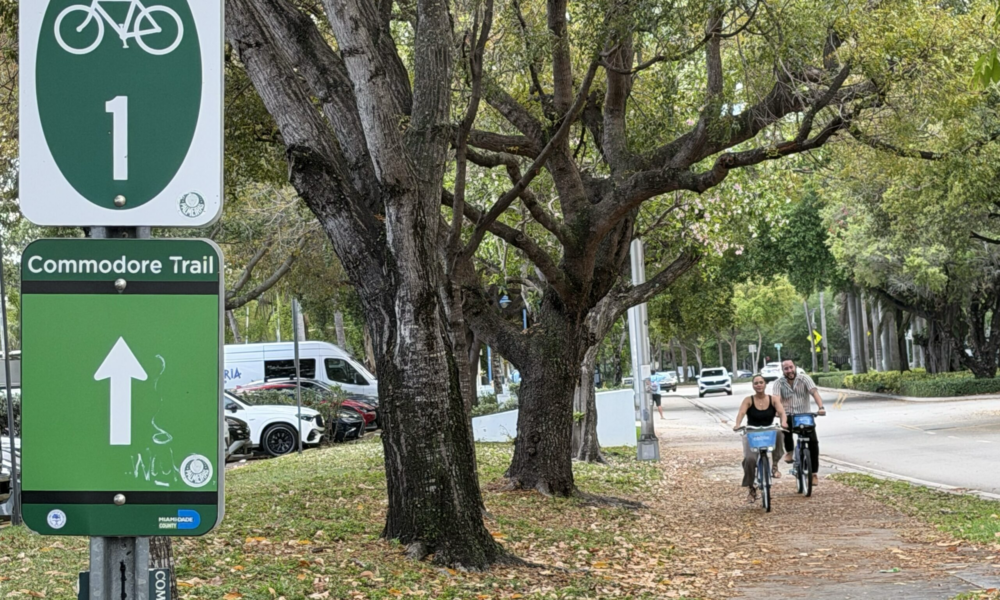
In Coconut Grove, the qualifying greenways named in the ordinance include the Commodore Trail, which runs the length of the neighborhood, and the Underline, which follows the Metrorail corridor along U.S. 1.
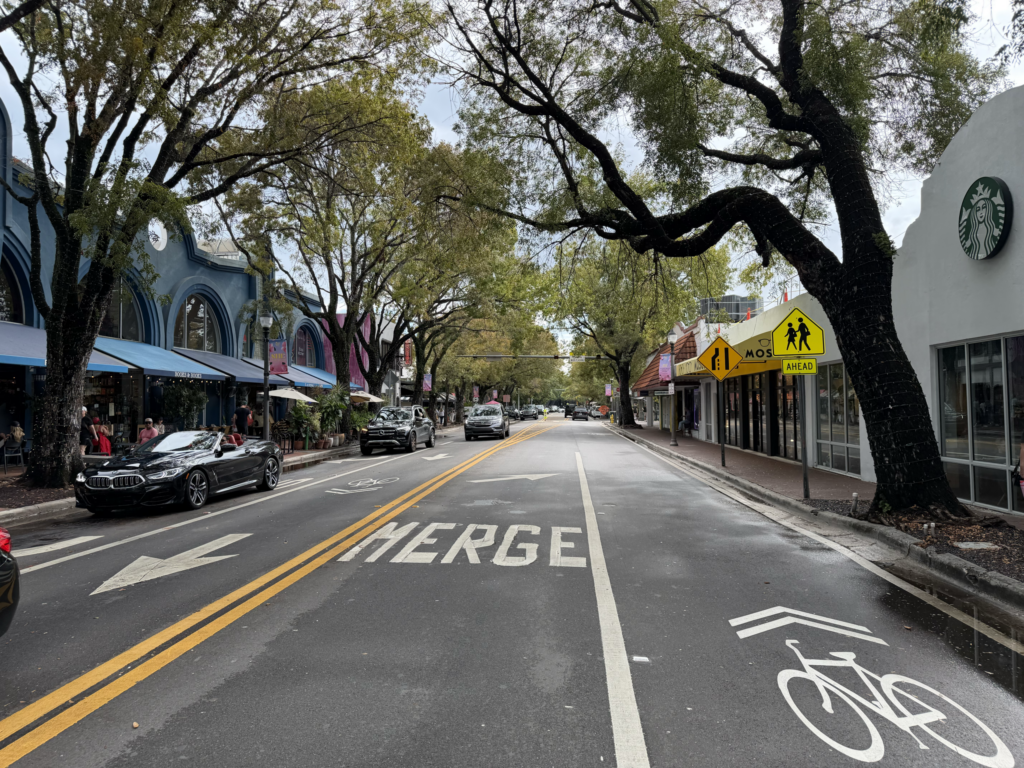
Other expressly identified greenways are the Ludlam Trail, Miami River Greenway, Underdeck and Flagler Trail.
Only areas zoned for five-story development and above would qualify for the program. Single-family neighborhoods would be exempt.
In addition to doubling the eligibility distance, the revised ordinance gives city officials greater flexibility to expand the number of properties eligible for the program by expanding the definition of transit infrastructure that can qualify as greenways and by expressly establishing the city’s authority to determine future ones.
While the original proposal focused on established trails, the revised version repeatedly refers to “City-designated” greenways and adds a new category known as “On-Street Greenways,” raising the prospect that existing roadways and streets — not just trails and bike paths — could be designated as qualifying corridors for the bonus height and building size, as measured by floor-area ratio.
In Coconut Grove, the program would apply only to properties already zoned for development above five stories, including portions of South Bayshore Drive, U.S. 1 and at one property on Tigertail Avenue. Throughout the rest of Miami, properties within a half-mile of a designated greenway that are zoned for five-story development could become eligible for buildings up to eight stories tall.
Sites currently capped at 12 stories — in Coconut Grove and elsewhere in the city — could become eligible for buildings as tall as 20 stories. Buildings currently limited to 24 stories to rise to 48 stories, 36-story buildings to rise to 60 stories and 48-story buildings to reach 80 stories.
City officials describe the program as a funding mechanism for mobility infrastructure, linking bonus building height and floor area to greenway and transportation improvements either undertaken directly by developers or funded through cash contributions to the city’s Parks and Open Space Trust Fund.
Supporting materials for the legislation argue that concentrating development near greenways will support a more walkable and bike-friendly transportation network, describing the corridors as “alternative transportation routes.”
The proposal is the latest in a series of changes pushed by city officials to allow development above base zoning levels.
Last week, the City Commission approved an expansion of the city’s affordable housing density transfer program, which allows developers to increase the size of market-rate and luxury developments by purchasing and transferring unused housing density from affordable housing projects elsewhere in the city.
Read more: Despite Grove Carve-Out, Density Transfer Program Set to Expand
If approved by PZAB, the greenway proposal would advance to the City Commission for final consideration.















This is beyond outrageous! Yet another gift for the developers. Miami loves to whore itself for the concrete cartel.
Elvis Cruz,
Morningside
Ooooh. I can’t believe how slow I’ve been. The whole US1 greenway (I just didn’t understand the amount of money spent on something that requires users to risk their lives crossing major cross streets and that requires so much upkeep) was just a step in the plan to drastically increase density of development of unaffordable housing. Now I get it. Greedy insanity.
This is where PZAB gets all of their developer friendly proposals that will be extremely detrimental to the Grove (in addition to the developers and their lawyers):
City Planning Department:
David Snow – Director
Sevanne Steiner – Assistant Director
Graham Jones – Assistant Director