

Miami’s Historic and Environmental Preservation Board overturned two Coconut Grove tree removal permits Tuesday night, but a challenge to the removal of 57 trees for a temporary sports complex on Grand Avenue was dismissed after city officials ruled the appellant lacked standing.
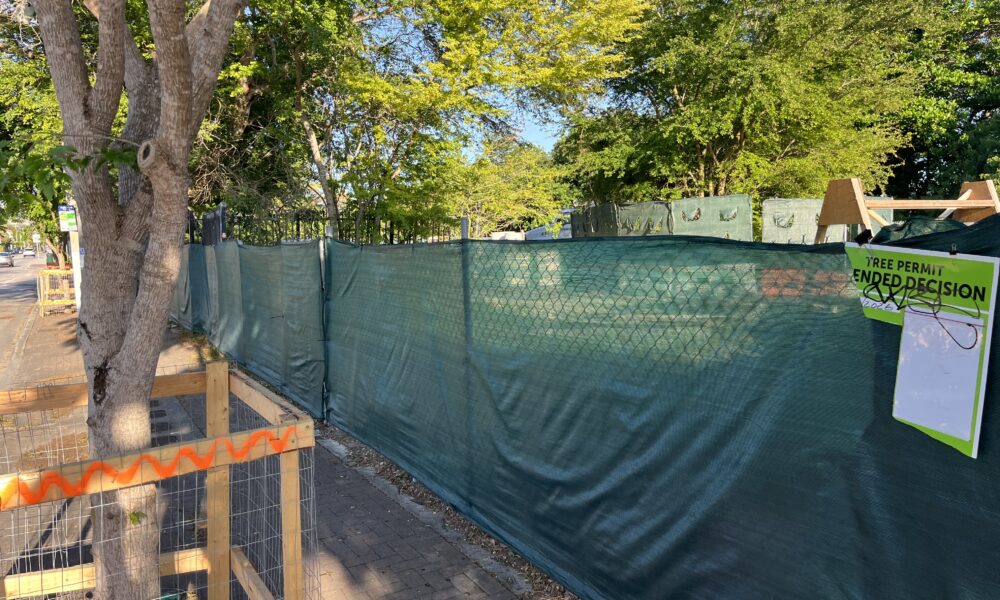
An appeal seeking to block the removal of 57 trees for a pop-up sports facility on Grand Avenue was dismissed on a technicality late Tuesday night by the city’s Historic and Environmental Preservation Board.
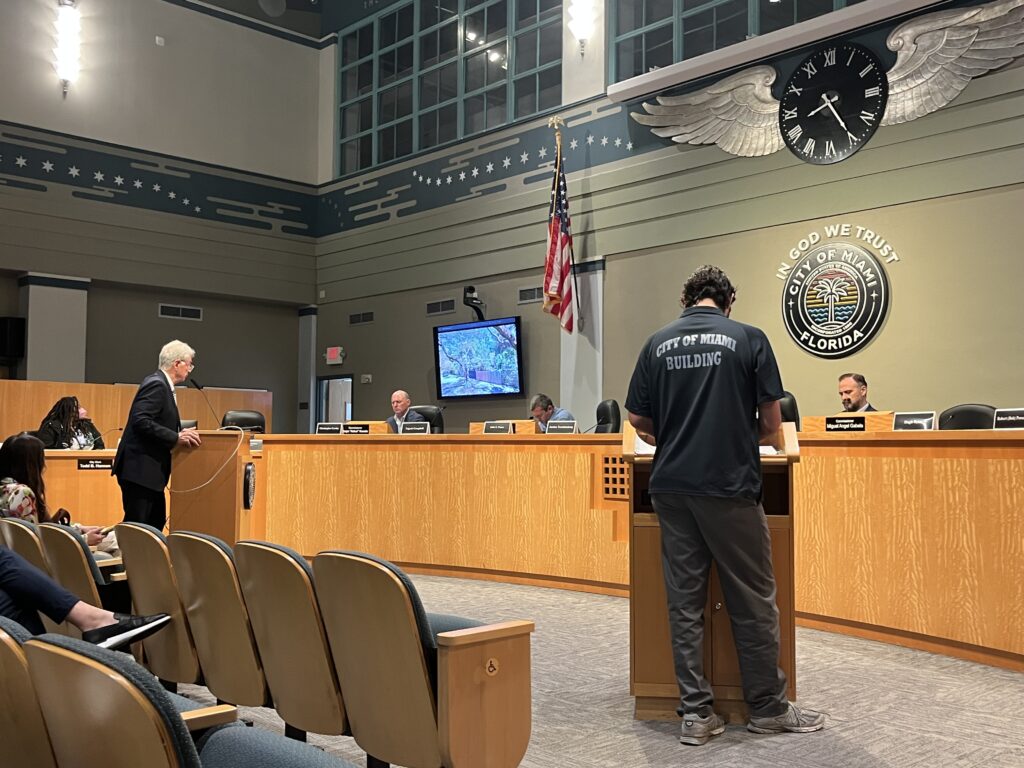
Nicole Gazo, who filed the appeal, is neither a City of Miami resident nor an abutting property owner, disqualifying her from bringing the appeal, Assistant City Attorney James Jackson advised board members moments before they were set to consider it.
“Fifty-seven trees — not up for debate — now automatically approved to be removed for a temporary padel court. So that sucks,” Gazo told the Spotlight.
Gazo and others who planned to speak in support of the appeal said they were infuriated that the high-profile item was placed last on the agenda and that Jackson, Assistant Planning Director Sevanne Steiner, Preservation Officer Kenneth Kalmis and other city officials waited until the end of the more than eight-hour meeting at Miami City Hall — after 11 pm. Tuesday — to announce that the appeal would not be heard due to a standing issue.
“It was absolutely aggravating,” Gazo said. “It was the biggest tree removal proposal, and it was left for last.”
Gazo filed the appeal — which cost about $650 in filing fees and other city charges — in March after the city’s Building Department approved the removal of 57 trees, some retroactively. She argued that the city’s code does not allow tree removal to accommodate a pop-up facility operating under a special-events permit.
That permit expires at the end of the year.
The project, by Coconut Grove-based development and real estate company Silver Bluff, features 12 pickleball courts, six padel courts, one tennis court and a clubhouse on a vacant lot at 3520 Grand Ave.
Silver Bluff officials have described the facility as a placeholder while the developer finalizes plans for a permanent five-story apartment building with 175 living units planned.
To offset the tree loss, Silver Bluff proposed planting 18 trees ranging in height from 10 to 16 feet and contributing $119,000 to the city’s tree trust fund.
Read more: Tree Removals Challenged for “Temporary” Grand Avenue Project
With the appeal window now closed, Gazo said she is considering a challenge to the city’s decision in court.
Earlier in the evening, the board approved two separate appeals challenging city-issued tree removal permits on residential properties in Coconut Grove, despite recommendations from the city’s environmental resources staff — who operate under the Building Department — that the appeals be denied.
Board members voted unanimously to overturn a city permit allowing the removal of two specimen hardwood trees — a royal poinciana and a golden shower — on Swanson Avenue in North Grove. Due to their age and size, both are afforded the highest level of protection under city code.
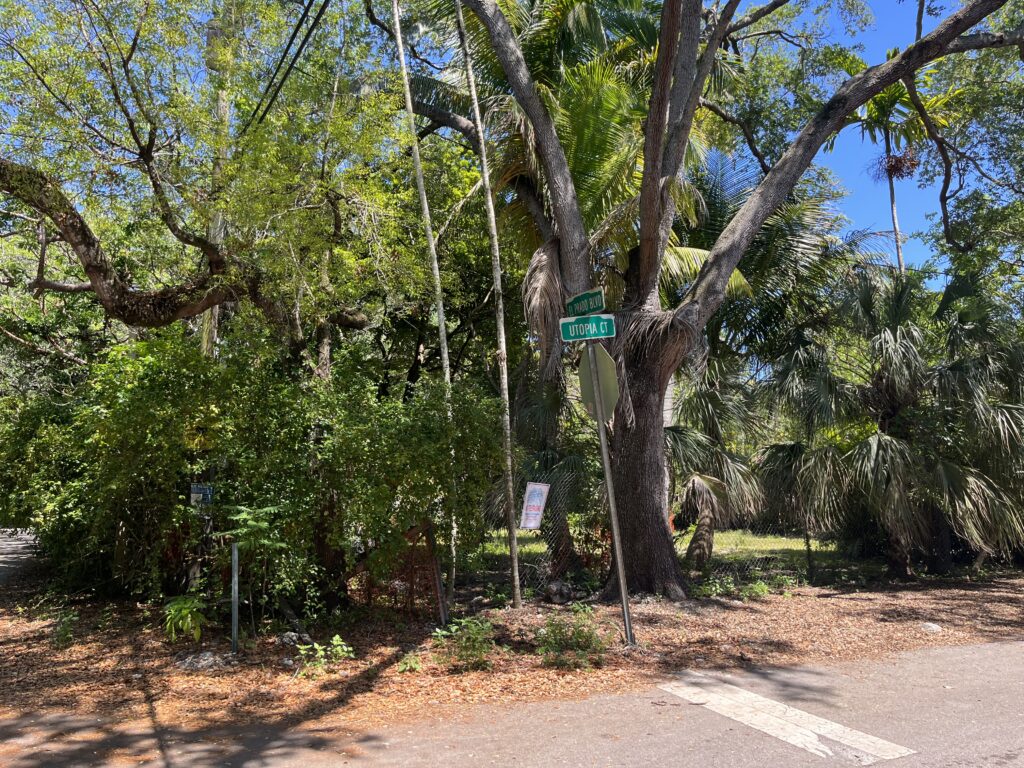
The property owner had argued the trees were diseased, interfered with overhead power lines and obstructed the “visibility triangle” at the intersection of two streets.
The appeal, filed by North Grove resident Marlene Erven on behalf of the Coconut Grove Park Homeowners Association, challenged those claims.
“Removal is irreversible and should only be a last resort,” Erven told the board.
HEP Board Vice Chair Luis Prieto y Munoz quickly agreed.
“It’s remarkable how every tree in a footprint is always diseased and problematic,” he said. “I’d prefer to err on the side of a mature canopy.”
The board was split on the night’s second tree appeal, which sought to overturn a city-issued permit to remove 15 trees — 10 hardwoods and five palms — and relocate five others at a property on El Prado Boulevard in the South Grove.
To meet mitigation requirements, the property owners proposed planting 19 hardwoods and 12 palms, though nearly all would have been concentrated in a narrow strip along the rear of the lot and largely out of public view — a plan that drew pushback from board members.
“I understand canopy replaces canopy. But is it really a replacement if, one, we are not sure the trees are going to be able to develop correctly; and, two, we don’t see them from any of the streets around the lot?” South Grove resident Walter Ringwald, who filed the appeal, said in his presentation to the board.
It was the property owners’ second attempt to clear trees from the lot for new development. In 2021, neighbors successfully appealed a plan to remove 12 trees and relocate nine others.
“There’s nothing that restricts a single-family home from being built,” said David Winker, an attorney for the appellants. “We want development that is reasonable and fits into our neighborhood.”
The nearly two-hour hearing ended with a 4-2 vote in favor of the appeal.
The board’s decision to reverse two city-issued removal permits comes as tree protection advocates call for stronger safeguards. More than 185 people have signed a petition submitted to Mayor Eileen Higgins calling for a moratorium on further permits and greater transparency in the internal policies of staff who process and oversee them.
City commissioners will take up one of the group’s demands next week when they vote on creating a Tree Ordinance Advisory Committee, a long-promised initiative to help guide a controversial rewrite of the city’s tree protection laws.
Read More: Tree Policy Delayed as Removal Permits Rise, Advocates Warn








Thank you, Chair Luis Prieto y Munoz, for recognizing the pattern. 🙏🏻
I cannot wait for market forces to finally recognize the monetary value of mature trees. The intangible value is incalculable. All the studies prove that trees are good for humans, both mentally and physically, and that they provide a huge amount of ecosystem services. Investing in trees has a huge ROI. But we’d rather blow money on concrete and then blow more money mitigating the effects of concrete.
How can we stop this war on trees the developers have going on? It’s seriously like strip-mining for development-dollars in the middle of our neighborhoods. Obviously, they’re going to try and increase their margin to the n-th degree. They’ll never stop. They’re not interested in being good community members. Our neighborhoods are simply ATMs for them. THEY DON’T CARE ABOUT US. They’ve obviously done the calculations and it’s cheaper for them to clear-cut, essentially terraforming our city for generations to come, all for a few margin points. 🤮 This timeline sucks.