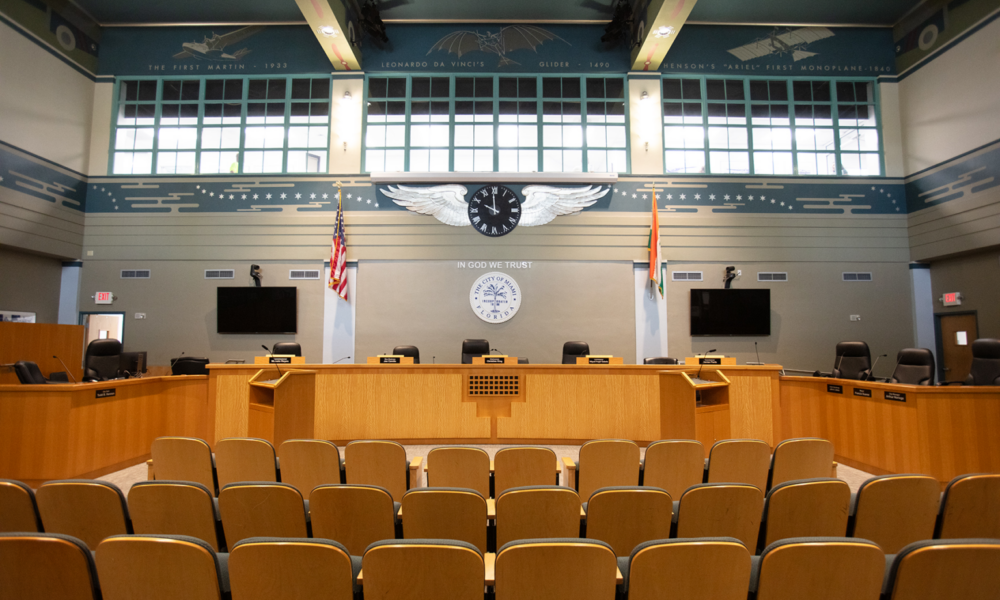




In the days leading up to last month’s approval of Miami’s $3.7 billion budget, a city oversight committee charged with reviewing municipal finances tried to alert commissioners to a host of potential concerns. But its report was not shared with commissioners until after the vote.
Miami city commissioners approved a record budget last month without seeing a report from the city’s financial oversight committee — a panel specifically charged under city law with reviewing the budget — that raised concerns about the city’s financial outlook.
The report, first drafted in August by the Finance and Audit Advisory Committee, contained 41 recommendations addressing the proposed $3.7 billion spending plan, a $450 million public safety bond, pension costs and other financial obligations. A final version was issued Sept. 23 — one day before the final budget vote — with explicit instructions for city staff to share it with commissioners before they voted.
But the report — without explanation — was withheld from commissioners until Sept. 30, nearly a week after they approved the spending plan. The city did not post the report online, as it typically does, or include it among the budget legislation’s supporting documents.
Sources inside City Hall say the decision not to distribute the report came from City Manager James Reyes. The Spotlight reviewed a text message from a city staff member familiar with the committee’s work that corroborates that account.
Reyes did not respond to the Spotlight’s request for comment.
The controversy surfaced at the Oct. 8 City Commission meeting, when District 2 Commissioner Damian Pardo demanded to know why the report had not been distributed.
“I didn’t get this memo until a week after we approved the budget,” Pardo said. He praised the committee for raising important issues and said that only after reviewing the report did he realize “how good it would have been to have that ahead of time.”
Commissioner Rolando Escalona also questioned the handling of the report, asking under what authority its distribution had been stopped after the committee voted to send it.
Neither Pardo nor Escalona responded to the Spotlight’s request for comment.
At the Oct. 8 commission meeting, Reyes acknowledged receiving the report the day before the final hearing but questioned the timing of the committee’s work and suggested some concerns had already been addressed. He did not explain why the report was withheld from commissioners.
Invited by Pardo to address commissioners Thursday, committee member Eric Zichella, a private government affairs consultant, emphasized the panel’s critical role in informing city decisions.
“Our job is to give you the facts and the advice you’ve asked for, and an independent view before you vote on things,” he said.
In an email exchange with the Spotlight, Zichella declined to answer a series of questions about the report’s content and handling but, in a written statement, pushed back against Reyes’ suggestion that the committee’s work had come too late and was, to a degree, outdated.
“Our committee completed its important work timely, and the report included many questions about the budget that had not been discussed publicly,” Zichella wrote.
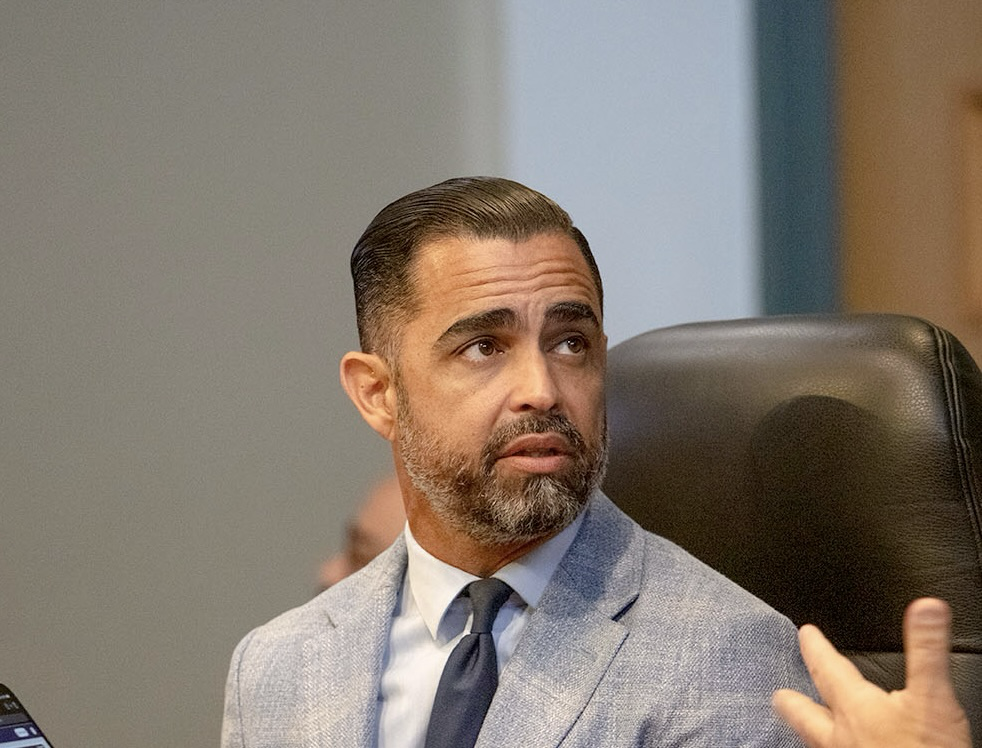
“We gave direction, based on our authority in the code, for it to be presented to commissioners and the public prior to a final vote on the budget,” he continued. “We were not informed of the decision not to share the report with the city commission and were not aware of it until after the second budget hearing.”
Among the issues addressed in the withheld report was Miami’s proposed $450 million public safety bond, championed by Mayor Eileen Higgins, which voters will decide in November.
Read more: Commission Sends $450 Million Public Safety Bond to November Ballot
The committee did not take a position on whether the $450 million bond should be approved. Instead, it called for more information about which projects the money would fund, how they fit into the city’s existing spending priorities and what the additional borrowing could mean for taxpayers.
The report noted that Miami’s six-year capital plan — its blueprint for building and repairing roads, parks, public buildings and other infrastructure — already lists 183 projects without funding, representing approximately $1.8 billion in unmet needs.
Many of the public safety projects proposed for bond funding appear in the fifth year of that plan as new, unfunded projects. The committee’s report recommended that the administration explain where each project stands in the city’s plans, whether any money has already been set aside for it and what would happen if voters reject the bond.
The committee also wanted commissioners — before their final budget vote — to have a clearer picture of the city’s ability to take on more debt. Miami already owes approximately $1 billion, and some of those obligations will be paid off in the coming years. The report called for a schedule showing when those payments will end and how much additional money the city could borrow without raising property taxes to pay it back.
City officials say the proposed bond would not require an increase in the property tax rate used to repay debt, but the committee sought more detail to support that assurance.
While voters are being asked to approve $450 million in new borrowing, the total bill for taxpayers will reach at least $795 million, including interest and issuance costs. Future operating costs for the proposed facilities had not yet been fully calculated.
Read more: Internal Q&A Reveals Miami’s $450 Million Public Safety Bond Could Cost Taxpayers Nearly $800 Million.
The withheld report also raises questions about the independence of Miami’s financial watchdogs — and their ability to scrutinize the administration.
The Finance and Audit Advisory Committee was created in May by merging two existing oversight boards — the Finance Committee and Audit Committee — into a seven-member panel. Each commissioner, the mayor and the city manager nominates one member, subject to commission approval. Its responsibilities include reviewing the city’s budget, capital spending, debt, pensions and financial reporting.
Yet five months later, only four seats are filled. Commissioners Miguel Gabela, Damian Pardo and Ralph Rosado, representing Districts 1, 2 and 4, respectively, have yet to fill their seats.
And in a curious arrangement for a committee charged with independently scrutinizing City Hall’s finances, one of its four members is, apparently, Finance Director Munirah Daniel — a senior official in the very administration whose financial decisions the committee is supposed to review. Daniel participated, and voted, in both the August and September meetings, although her name does not appear on the committee membership roster posted on the city’s website.
The committee’s work is also difficult for the public to track. Unlike other city oversight boards and committees that maintain online archives of meeting schedules, agendas, minutes and reports, the Finance and Audit Advisory Committee has virtually no online presence beyond its name on the city’s legislative hub.
The committee encountered obstacles even before completing its September recommendations, raising questions about whether city staff hindered its efforts to review the budget.
According to its report, the committee received budget materials only about two weeks before the first budget hearing, leaving little time for review.
After outlining its concerns in memo form during its August meeting, the committee planned to meet again Sept. 9 to finalize its recommendations, well before the commission’s final budget vote. But city staff canceled the meeting, citing concerns about a lack of quorum, even though three of its four members were prepared to attend in person, according to a person familiar with the committee’s operations.
That explanation appears at odds with the city’s own ordinance, adopted just four months earlier, which defines a quorum as a simple majority of appointed and qualified members — meaning three of the four members were sufficient to conduct business. The committee’s Sept. 23 report confirmed that interpretation.
Beyond the bond, the committee raised questions about financial obligations that were not fully accounted for in the budget.
Among them were potential salary increases resulting from negotiations with the city’s four employee unions, whose contracts expired Sept. 30. The budget was adopted without accounting for the cost of any raises negotiated under new agreements.
The potential expense is substantial. According to the committee, each 1% increase in employee compensation would cost approximately $4.7 million annually. A 5% increase would add $23.5 million.
Such increases are hardly unprecedented. The city’s largest general employees union negotiated 6% across-the-board raises in both 2024 and 2025, while many employees also received annual 5% step increases for another year of service.
The report also called, prior to a budget vote, for a review of the city’s pension obligations, including how overtime and other compensation provisions can increase retirement benefits.
Read more: Inside City Hall: The Hidden Pay Fueling Miami’s Six-Figure Firefighter Pensions.
The report identified approximately $5.75 million associated with a disputed pension amendment that had been excluded from the budget because of pending litigation. The committee recommended that the administration calculate the city’s full potential exposure and explain how it would be paid if the city loses the case.
Read more: Former City Attorney Sues Miami Over Disputed Pension Cap
The report’s recommendations extended beyond the budget itself, urging commissioners to fill the committee’s vacant seats, provide budget materials earlier and attach its recommendations to budget legislation so commissioners and the public could review them before voting.
The concerns are not new, nor are they limited to the recent controversy. Other city oversight boards have struggled with vacancies, declining influence and limited support from city staff. In May, Zichella, then chairman of the Finance Committee, questioned why the administration had not sought the panel’s input on the proposed $450 million public safety bond as commissioners debated whether to put it before voters.
Read more: Zombie Boards: The Life — and Death — of Miami’s Citizen Oversight.
The city’s code requires the Finance and Audit Advisory Committee’s meetings to be publicly noticed and its minutes maintained as public records — neither of which appears to have occurred since its formation in May.
The ordinance creating the committee also makes the city manager responsible for administrative support, including scheduling meetings, maintaining correspondence, posting meeting notices and filing reports — placing the committee’s administrative operations under the same city management whose financial decisions it is charged with reviewing.
Xavier Alban, a City Attorney’s Office lawyer assigned to advise and support the committee, declined to speak with the Spotlight. City Communications Director Helena Poleo has not provided responses to a list of written questions about the handling of the budget report.
For Zichella, the failure to distribute the report meant commissioners and residents were denied an opportunity to consider the committee’s findings before the city’s most consequential annual financial decision.
“It is unfortunate that the public and the city commission didn’t have an independent perspective presented to them before they considered the most important vote of the year,” he wrote.