

The Miami-Dade County Commission is scheduled to vote next week on a proposed land-use amendment that would advance the redevelopment of the former Seaquarium property on Virginia Key.
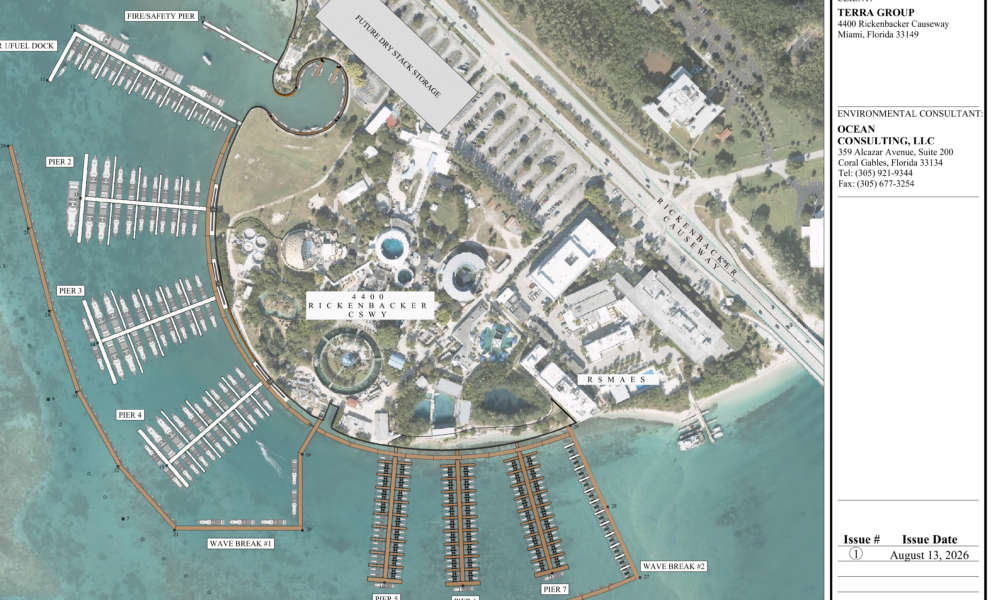
Miami-Dade County is moving ahead with its plan to redevelop the Seaquarium property on Virginia Key – despite the threat of a citizen lawsuit – by scheduling a vote next week on a land-use change that would allow a developer to build a massive new project with an accredited aquarium, a retail village, and a marina with 295 boat slips.
Two county residents have said they will challenge that plan in court, unless the county agrees to seek voter approval for the proposed marina.
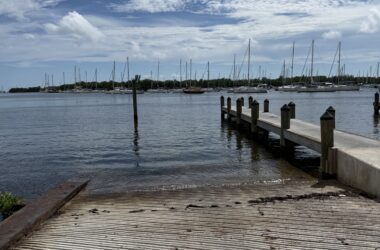
Gregory Frankel and Aaron Stauber say the county is required by its own charter to seek voter approval because the marina would be built on 56 acres of submerged lands in Biscayne Bay that were never part of the Seaquarium property.
Read more: Lawsuit Threatened Over Seaquarium Redevelopment
Frankel, a Coconut Grove attorney, said he spoke to Mayor Daniella Levine Cava this week to push for a public vote, but as of Wednesday had not received a written response to the formal notice he and Stauber sent to county officials on Sept. 30.
“Our position hasn’t changed,” Frankel said when asked about the county’s decision to advance the project at next week’s County Commission meeting.
The timing of the lawsuit will depend on how quickly the county moves to secure other approvals for the project, he said. The land-use change scheduled for a preliminary vote on Tuesday is only one piece of the project’s development puzzle.
The county also is seeking to change the property’s zoning and finalize a 99-year lease with Resilient Aquarium LLC, a company controlled by developer David Martin. The previous tenant, MS Leisure, closed the Seaquarium and filed for bankruptcy in 2025.
“If the county moves the lease forward without a (countywide) vote, we are prepared to ask the court to enforce the Charter, but we would much rather the County simply put it to the voters,” Frankel told the Spotlight.
The land-use amendment would create a Seaquarium Activity Area Special District on 36 acres of county-owned land where Lolita, a captive killer whale, performed as the Seaquarium’s headline act.
With 500,000 visitors a year, the 1950s-era Seaquarium was one of Miami’s most popular attractions, and a significant source of revenue for the county, which has faced significant budget shortfalls in recent years.
The proposed land-use change will restore that revenue stream, and address a significant lack of marina space, the county said in an application seeking the change.
“The inclusion of marina uses will help address the County’s documented deficiency in marina space, while providing County residents with enhanced access to recreational boating,” the application says.
In addition to the aquarium, retail village, and marina, the special district would allow for interactive marine attractions, “wellness” areas, recreational facilities, education and conservation centers, and events in the Seaquarium’s iconic Buckminster Fuller dome.
The proposed marina would be capped at 847 berths, including 295 wet slips and dry stack storage for another 552 vessels.
Frankel and Stauber say they don’t oppose the redevelopment of the Seaquarium property but insist that the proposed marina requires a public vote.
“Our clients are not asking the county to abandon redevelopment of the Seaquarium,” Darrin Gursky, their attorney, wrote in the Sept. 30 notice letter. “They are asking the County to allow the voters the authority the Charter reserves to them.”
The Spotlight asked Mayor Levine Cava, County Attorney Geri Bonzon-Keenan, and County Commissioner Raquel Regalado, whose district includes the Seaquarium, whether voters should decide the fate of the marina, but did not receive a response.