

A Grove resident argues the proposed 877-berth marina — and possibly more — must go before voters, raising new questions about the sweeping redevelopment plan for the iconic waterfront property on Virginia Key.
A Coconut Grove lawyer is challenging Miami-Dade County’s plans for a massive marina development at the former Seaquarium on Virginia Key, saying he will take the county to court if voters aren’t allowed to approve – or reject – the marina.
Gregory Frankel and a second individual – Aaron Stauber – put Miami-Dade County officials on notice Wednesday that they intend to file suit unless the county agrees to hold a countywide referendum on the proposed marina.
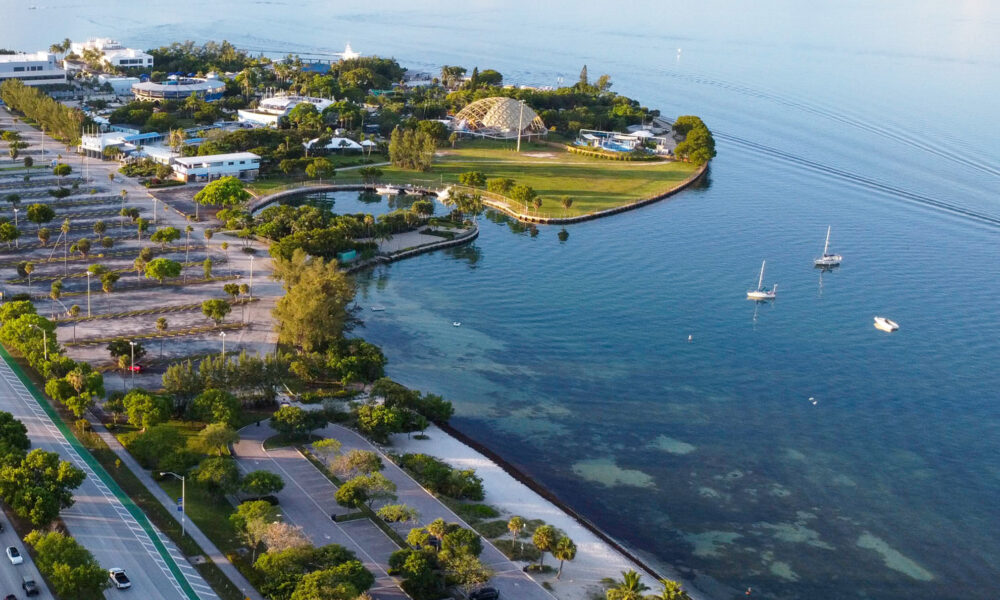
The county is negotiating a long-term lease with an affiliate of Coconut Grove-based Terra Group to redevelop the Seaquarium site with a marina that would extend into Biscayne Bay. The marina would include slips for 325 boats and a dry stack capable of racking 552 more vessels.
Read more: The Mega Marina That Could Replace the Seaquarium
In challenging the county, Frankel and Stauber invoked the county’s own charter, saying Article 7 of the charter gives voters the right to decide whether the waterfront site and offshore submerged lands should be leased to a private developer for commercial use.
“We are not against developing the Seaquarium,” Frankel said in a statement to the Spotlight. “We are for the Charter.” Added Stauber: “The question is whether the voters get to decide, and the Charter says they do.”
The letter asks the county to confirm within 10 business days that it will not move forward with the marina unless the proposed development is approved by voters.
Article 7 of the county’s charter gives aquatic preserves, public parks and preservation lands special protection, requiring voter approval for certain private commercial uses and leases. Virginia Key is among the properties for which the charter requires approval by two-thirds of county voters.
But Article 7 also creates an exception, saying the restrictions do not apply to the Seaquarium.
Frankel and Stauber acknowledge that provision but say it does not apply to the proposed marina, which they contend is a separate commercial enterprise and would extend onto submerged lands in Biscayne Bay, beyond the existing Seaquarium lease boundary.
““The County’s own records show that the existing Seaquarium lease has always stopped at the bulkhead line: no bay bottom has ever been part of it,” they said.
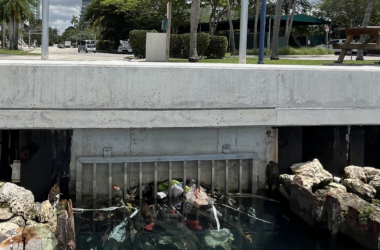
A boundary survey and marina plans reviewed by the Spotlight appear to support that assertion: The existing lease ends at the bulkhead — the retaining wall along the shoreline — while the proposed marina would extend well beyond it into Biscayne Bay, with docks, piers and a wave break occupying submerged county land.
Frankel and Stauber argue that distinction is critical.
“A new commercial marina – on submerged land that was never the Seaquarium – is not the Seaquarium, and the exemption does not reach it.”
In a written statement, a Terra Group spokesperson did not address the underlying claims raised by Frankel and Stauber but said the proposed development “will deliver a publicly accessible, environmentally conscious destination where residents and visitors can enjoy the waterfront and learn more about South Florida’s marine habitat.”
While their immediate challenge focuses on the marina, Frankel and Stauber also leave open the possibility of challenging other parts of the redevelopment, including proposed wellness, private event, retail and restaurant uses on the upland property, as well as the proposed 99-year lease.
“The marina is the clearest case and is the subject of this demand,” the letter states. But Frankel and Stauber say they “reserve” their objections to those other elements of the project.
Frankel and Stauber said they are acting on their own, as county residents, and not on behalf of any organization or entity. They also say they are acting on principle. If the county can approve the Seaquarium project without a public vote, then other public lands may lose the protections bestowed by the county’s charter.
Frankel is a Coconut Grove attorney who is active in local Democratic politics; Stauber is the president of Rugby Realty, a commercial real estate development firm based in New Jersey. He owns a homesteaded condominium in Bal Harbour.
They are represented by attorney Darrin Gursky of Haber Law in Miami. Gursky signed the demand letter that was delivered Wednesday to Miami-Dade Mayor Daniella Levine Cava, County Attorney Geri Bonzon-Keenan and county commissioners.
As of press time, Levine Cava, Bonzon-Keenan, and County Commissioner Raquel Regalado had not responded to requests for comment.
“Our clients are not asking the County to abandon redevelopment of the Seaquarium. They are asking the County to allow the voters to exercise the authority that the Charter reserves to them,” Gursky stated in the letter.
“Submitting the matter to referendum would resolve the legal controversy while allowing the merits of the marina proposal to be decided democratically.”