

“Public safety is the top priority,” Mayor Eileen Higgins said last week in defense of her proposed $450-million bond proposal. “Without that, everything else falls apart.”
The Coconut Grove Spotlight sat down with Miami Mayor Eileen Higgins last week to ask her why voters should approve a $450 million bond program for public safety when two of the city’s five commissioners say she’s peddling a “half-baked” plan.
Voters will decide the issue next week. In the meantime, residents are hearing two starkly different messages out of City Hall. Higgins says the city needs to act now to save lives, save money, and avert a catastrophe in the event of a major hurricane.
Miami Commissioners Damian Pardo and Christine King say this is the wrong plan, at the wrong time. “We can build and modernize police and fire facilities without approving this bond,” Pardo said in a statement shared by staff.
So, who’s right?
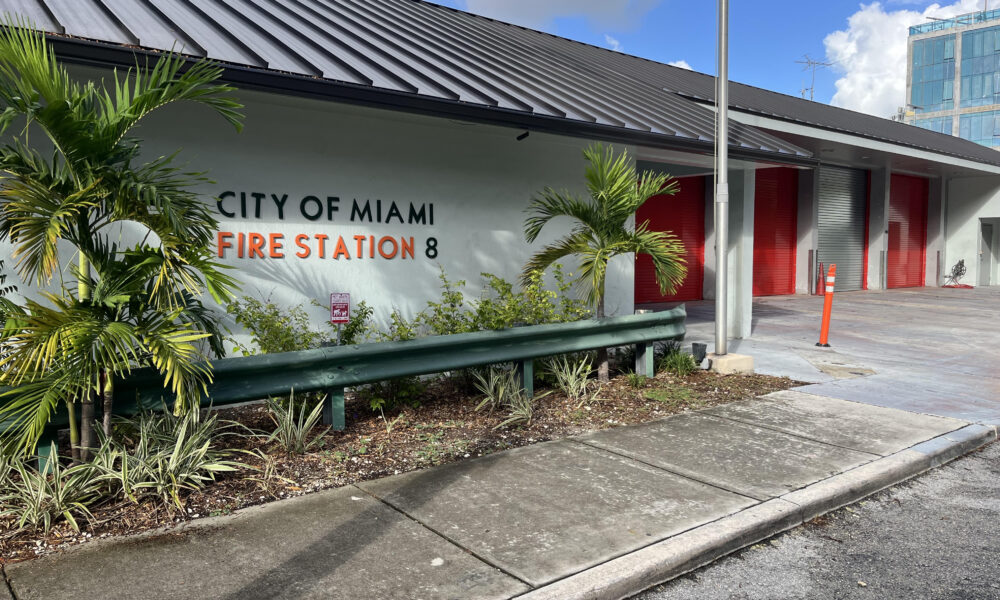
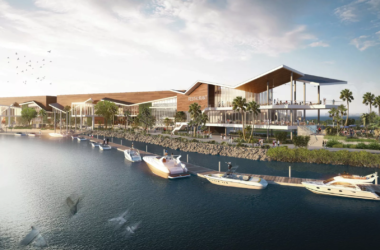
The bond would pay for a new public safety headquarters building ($305 million), four new fire stations ($52.8 million), two replacement stations ($59.5 million), a renovation of Fire Station No. 3 ($22.75 million) and repairs and upgrades at 12 facilities ($10 million) including Station No. 8 in Coconut Grove. You can see details of the plan here.
The mayor is promising all of that work will be completed by 2033, without breaking the bank. If the bond program is approved, a homeowner with a house valued at $423,020 will pay an additional $110 a year in taxes, on average, the city estimates.
The referendum (Miami Referendum 1 on the last page of your ballot) has turned into a showdown between the mayor and her critics.
Here’s what Higgins had to say about her plan last week. (This interview has been edited for clarity and brevity).
Spotlight: Pretend we’re on an elevator and I’m getting off on the 12th floor. Give me your best 60-second speech on why voters should support this bond program.
Higgins: “When you look at neighborhoods, there are thousands of City of Miami residents who don’t have six-minute response times, which is the national standard. If you’re having a heart attack and someone comes and gets you within six minutes, you’re likely to survive. We have neighborhoods where the average is eight, nine minutes, and we are sometimes responding to emergencies in over 12 minutes.”
Spotlight: Take me back to the beginning of this campaign. When did you decide that the city needed to address these public safety issues with a $450 million bond program?
Higgins: “When I became mayor, I began to look at all of our buildings. I went into the police headquarters building, which is over 50 years old, and what I saw was shocking. And the situation with our fire stations was almost worse.
“I sat down with the team – our Office of Capital Improvement, our finance people, obviously police and fire – and we put together the package of what all the repairs and the four new fire stations would cost. The total cost for all of that is about $450 million. We do not have that funding in the current budget (but) we have the ability to issue debt (bonds) and that is the least expensive way to deal with this problem.
“Costs of construction are going up 4 to 5% a year. If I wait one more year, it’s $20 million more for every year we wait. The most cost-effective way to do it is to get started now. It saves money and of course it saves lives.”
Spotlight: Critics say the bond represents a bait-and-switch, that you promised a “deep dive” into city spending during your campaign, but then became an advocate for more spending and more debt after you were elected. How do you respond?
Higgins: “What I did say in the campaign is that I was going to look at everything in the city. I was going to look at our broken permitting system, I was going to look at why it took so long for affordable housing to get built, I was going to analyze all of the things to make the city work better. So, believe me, I’ve been working on a lot more things than just this. But this is a priority.
“This simply can’t wait. I can tell you we’ve been lucky. We haven’t had a major storm in 30 years. That police headquarters with our EOC (emergency operations center) and our 911 call center – not going to make it. So, do we wait for that storm to happen, or do we fix it now? I see no way to keep our community safe, without starting on this now.”
Spotlight: Two of the city’s five commissioners are actively working to defeat the referendum. Do you regret not taking more time to win the support of those commissioners, so the city could be united in supporting the bond?
Higgins: “No, when people’s lives are at risk, I intend to act. It is irresponsible to not act. The fact that we have commissioners with a collective number of years on the dais – the two in opposition have eight years on the dais – and they have not visited all of the fire stations and police headquarters. They haven’t seen what I’ve seen. I’m in these stations every week. There is not a week that goes by that I’m not in the police headquarters building. If they had seen what I’ve seen, they would feel differently.”
Spotlight: What does their opposition say now about your ability to work with the city commission in the future to advance your agenda? Is that relationship broken?
Higgins: “I don’t think so. We clearly have differing points of view on public safety. But we had a great commission meeting yesterday (Oct. 22). I think yesterday’s meeting was perfect evidence that you can disagree on one thing and get along just fine on others. That’s what democracy is all about.”
Spotlight: So, no recriminations?
Higgins: Not on my part.
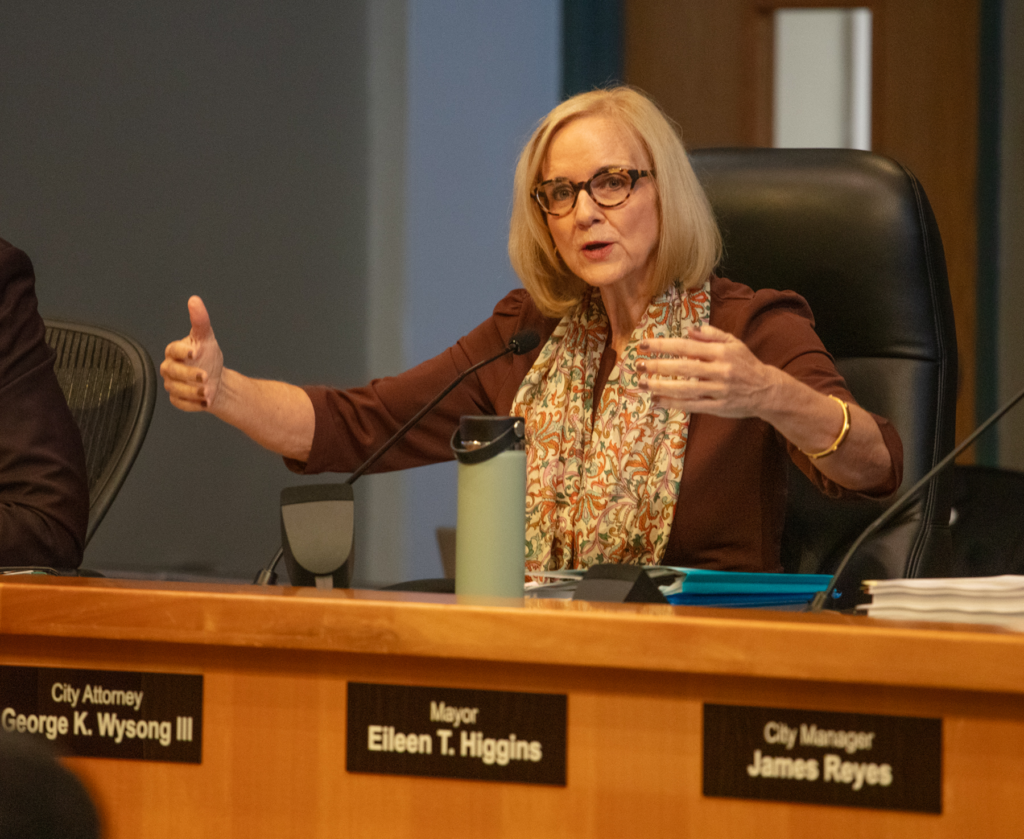
Spotlight: The two commissioners who oppose the bond say the $450-million proposal wasn’t properly vetted before being placed on the ballot. In hindsight, do you think you should have asked the city’s Finance and Audit Advisory Committee to evaluate this?
Higgins: “We are going to be going to the Finance and Audit Committee before we are ready to issue debt. We have to go to the Finance and Audit Committee. That’s what they are there for – before we issue debt. But we are not issuing debt. We are asking the voters, do they want to give us the capacity to do that. That is a completely different process.”
Spotlight: How do you respond to critics who, like you, support better police and fire-rescue protection but say this is the wrong time to ask property owners to pay more for those services?
Higgins: “I would not ask them to do this if I didn’t think I would be able to save their lives by building these four new fire stations. I wouldn’t do it. Because times are tough now, but with what is going on in Washington, I don’t see inflation going away. I don’t see tariffs going away. We have the same president for two more years. But two more years of waiting is more expensive to do this.”
Spotlight: But is there a less expensive way to do this? One of the possibilities that has been mentioned is public-private partnerships.
Higgins: “Let me tell you about our public-private partnerships. We have three. One of them worked. It took 18 years to get that fire station in Little Havana. We have two more. The two in Brickell. You go to the north end of Brickell, you go to the south end of Brickell. Do we have a fire station? No. They have been demolished. So, this is how the City of Miami does public-private partnerships. Some rich, greedy developer shows up, and goes, ‘That’s a nice piece of property, but you have this little fire station on it.’ If you let me demolish that fire station, I can build a new one, and I’ll get more land, and I’ll build this fancy-pants 80-story building on top of it.
“So, the city allowed both fire stations to be demolished. They are both in trailers. I have no hope in the next five years of having a permanent fire station in Brickell because of the ‘success’ of public-private partnerships. What developers want is our land that have fire stations on it and when they get it, they demolish our fire stations.”
“So no, I do not believe the private sector should be in charge of our public safety, and of saving your grandmother’s life.”
Spotlight: If the referendum is defeated on November 3, what’s your next step?
Higgins: We muddle along. And then, when a roof collapses on a fire station, we stop construction on whatever, a flooding project, we stop doing a park renovation. The problem is here. And this is what I promised people, I was going to tell them the good, the bad, and the ugly. And money doesn’t grow on trees.”
Spotlight: If the voters say no to a bond, is there another way to come back on it?
Higgins: “No, probably not. Not without cutting other services or other projects.”







Many public buildings, trains, buses, roads, bridges, pools, parks and bike trails throughout Europe and Canada are much older and yet in better condition than those in Miami and MDC. The difference is that ours seldom receive preventive maintenance. Apparently our elected leaders prefer to let our infrastructure decay and then just build something new and celebrate with another ribbon cutting ceremony. Perhaps we could save a lot of taxpayers money, if we just arranged more attention grabbing media coverage for them with ribbon cutting ceremonies for preventive maintenance occasions as well.