



The city’s five commissioners voted unanimously to grant Miami-Dade County the zoning relief it needed to move forward with the long-stalled project.
The Miami City Commission voted unanimously on Thursday to greenlight Miami-Dade County’s plan to rebuild the Coconut Grove Playhouse with shops, offices and parking over the strong objections of nearby neighbors who fear the project will overwhelm their quiet West Grove community.
Miami-Dade County officials have promised verbally to address those concerns – chief among them the threat of commercial intrusion and traffic – but residents were seeking a legally-binding agreement to ensure the county delivers on that commitment.
Instead, Miami District 2 Commissioner Damian Pardo attached a series of conditions to the approval granted Thursday, while commending the county for its overall approach to the long-delayed project. “I think the county has done a good job,” he said.
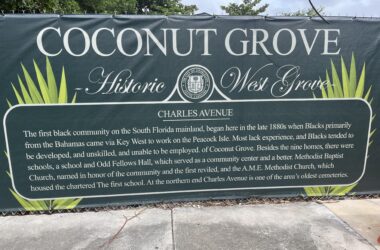
Those conditions are meant to address neighborhood concerns about the commercial components of the project, the possibility of spillover traffic, local job opportunities, access to programming, and the loss of the historically Black neighborhood’s identity.
Whether those conditions deliver the protections sought by residents remains to be seen, however. The project has been delayed for years by litigation, and critics say there may be more to come.
The conditions, described verbally by Pardo, will require: a traffic study and mitigation plan, a buffer between the project and the West Grove, access to job opportunities and programming, and tangible recognition of the history and significance of the formerly segregated neighborhood to the west of the playhouse.
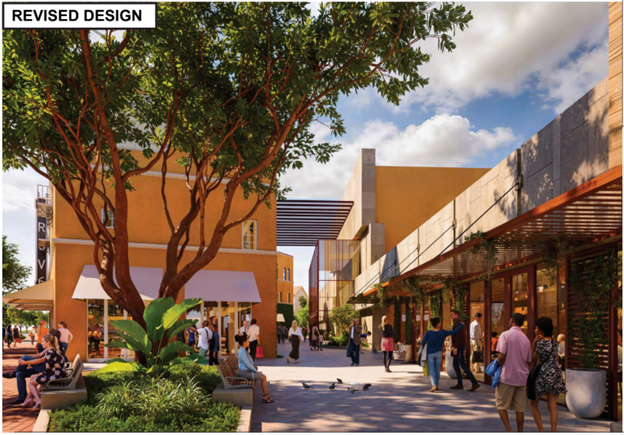
To advance the project, the City Commission approved five zoning exceptions and four waivers so the county can restore the playhouse’s 1926 facade, construct a new 310-seat theater behind it, and build a 289-space parking garage next door.
The county’s zoning request was previously heard – and rejected – by the city’s Planning, Zoning and Appeals Board (PZAB) in May, setting up Thursday’s showdown before the City Commission.
In an email sent to county officials on the eve of Thursday’s vote, representatives of Preserve the West Grove urged the county to make a binding commitment to address neighborhood concerns before moving forward with the project.
“We all would like to see this project move ahead, and we continue to be hopeful that this project may move ahead in a way that not only returns great theater to Coconut Grove, but also protects and supports Historic Village West,” the email said.
More than two dozen people – evenly divided on the merits of the project – addressed the commission before the vote, with critics asking the city to reject the county’s plan unless and until the county made a binding commitment to West Grove neighbors.
“We have grave concerns about the commercial nature of this project,” Courtney Berrien told commissioners. “What is promised by the county isn’t binding.”
County officials have promised publicly to address neighborhood concerns about commercial intrusion and traffic, but neighbors aren’t convinced that will happen.
“We do not oppose the playhouse,” West Grove resident Mamie Armbrister said. “We just don’t want our neighborhood to be invaded, intruded as part of the project.”
Supporters, including members of the South Florida theater community and Coconut Grove business interests, urged the city to allow the county to move forward with the project and reopen the theater.
“Let’s move this forward. It has been way too long,” Mark Burns, executive director of the Coconut Grove Business Improvement District (BID), told commissioners.
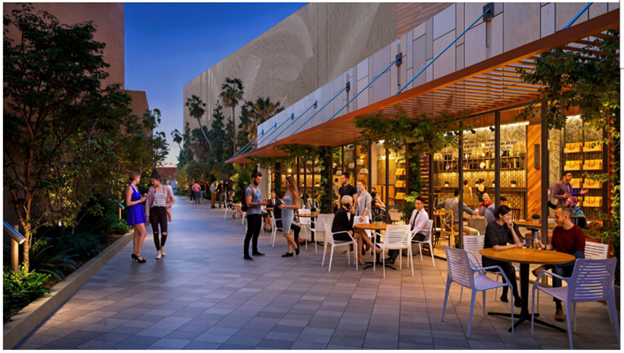
As part of its plan, the county wants to place the new theater at the center of a development with 2,600 square feet of retail space, 3,800 square feet of food and beverage space, 28,000 square feet of office space, and 2,600 square feet of educational space.
An interior plaza in front of the theater would connect to the neighborhood behind it via a pedestrian walkway – a design element meant to address past discrimination but which residents say will result in commercial intrusion and unwanted traffic.
County officials have offered to install a gate and close it either temporarily or permanently to prevent theater-goers from directly accessing the neighborhood.

















The Grove Key (Scotty’s Landing) Property next to City Hall is “Nothing Like” What was Promised & What We Voted for !!! Don’t Expect anything different at the Playhouse !!!!
The Commission’s responsibility was to determine if the County established legal basis to overturn the PZAB decision. The County’s appeal did not meet those requirements.
For years, the County maintained that a state review did not apply. It later changed its position and claimed it complied. That review occurred after the demolition in violation of the law.
The City Historic Board rejected County’s proposal. The County has repeatedly told the public that Board approved its plans.
The State conducted an audit identifying lease violations. County failed to satisfy multiple Secretary of the Interior preservation standards.
The County also told the public there was a competitive bid for the theater operator. There was not.
The County also assured that important historic elements would be preserved. Historic elements were instead found shattered and discarded on top of rubble.
In 2004, nearly half a million County voters approved $20 million to “restore the Coconut Grove Playhouse and add to its performance and educational capabilities.” Instead of adding to performance capabilities, it subtracted.
None of the voter-approved bond money has been used to restore the facade.
The County’s own feasibility study recommends a larger regional theater as the economically sustainable model.
The County’s plan relies upon revenue from its retail to subsidize a small theater. Grove restaurants and retailers are already struggling.
The message from the Planning and Zoning Appeals Board and the public was clear: More culture. Less commercial.
The fight to protect Miami’s history, culture, and public trust is not over.