

After months of resident complaints, a proposed ordinance would require temporary pedestrian protection at commercial construction sites, addressing one of Coconut Grove’s most persistent frustrations: prolonged sidewalk closures.
After more than a year of complaints from Coconut Grove residents over prolonged sidewalk closures at major construction sites, the Miami City Commission on Thursday will consider an ordinance that would require many building permits to include temporary pedestrian protection allowing continued use of public sidewalks during construction.
The measure, sponsored by Miami District 2 Commissioner Damian Pardo, would amend the city code to require “sidewalk protection” — such as sidewalk sheds, overhead protection systems or scaffolding — designed to allow pedestrians’ “uninterrupted, continued use of the public right-of-way.”
The requirement would apply primarily to larger projects classified as “threshold buildings” under the Florida Building Code, including many mid-rise and high-rise developments.
Prolonged sidewalk closures have become a recurring quality-of-life concern in Coconut Grove, with residents repeatedly urging city officials — often with little apparent response — to address conditions at several high-profile construction sites.
Read more: Residents Question City Oversight of Construction Closures in the Grove
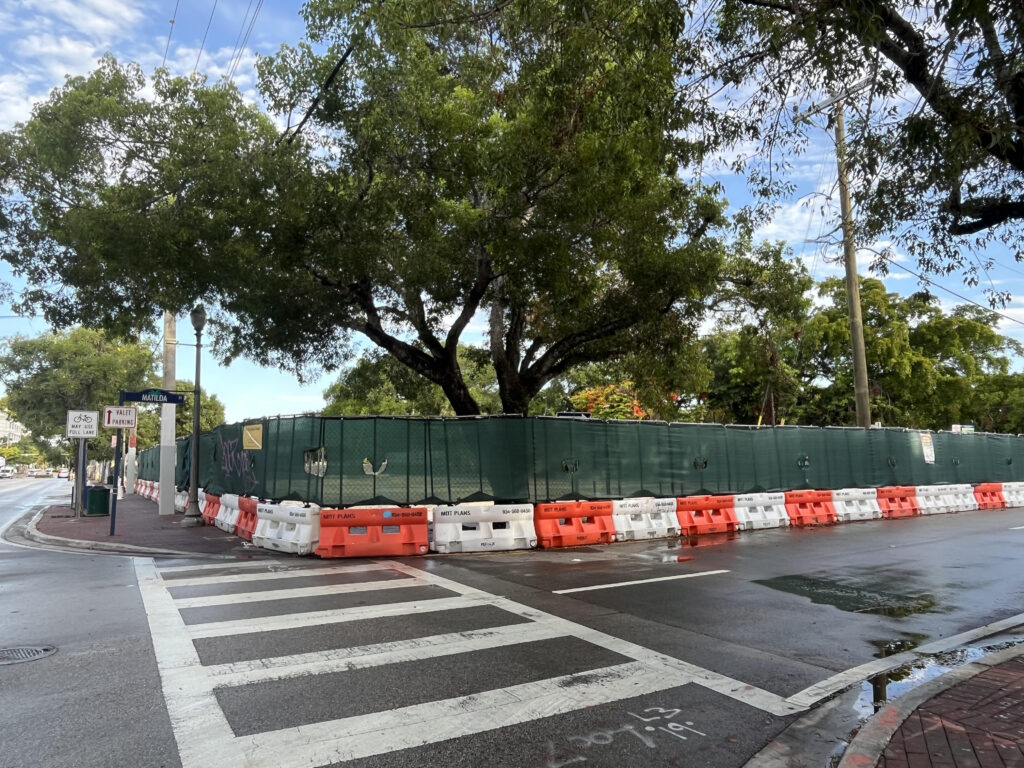
Among the complaints: sidewalks closed for months at a time; pedestrians forced into traffic because no protected walkway remained open; construction fencing that blocked visibility at intersections and school crossings; and confusion over how the city interprets and enforces its own right-of-way regulations.
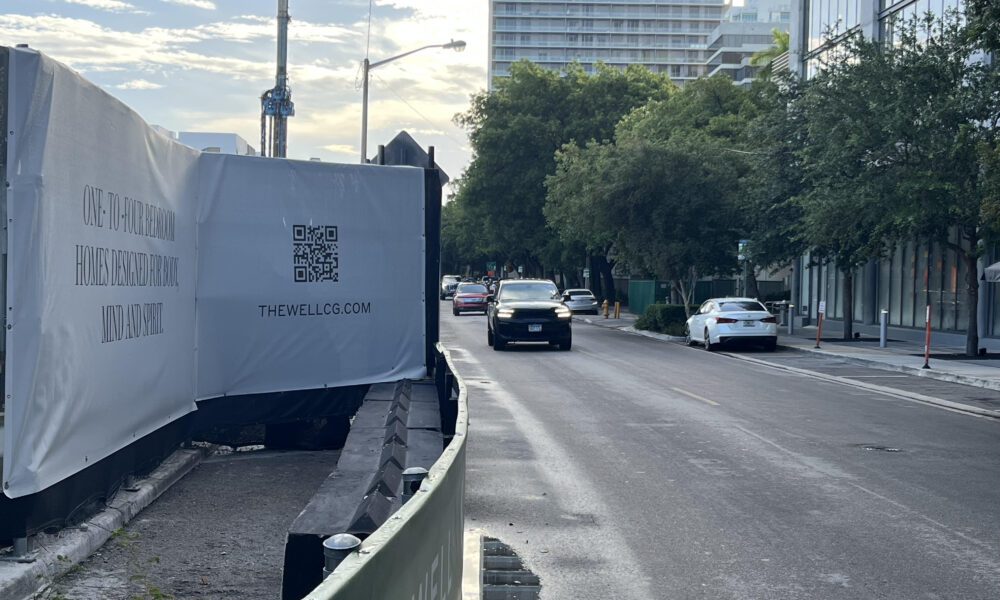
At The WELL Coconut Grove, residents have questioned why portions of the Tigertail Avenue sidewalk and parking lane remained closed for months and whether construction-related closures are subject to enforceable time limits under city code.
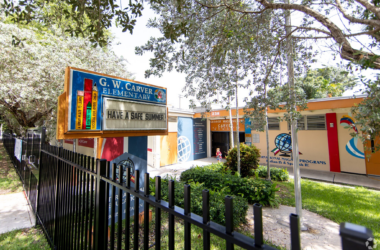
Near Coconut Grove Elementary School at Grand Avenue and Matilda Street neighbors filed a formal complaint alleging unsafe pedestrian conditions around the proposed Ziggurat development, including obstructed sightlines at a school crosswalk, inadequate pedestrian detours and barricades that they contend fail to comply with the Americans with Disabilities Act.
Along South Bayshore Drive, sidewalks surrounding the Four Seasons Private Residences remained closed for nearly two years before reopening, forcing pedestrians into adjacent traffic lanes along one of the Grove’s busiest corridors.
Read more: Christmas Wish List: A Sidewalk on South Bayshore
The measure would not establish new limits on how long sidewalks may remain closed — an issue that has been at the center of many neighborhood complaints. It would, however, give the city explicit authority to require temporary pedestrian protection as a condition of many construction permits, potentially allowing sidewalks to remain accessible where they otherwise might be closed.
Whether the ordinance changes conditions on the ground may ultimately depend on how often the city invokes one key exception. Under the proposal, if a licensed engineer determines that providing temporary pedestrian protection is impractical, the Department of Resilience and Public Works could waive the sidewalk-protection requirement.