
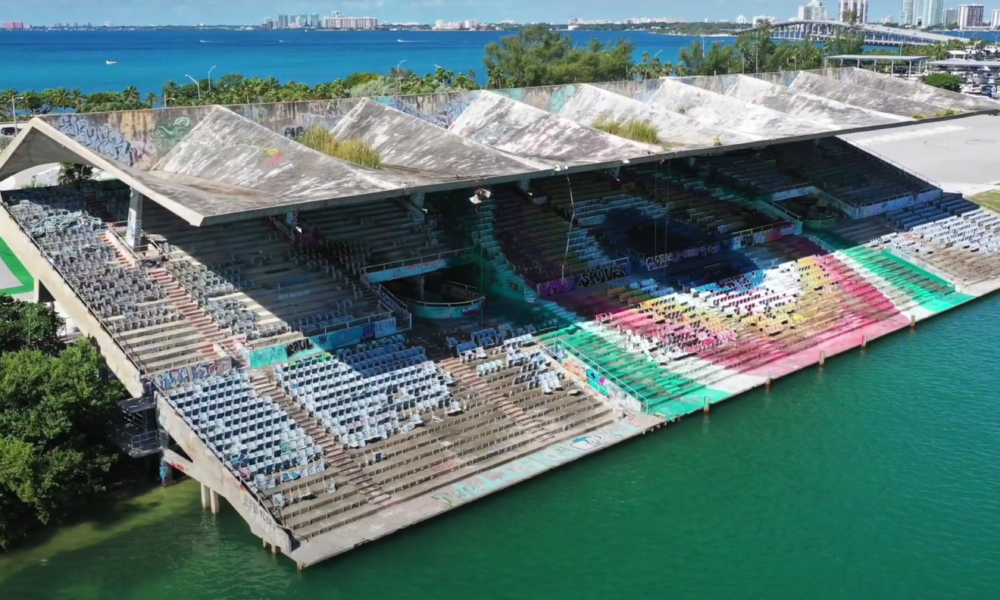

Miami voters are being asked to approve a 40-year management agreement between the City of Miami and a private company for the waterfront stadium on Virginia Key, which has been closed since Hurricane Andrew in 1992.
The key to saving Miami’s iconic 1963 marine stadium on Virginia Key may hinge on whether voters will approve a 40-year management agreement between the City of Miami and a Denver-based company whose chief executive was indicted for bid rigging.
If voters are willing to look past that indictment, then there’s the cost to consider as well. According to a city analysis last year, it may take as much as $54 million to restore and reopen the waterfront stadium.
Next Tuesday, voters will decide whether the city should partner with Global Spectrum, an affiliate of Oak View Group, to activate and manage Miami Marine Stadium, a 6,700-seat facility that has been closed since Hurricane Andrew struck in 1992.
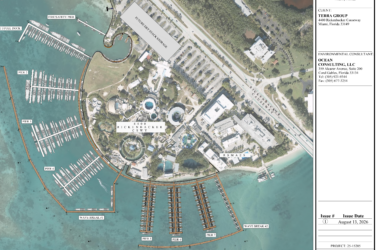
Under the proposed deal, Oak View (OVG) would provide up to $10 million for the restoration of the stadium and the creation of a neighboring “flex” park.
The city in turn would pay OVG a $33,333 monthly management fee, according to the ballot language approved by Miami officials. However, after that monthly fee is deducted the city will receive 93% of all future event revenue, and 85% of any sponsorship revenue. Other details of the arrangement would be worked out between the city and OVG if voters approve the referendum.
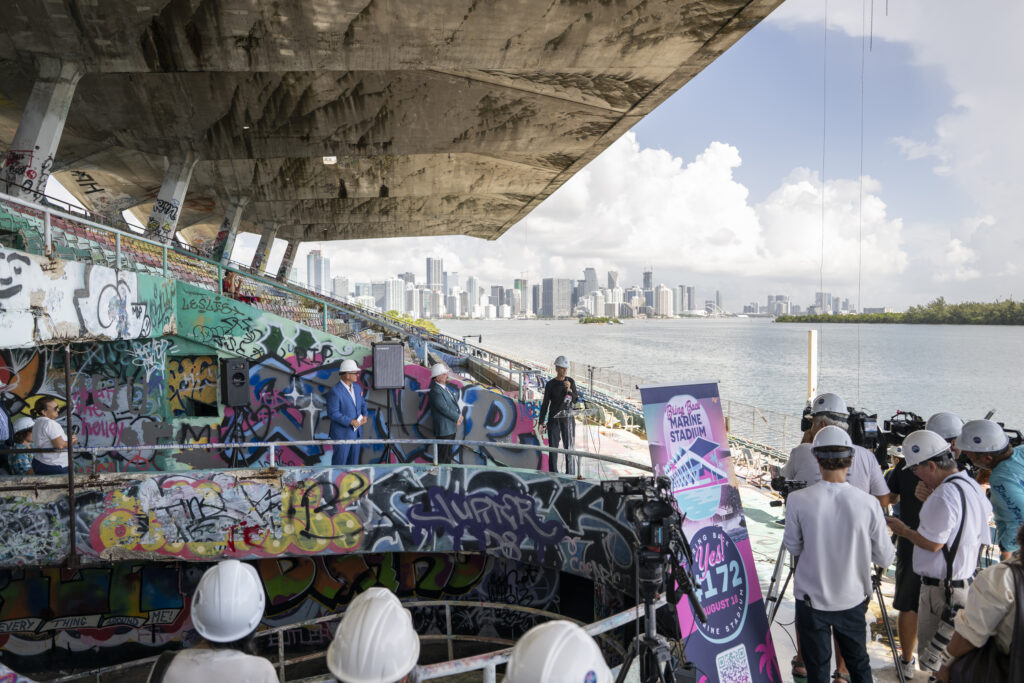
Preservationists and professionals who have been involved in the fight to preserve the historic landmark said the agreement may be the best chance to reopen a waterfront stadium that once hosted boat races, concerts, and television and movie shoots.
“This is the go or no-go decision on saving and restoring the Miami Marine Stadium,” said Richard J. Heisenbottle, a Coral Gables-based architect who prepared a report on the stadium for the city.
One potential sticking point for voters: OVG’s CEO, Tim Leiweke, was indicted by a federal grand jury in the summer of 2025 for allegedly conspiring with a rival company to rig the bidding process for a multi-purpose arena at the University of Texas.
In connection with the indictment, OVG agreed to pay a $15 million fine while the rival company, Legends Hospitality, paid a $1.5 million penalty, according to a U.S. Department of Justice news release.
Leiweke received a pardon from President Donald Trump in December before going to trial although not before stepping down as CEO of the company he co-founded in 2015. The company CEO is now Chris Granger whose experience includes being president of the Detroit Tigers, Detroit Red Wings, and Sacramento Kings.
OVG declined to comment for this story. However, those who support the pending deal stress that the charges against Leiweke had nothing to do with Miami.
“Oak View has 300 plus venues across the country. One of them is the Miami Beach Convention Center,” said Emi Guerra of Breakwater Hospitality Group, a Miami-based company that will help OVG operate Marine Stadium, should the referendum pass.
“They already have a local presence,” Guerra added. “They know what works and what will make money and they have the contacts to fill it up.”
Still, the federal charges were enough to delay the City of Miami deal last year.
Read more: Hopes for Miami Marine Stadium Are Dashed – Again
It wasn’t until early 2026 that the deal moved forward thanks to Miami District 2 Commissioner Damian Pardo. It was Pardo who pushed to place the proposed marine deal on Tuesday’s ballot. (Pardo did not respond to requests for comment.)
A popular stadium wrecked by neglect
Don Worth, a Miami Beach resident who has fought to preserve the Miami Marine Stadium since 2007, said the OVG proposal might be the best shot to bring back a building that has been significant to Miami’s history.
“This will be the symbol of Miami just like the Sydney Opera House is to Sydney, Australia. It will be transformative,” said Worth, co-founder of the now defunct Friends of Marine Stadium. “The architecture is great. And the history is great.”
Originally conceived as part of a larger development that would include a multimillion-dollar resort, an 18-hole golf course, and an executive airport, Miami Marine Stadium was built on land that Miami-Dade County deeded to the city.
To create the event venue, the city spent $1 million to dredge a boat basin and another $1 million to construct the stadium designed by Cuban architect Hilario Candela. His design included the building’s distinctive cantilevered roof.
After it was completed in 1963, the stadium hosted a variety of boat races, including events involving hydroplanes. There were also musical performances on floating stages by artists including Benny Goodman, Ray Charles, and Jimmy Buffett.
Television talk show host Phil Donahue filmed at least one show there. Easter morning masses, including one held by Reverend Billy Graham, were held there as well.
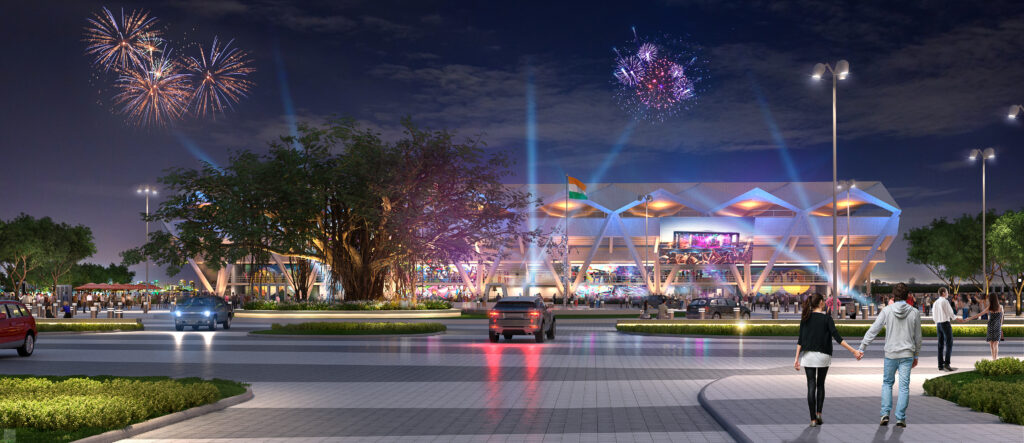
Miami Marine Stadium was also where Sammy Davis Jr. embraced President Richard Nixon at a 1972 re-election rally.
Although shuttered in the wake of Hurricane Andrew, Heisenbottle said the stadium is in good structural condition to this day. Still, he added, “there’s a lot of work to do.”
A March 2024 City of Miami report estimated it would cost at least $54.1 million to renovate the stadium. Additional features such as a floating stage, LED screens, and a new ticket booth could push the total cost to as much as $64.4 million.
Those figures do not include in the cost of building a “flex park” that could include outdoor eating and drinking areas and perhaps another waterfront recreation building.
Heisenbottle said a park is needed “because it brings everyone to the water’s edge. It becomes a public park on the water. And the stadium itself becomes an icon.”
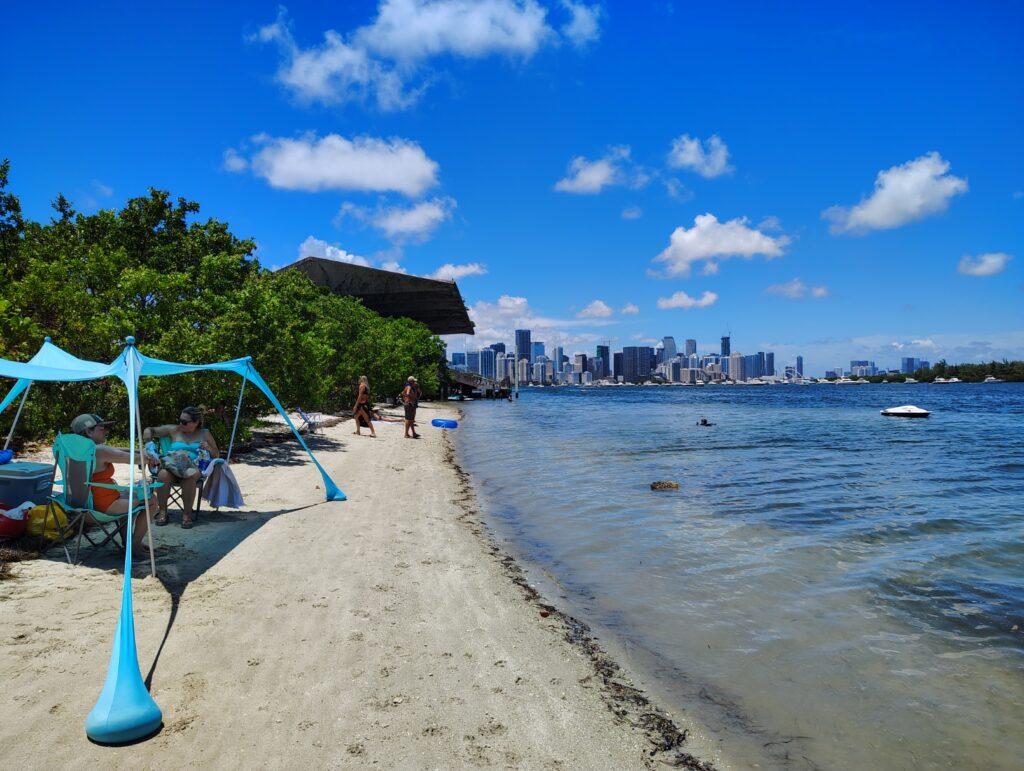
But the water’s edge by the stadium already receives visitors. On a recent muggy afternoon, a couple dozen people of all ages hung out along a narrow strip of sand near the stadium.
“It’s pretty chill here,” said Alberto Chavarri, a Broward resident who was with his girlfriend Cassandra Cortez and dog Bailey. “It’s cool here because it’s more private. Less people.”
Not everyone is a fan of the proposed deal, either. Filmmaker Billy Corben, a persistent critic of the City of Miami, described the agreement as another “shitty deal” where the private company will focus on developing an outdoor entertainment center instead of renovating the stadium.
“This is another one of these hope-and-pray schemes where the taxpayer always gets short changed,” Corben said.
Most people interviewed by the Spotlight, however, were in favor of the deal.
“In my mind this is probably the last chance to bring this building back to life for the public,” said Christine Rupp, executive director of Dade Heritage Trust.
Worth said the OVG deal may be best way to avoid the development of a private resort on the property. There have been four proposals to build hotels on the site in the past 18 years, he said, three of which would have involved demolishing the stadium.
The fourth proposal, by Crosspark Miami in 2024, would have constructed two hotels on the site without contributing to the building’s renovation, he said.
Chris McAliley, a Miami Rowing Club board member, said both the city and OVG have guaranteed that its members will continue to have access to the Marine Stadium basin that the organization has enjoyed for the past four decades.
Ernesto Cuesta, president of the Brickell Homeowners Association, said his organization is in favor of the renovation as well, so long as the new park doesn’t hold any events like Miami Ultra did on Virginia Key back in 2019.
“We are hoping that the flex park, as they call it, will not become a complete amphitheater where all these events like Ultra are held,” Cuesta said.
Beachgoers also told Spotlight they’d be in favor of seeing a deal that leads to Miami Marine Stadium’s revival, though retired stuntman Carl Paoli said he would prefer if Virginia Key didn’t become a tourist trap.
“As long as it doesn’t turn into South Beach and ruin a nice local beach,” said Paoli, a Brickell resident. “Every tourist goes to South Beach. And all the locals are like… don’t tell the tourists about Virginia Key.”











The City of Miami is asking us to sign a blank check for Miami Marine Stadium. Beyond a vague revenue allocation, there is absolutely no concise plan on which to base a “Yes” vote. With revenue maximization as the main objective, what is to stop this fragile waterfront location from being exploited year-round with massive, disruptive events?
Worse still, the actual operating details of this 40-year agreement with OVG/Global Spectrum will only be worked out after voters approve it. This indicates the City knows the terms wouldn’t pass public scrutiny if they were fully clarified upfront. Combining this lack of transparency with the federal legal history surrounding OVG’s leadership makes this ballot measure highly worrisome.
The City needs to go back to the drawing board, gather resident input, and issue a transparent RFP based on a clear, agreed-upon plan. Voting “Yes” on this undefined mess is a recipe for another corporate exploitation project that residents will deeply regret.
Congratulations to our community for being wise enough to support the restoration of our iconic Miami Marine Stadium.
Congratulations to all the elected leaders that supported its return.
But major congratulations go to Don Worth who dedicated 18 years in the most noble and selfless effort to restore it for the benefit of our community and future generations.
Plenty of folks offer great ideas on how to best provided for the greater good of all, but few are willing to actually dedicate time and effort to do the job.
Perhaps someday our community will fully recognize his incredible contribution and bestow the honor of naming it “The Don Worth Miami Marine Stadium”.