

The city’s first tree ordinance workshop brought complaints about removals, enforcement and appeals. The public review comes to Coconut Grove on Thursday.
Miami residents frustrated by tree removals and the city’s permitting process are getting a chance to tell City Hall what they think should change.
Their answer, at least so far: a lot.
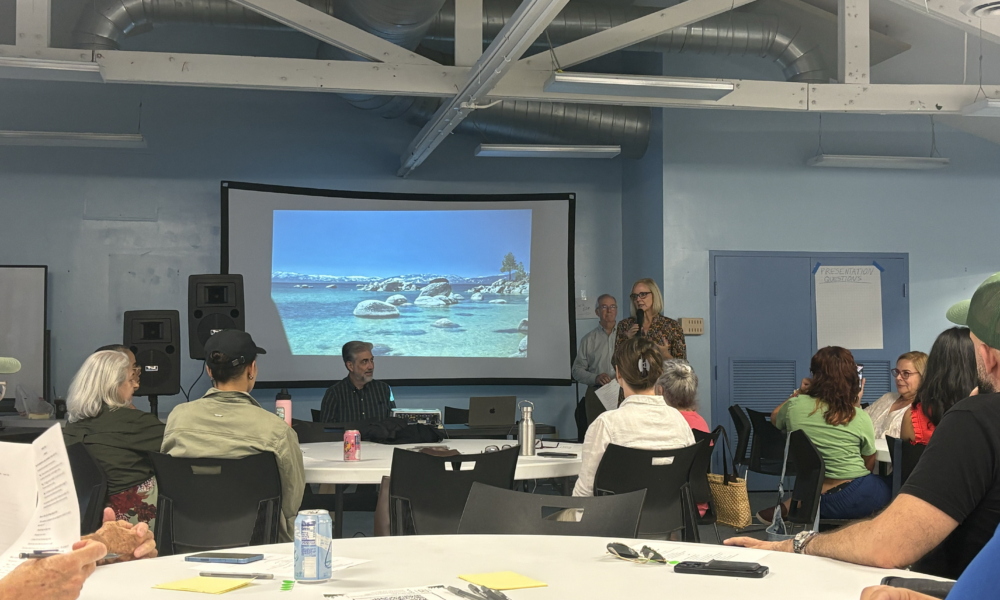
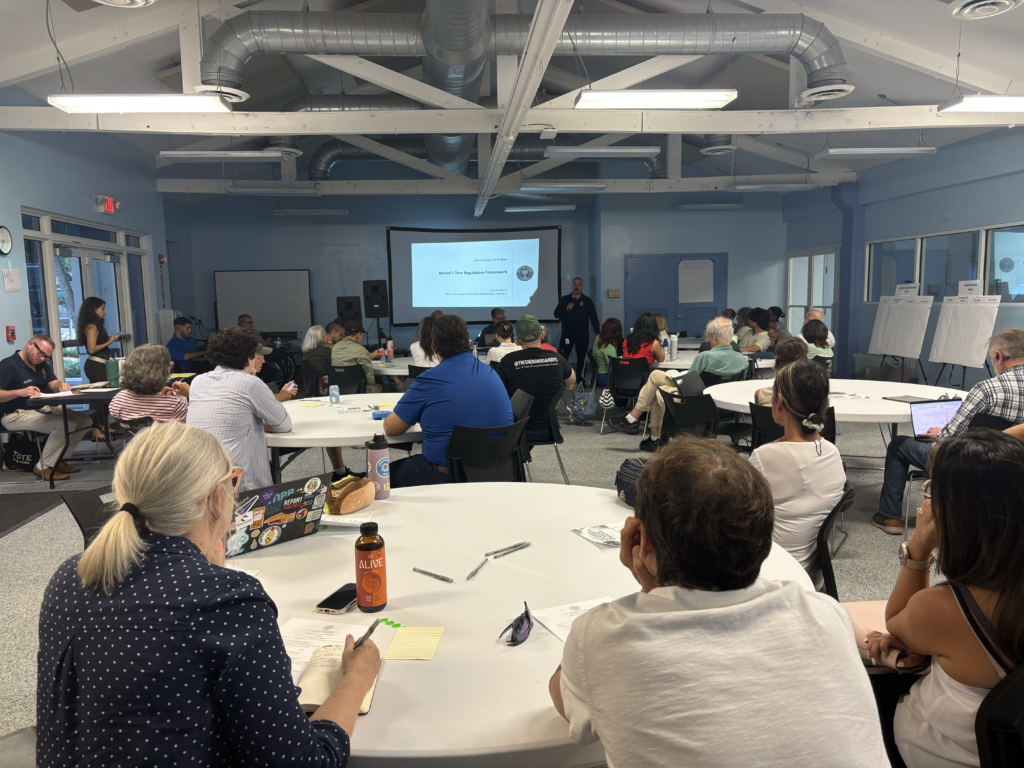
About 30 residents turned out last week for the second of five community workshops on Miami’s tree regulations, spending three hours hearing information and airing concerns about everything from enforcement and replacement requirements to the rules governing when trees can be removed.
The District 3 workshop at the Shenandoah Park recreation center marked the beginning of a long-promised effort to solicit public input ahead of a potential rewrite of the city’s tree protection ordinance.
More than a year after the Miami City Commission called for a comprehensive review of the regulations, the city has begun an eight-month Tree Ordinance Advisory Committee process expected to culminate next spring with recommendations for changes to the rules governing tree protection, removal, replacement and enforcement.
For Coconut Grove residents, their turn comes Thursday.
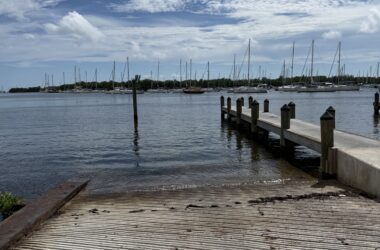
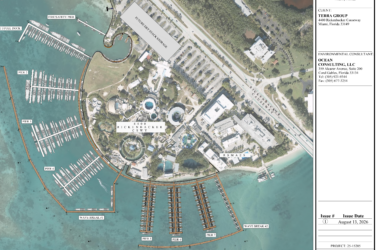
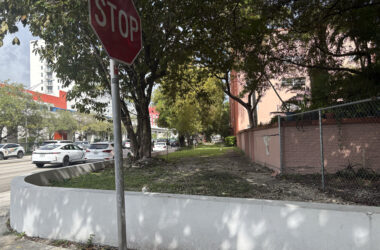
The District 2 Tree Ordinance Community Workshop will be held from 6 to 9 p.m. Aug. 20 at the Hangar at Regatta Harbour, 3385 Pan American Drive. District 4 will hold its workshop a day earlier, from 6 to 9 p.m. at Manolo Reyes Park, 6030 SW Second St. Both meetings are open to the public.
The workshops are among a series being held as the city’s newly created Tree Ordinance Advisory Committee gathers public input on regulations that have become increasingly contentious amid development and concerns about the loss of Miami’s tree canopy.
The committee will then develop recommendations for the city’s Building Department, which has been tasked with drafting changes to the tree ordinance. Any changes would ultimately require City Commission approval.
And if last week’s first meeting is any indication, residents will have plenty to talk about.
“If you want Brickell to be walkable, you need trees,” Brickell resident Elena Kasparis told city officials. “Otherwise, people are going to hop in Ubers to walk three or four blocks, which is what they’re doing, because it’s unbearable to be outside.”
Kasparis was one of dozens of residents who came with complaints — and ideas for change.
“I live on a street where they’re cutting down probably the last trees on the street,” she said.
Others raised concerns about the loss of shade as neighborhoods become more densely developed, the care and replacement of trees, enforcement of existing regulations and the cost and complexity of challenging city-issued tree-removal permits.
Kasparis urged the city to reduce the cost of appealing those permits, which can run into hundreds of dollars once appeal and noticing fees are included — a cost that residents have complained can make challenging a permit prohibitively expensive.
Bianca Mijares, a District 3 resident, said the city’s approach should extend beyond protecting individual trees.
“I think trees are part of the personality of any place, any city, any ecosystem,” Mijares said. “[They] should coexist with public infrastructure.”
The dissatisfaction was also apparent when participants were asked to grade the city’s performance. Residents placed stickers on large sheets indicating whether Miami was doing too little, enough or too much — or whether they simply didn’t know — in protecting existing trees, planting new ones, replacing trees that are removed and caring for them.
The verdict was lopsided: On nearly every question, participants said the city was doing too little.
Residents were also asked two broader questions: what city leaders and residents most need to know about trees, and what actions they would like the city to consider taking.
Mayor Eileen Higgins opened the workshop before leaving shortly afterward. District 3 Commissioner Rolando Escalona did not attend. Three seats on the 11-member Tree Ordinance Advisory Committee have yet to be filled.
The committee began meeting in July and is expected to complete its work by March.
Read more: Miami Begins Review of Tree Rules as Removal Battles Intensify
The public-engagement process is being facilitated by Hal Beardall and Rafael Montalvo of Florida State University’s Florida Conflict Resolution Center. Residents who cannot attend a workshop can also submit comments through an online survey.
A second round of workshops in each district is planned for later this year or early next year, allowing residents to weigh in on proposed changes before the committee makes its final recommendations.
The ordinance review comes as disputes over Miami’s tree-removal permitting process have increasingly moved from neighborhood streets to City Hall.
After just one tree-removal appeal was filed in all of 2025, the city’s Historic and Environmental Preservation Board has faced at least 14 this year, prompting special hearings devoted to tree appeals.
Some of the most contentious disputes have centered not on whether trees should be removed, but on who has the right to challenge the city’s decisions.
In July, the board dismissed appeals involving the proposed Ziggurat development on Grand Avenue and a McDonald Street property after determining that the appellants lacked legal standing, without considering the merits of their challenges.
Members of Miami’s Trees Matter Most, an advocacy group that provides guidance and technical support to residents filing many of the appeals, have challenged those rulings, arguing that the city’s interpretation of who is permitted to appeal a tree-removal permit — an interpretation that has prevailed in recent HEPB decisions — flatly contradicts the city’s own code. City officials dispute that interpretation.
The issue has frustrated some board members as well.
“It puts us in a funny spot,” board member Christopher Cawley said. “We’re not here to be lawyers. We’re here to talk about the environmental resources. … We’re just debating a total technicality right now.”
Read more: Tree Appeal Surge Overwhelms City Oversight Board
The next round of tree appeals is expected before the board in September.
Anita Li is a Spotlight reporter and Report for America corps member covering government accountability in Coconut Grove and Miami City Hall. She joins us through our partnership with Report for America, a national organization that places journalists in local newsrooms across the United States.








Mayor Higgins stayed just long enough to get an Instagram clip, but didn’t stay long enough to learn anything from residents.
The City of Miami has a fairly strong tree protection ordinance, but it does have some fundamental problems.
It has too many barriers to appealing a tree removal, including ‘legal standing’ and excessive fees.
Tree removal decisions are among the last items to be considered for new construction; they should be the first.
Also, the City has made some highly questionable decisions to allow removing trees in the public right of way, including 5 mature mahogany trees at 1837 NE 4 Ave, and 36 tall royal palms and 6 black olive trees at 1401 Brickell Avenue. The mahoganys were saved, the others were cut down.
It is also highly suspicious that the Chief of Environmental Resources, Quatisha Oguntoyinbo-Rashad, was transferred out of her position of authority. Was she too protective of trees for the current administration and the developers who make campaign contributions?
Many in the tree-advocacy community believe the current exercise in public input was initiated to enable the City to weaken, not strengthen, the tree ordinance.
Time will tell.
It seems these workshops are for city officials to claim they’ve addressed the problem. Less lip service, protect the trees more. Atlanta has more trees than tropical Miami. And remember, world class cities have fabulous third spaces (public spaces, plazas, and parks). Miami seems to be giving theirs away to the highest bidders (and donors).