

Miami City Commissioner Rolando Escalona says he stopped the five-acre park project to reconsider how best to expand green space in Little Havana. His predecessor says there’s another explanation.
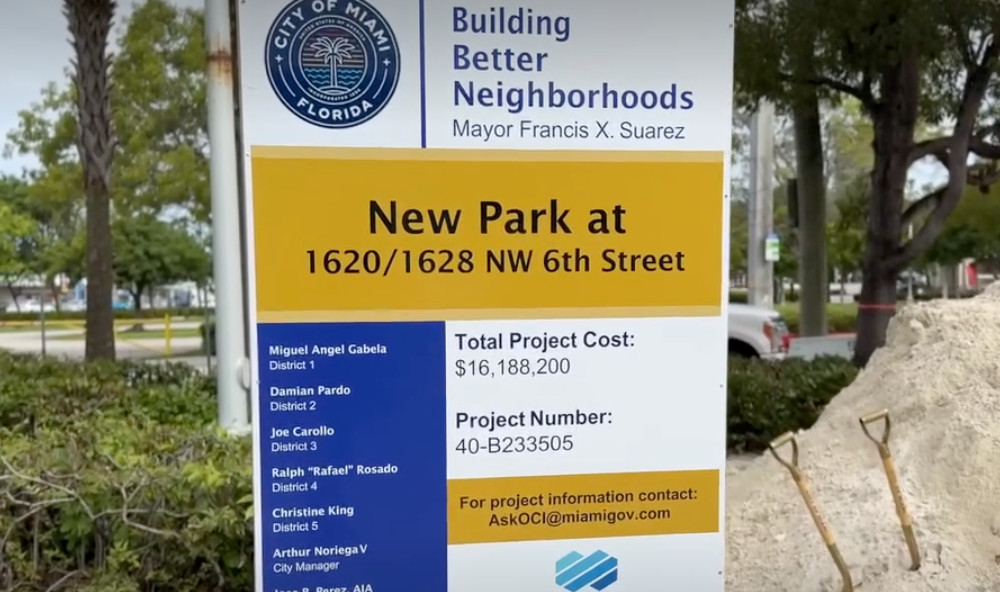
Last October, City of Miami officials stood before cameras outside loan Depot Park in Little Havana promising residents a new, state-of-the-art five-acre park in a neighborhood long lacking public green space.
“Anytime that we get to build a park for the residents of the City of Miami, it’s a great day in the city,” Capital Improvements Director Jose Perez declared in a promotional video. “This is a park forever.”
It wasn’t.
After years of planning, millions of dollars in land purchases, a groundbreaking and a series of city approvals, the project has been pulled, with city insiders pointing to the elected official who oversees the neighborhood where the park would be built: Miami District 3 Commissioner Rolando Escalona.
In a written statement to the Spotlight earlier this week, Escalona, who took office in November, acknowledged that his office stopped the project, saying he wants the city to reconsider whether one large park or a collection of smaller parks would better serve Little Havana.
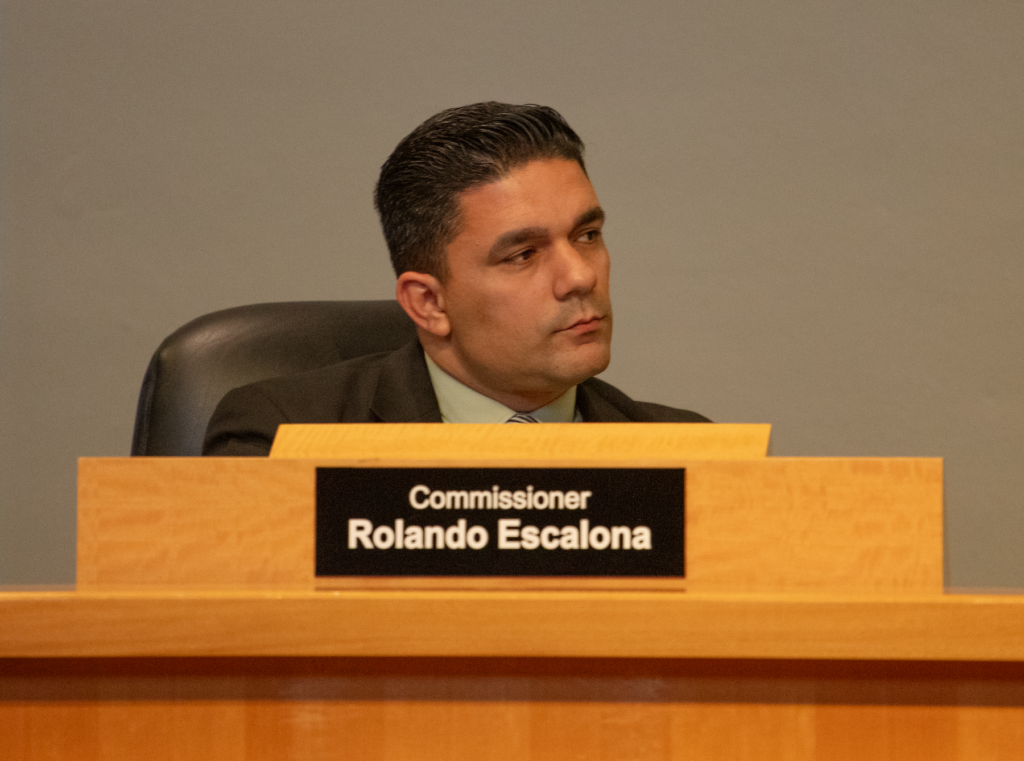
“The project was pulled to give our office the opportunity to fully evaluate what would best serve the surrounding community,” Escalona said, including whether the neighborhood would benefit from “one larger park or a combination of different park levels, such as neighborhood parks, community parks, or pocket parks.”
“This was not a decision against creating more green space,” he added. “It was a decision to make sure we are taking a comprehensive look at the needs of the area before moving forward.”
His predecessor isn’t buying that explanation.
Standing Wednesday at the fenced-off site where the park was supposed to rise, former Miami District 3 Commissioner Joe Carollo said the city had spent years assembling land and planning the park and that $18.5 million had been set aside to build it.
Carollo, who represented the district until term limits forced him from office last November, said the city spent approximately $8 million acquiring property needed for the project.
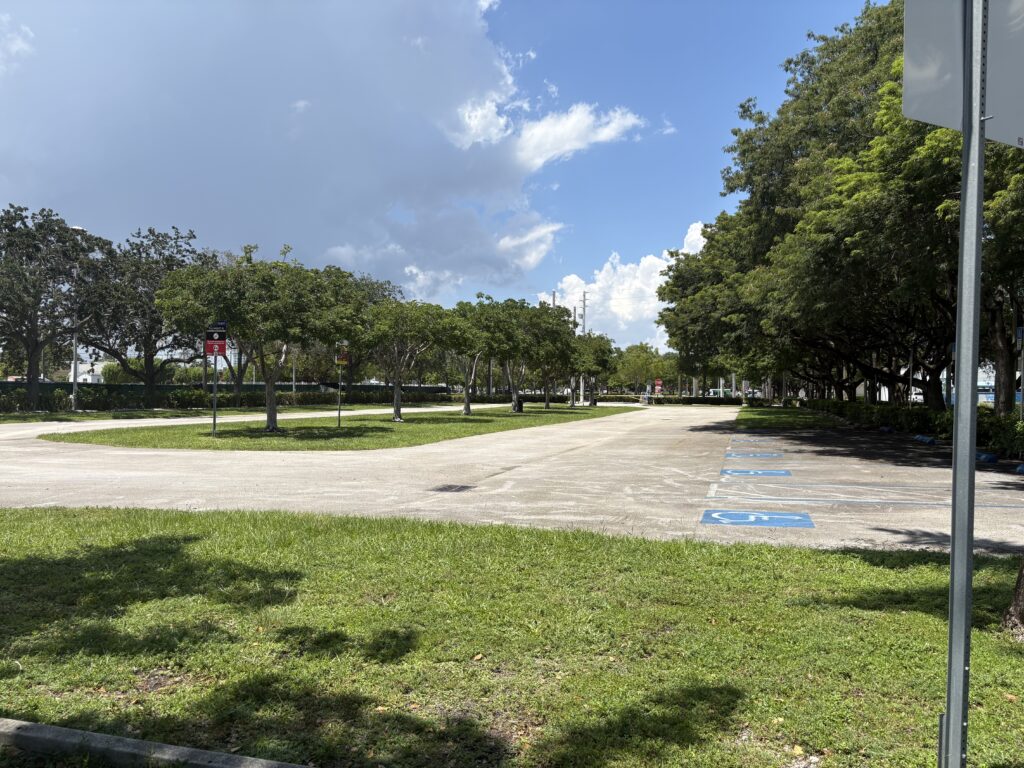
Looking across the largely vacant property, much of which is used for parking, Carollo rejected Escalona’s suggestion that Little Havana might be better served by several smaller parks rather than the five-acre facility.
“He’s full of shit, and he knows it,” Carollo said of Escalona. “The only reason you go to small parks is because you can’t find land, but we were able to put it together.”
The park envisioned by Carollo and other city officials was anything but small.
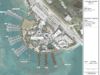
Plans called for one of Miami’s largest playgrounds, baseball and soccer fields, pickleball courts, a community building, fitness equipment, walking paths and extensive landscaping. A pedestrian promenade would have extended from Northwest 17th Avenue toward the entrance of loanDepot Park.
“This facility is going to have the ability for the nearby residents to come to the park, play baseball, soccer,” Perez said in the city’s promotional video. “You have a dog park. You have a massive playground. You’re gonna have definitely programming for all ages.”
Nearly 10 months later, much of the site not used for parking remains fenced and overgrown, with no visible signs that construction ever began. City records show no active building permit for the site.
Carollo pointed to fenced portions that he said had previously been opened for neighborhood recreation.
“I had this open when I was here, and the community was playing soccer,” he said. “I don’t know why they closed it. … They took all the soccer stuff away.”
With the new park now dead in the water, Carollo says another question remains: What becomes of the $16 million earmarked for its construction and another $2.5 million he says was set aside for “add-ons”?
The new park was part of the city’s effort to replace roughly 73 acres of public parkland lost to the Miami Freedom Park soccer stadium and mixed-use development under Miami’s “no net loss” park policy.
Read more: Miami Promised ‘No Net Loss’ of Parks, then Changed the Fine Print
The proposed five-acre park, which had never been formally named, encompassed a collection of city-owned parcels between Northwest Fifth and Sixth streets and Northwest 17th Avenue, adjacent to loanDepot Park, the city-owned stadium leased to Major League Baseball’s Miami Marlins.
For the park to move forward, several of those parcels required zoning and land-use changes by the City Commission to allow them to be used as public parkland rather than for their previously designated uses.
But as the project moved toward construction, another interested party entered the picture: the Miami Marlins.
In November 2025, an affiliate of the Marlins organization appealed the Planning Department’s decision to issue a warrant — an administrative zoning approval — authorizing a portion of the park project on one of those city-owned parcels.
That parcel included a surface parking lot associated with loanDepot Park, putting the proposed park in potential conflict with the Marlins’ existing parking interests at the stadium.
Last month, on the day the Planning, Zoning and Appeals Board was scheduled to hear the Marlins’ appeal, city zoning officials announced that they had withdrawn the warrant, rendering the appeal moot.
What role the Marlins’ appeal involving the stadium parking lot played in Escalona’s decision to cancel the larger park project — and what role Escalona’s decision played in the city’s subsequent withdrawal of the warrant — remains unclear. Neither Escalona nor city communications staff have responded to a detailed list of follow-up questions from the Spotlight.
Marlins officials also have not responded to repeated requests for comment. Melissa Tapanes Llahues, an attorney who represented the Marlins in its appeal of the city’s warrant, declined to comment on the record.
But Carollo says the baseball organization and the city were already at odds over the property before he left office last fall.
Carollo said the city and the Marlins initially discussed a compromise under which roughly 300 parking spaces displaced by the park would be replaced in garages on nearby city-owned property. The discussions also contemplated allowing the Marlins to pursue hotel and residential development on other property near the stadium, he said.
“We would have put some 300 parking spaces that they claimed they would lose there,” Carollo said.
According to Carollo, those discussions changed after the park groundbreaking, when Marlins representatives presented plans for four residential buildings around the stadium, including two that he said would have been located on property contemplated for the park. He said the proposal also called for commercial development beneath an elevated park.
“There was very little park left,” Carollo said. “On top of that, they wanted us to build a park … where the park would have been on the second story … and in the bottom, it all would have been commercial. I almost exploded.”
Carollo said he rejected that proposal.
The Spotlight has not independently confirmed Carollo’s account of the Marlins’ development proposals or negotiations with the city.
Escalona, meanwhile, has framed his decision not as an abandonment of Little Havana park investment but as an opportunity to reconsider where and how that investment should occur.
His office said any future plan would be guided by the city’s Parks Master Plan and would seek to locate parks strategically so that more residents have access to green space.
“Our goal is to maximize the impact of our investments and ensure that the parks we create are accessible, useful, and responsive to the residents they are intended to serve,” Escalona told the Spotlight.
Anita Li is a Spotlight reporter and Report for America corps member covering government accountability in Coconut Grove and Miami City Hall. She joins us through our partnership with Report for America, a national organization that places journalists in local newsrooms across the United States.