


With no public notice, a last-minute “substitution ordinance” in 2023 allowed the City of Miami to sidestep requirements to acquire new land for parks when it turns its existing ones over to developers.
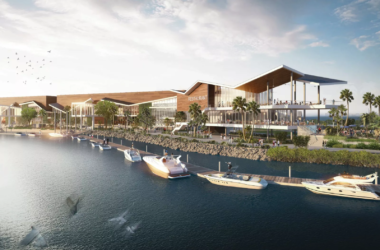
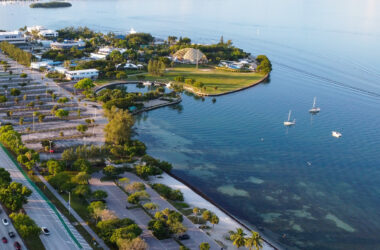
The City of Miami is not obligated to acquire new land to replace the roughly 73 acres of public park space lost to the Miami Freedom Park soccer stadium and mixed-use development — or any other park land later sold or converted for non-recreational use — because city officials quietly revised the wording of Miami’s “no net loss” park land ordinance before it came to a vote in 2023.
Under the changes — adopted without public review or input — existing city-owned parcels, such as rights of way, vacant tracts, and surplus commercial lots, can now be counted to offset the loss of city park land, rather than requiring the acquisition of new property as lawmakers initially intended.
The change was not disclosed, explained, or debated publicly prior to the City Commission vote.
The revelation — uncovered through a Spotlight public-records request — is the latest example in the City of Miami of a so-called “substitution ordinance,” a city law approved with substantive, last-minute changes not revealed to the public.
City officials acknowledged the practice earlier this year after a Spotlight investigation revealed multiple instances over the past two years in which zoning measures were rewritten — in some cases expanding the development potential and market value of large sections of land — all without public disclosure.

The 2023 “no net loss” ordinance codified Miami’s long-standing policy requiring replacement parcels to offset any park land rezoned, repurposed, or sold for development. Its intent section made that clear:
“It is intended that the City receive park lands of suitable park, recreational, or conservation value in terms of usefulness and location … simultaneous with the conversion or elimination of any existing park land.”
The measure passed unanimously on the first of two required commission votes, in September 2023, with residents generally voicing support during the meeting’s public comment period, records show.
But the version of the ordinance approved by the commission that day wasn’t the one the public saw. Four days earlier, City Manager Art Noriega, in an interoffice memo obtained by the Spotlight, added a single line that fundamentally reshaped the law’s impact:
“No City-owned land may be used as replacement park land for purposes of this policy, with the exception of the replacement park land being used for a City-owned public facility.”
In other words, and in language perhaps more confusing than clarifying, the city was effectively off the hook for adding to its inventory of public land.
The amendment allows city officials — specifically the city manager — to offset the loss of park land at Miami Freedom Park and any future rezoned parks by reclassifying existing properties, provided they include a “public facility” — a category so broad that it could include virtually any existing or future use.
When told by the Spotlight of the previously undisclosed “substitution ordinance” before the September 2023 vote, civic activist Elvis Cruz, who records show was among the residents who spoke at the meeting, summed up his disbelief: “What a bunch of scumbags.”
Also surprised to learn of the change is former Miami District 2 Commissioner Ken Russell, who cast the 2022 swing vote in favor of the controversial Miami Freedom Park deal. A key provision of that deal, Russell says, was assuring “no net loss” from the development – a requirement made far less burdensome, and less costly, by the substitution ordinance, given the city’s ability to shift the loss there to existing parcels.
But simply calling a tract of land a park does not make it one, Russell warns. Whether the land is acquired or repurposed from existing city holdings, park land requires an upfront investment in facilities, landscaping, along with the resources to maintain it.
Russell remains furious with city commissioners who earlier this year agreed to redirect $10 million from Miami Freedom Park developers — money originally earmarked for creating new city parks — back into the stadium project itself.
City officials have not said how or where they intend to make up for the loss of public park land at Miami Freedom Park, and what it might cost. Under the city’s “no net loss” ordinance, lost park land — including the vast acreage consumed by the Miami Freedom Park development — must be replaced within three years.
Miami ranks near the bottom of major U.S. cities in park acreage per resident.
Noriega has not responded to detailed questions submitted in writing by the Spotlight about the stadium project, the city’s “no net loss” policy, and the altered language of the 2023 ordinance.
Among those questions is whether the last-minute changes were in fact planned much earlier: The copy of the “substitution ordinance” obtained by the Spotlight includes a date stamp more than two months before the commission vote. City officials in the Planning Department and City Attorney’s office have defended the practice of altering the language of legislation prior to commission votes, saying that public notice is required under the state’s open government laws only when the changes stray from the law’s “general purpose.” The details, they argue, don’t count.














The City of Miami Officials who engineered this dishonesty, cheating and harming of the public interest are indeed scumbags.
Doing last-hour, under-the-radar, substantive changes like this, with no meaningful public notice, should be grounds for removal from office and criminal penalties. It’s white collar theft.
BEFORE Francis Suarez and Ken Russell decided to support the soccer stadium scam they should have looked for exactly WHERE they were going to find 73 acres in the City of Miami to replace those 73 acres of lost park land.
They would have quickly seen they can’t find that much similar, continuous land, so they should have then said, “Sorry, my dear billionaire campaign contributors, we may be star-struck by your celebrity, but we can’t do the deal unless we cheat the public. We are ethical elected officials with integrity and character, so we can’t let you lease the Mel Reese golf course at a very cheap price and let you bulldoze it and remove over a thousand trees for your profit.”
But they didn’t say that, and the public got screwed.
Yes, they put it to a referendum, and yes, the public swallowed the ad campaign and voted for it, but it should never have been put to referendum in the first place.
Park land should be considered sacred ground to be protected and preserved, not seen as vacant land for empire building schemes for rich campaign contributors.
It’s one more reason why I don’t trust the City of Miami.
Elvis Cruz
Morningside
“Ben”—short for his given name Benevolent–the carnival trickster with the three walnut shells and the pea-size ball arrived in the Magic City and smiled to himself. “These rubes will be easy pick’ns” he said as he set up his polished wood table and parked himself on his stool. The sign behind him said: “Try your luck. Just 25 cents to win $25.”
By noon the suckers were lined up ten deep. It took him less than 30 seconds each to appear to place the musket ball under one of the shells which he then moved quicker than the human eye could follow, before asking the sucker to guess which one covered the ball.
Of course, they always guessed wrong, because the ball had disappeared before reappearing from under the fingernail of his right pinkie almost torn off in an accident when he was five. It had healed with a little cavity covered by scar tissue, perfect for picking up and depositing small round pellets.
Just before noon, when the crowd was thickest, his buddy Joe had joined him to play, and miracle of miracles, “guessed” the right shell. With a grand flourish, Ben pulled out a wad of greenbacks to loudly count out $25.
“Easy as pie” Ben said to himself. “They never catch on.”
Andy or Elvis,
Can you please tell us which commissioners voted for this crime?
Thanks for trying to watch out for us!
Gary Gross
Gary Gross, thanks for reading, responding, and caring.
First reading, on September 14, 2023, it passed 5-0. Voting for it were Commissioners Christine King, Joe Carollo, Alex Diaz de la Portilla, Sabina Covo and Manolo Reyes.
Second reading, on October 12, 2023, it passed 4-0. Voting for it were Commissioners Christine King, Joe Carollo, Sabina Covo and Manolo Reyes.
Wow….They all are corrupt or stupid. Thanks Elvis.
Do you have any advice for me on the mayoral runoff race? If you don’t want to respond publicly maybe you could email me [email protected]. I am grossly uninformed.