




The City of Miami’s practice of quietly modifying proposed legislation prior to a commission vote is permitted under law, officials insist, so long as the changes do not stray from what was “originally contemplated.”
The City of Miami’s widespread but little-noticed practice of modifying local ordinances prior to a commission vote – without notifying the public – is rooted in a 2007 Florida legal ruling that state-mandated disclosure requirements apply only when changes to a proposed law alter its “general purpose.”
But neither state law nor subsequent court rulings have defined how to apply the “general purpose” standard, giving local officials wide discretion to make last-minute, far-reaching changes to pending laws without public disclosure or review.
The City of Miami, for its part, has no written rules or policies for applying the “general purpose” standard when ordinances voted upon by commissioners deviate from the versions shared with the public, city officials have acknowledged to the Spotlight.

The city’s use of so-called “substitution ordinances” has been under scrutiny following revelations in late July that city officials modified a pending zoning ordinance by vastly expanding the areas of Miami eligible for supersized development, among other changes, not initially included in the law.
The measure – known as Transit Station Neighborhood Development, allowing far taller buildings and higher housing densities within proximity to Metrorail stations and other transit hubs – passed unanimously.
In a lengthy interview with the Spotlight following the vote, City Planning Director David Snow defended the decision not to disclose the amendments, arguing that they “were not substantial and were aligned with what was originally contemplated in the ordinance.”
In some cases, the changes doubled the geographical area eligible for increased height and density around a transit station, and extended the incentives to an extra zoning category – vastly expanding the law’s reach and greatly increasing the value of affected properties.
Other changes stipulate that the high-density allowances will apply to areas surrounding all “future” fixed-rail lines, not just existing ones; create a pathway for developers to sidestep minimum lot-size requirements; and allow developers to modify the plans of large-scale projects without public notice or input, as long-standing rules had required.
Snow said the changes align with the new law’s larger goal, or “general purpose”: increased development allowances in areas served by transit. The details, he argued, are not subject to public scrutiny, as long as the overall intent remains the same.
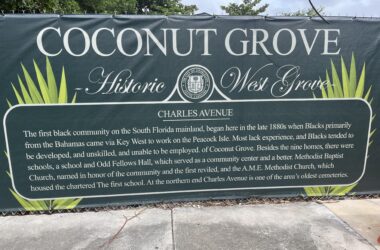
The same rationale, Snow added, explains the city’s decision to allow 11th-hour changes to a 2023 law that opened up wide swaths of Coconut Grove to increased building height. “As long as it was initially contemplated [by city officials],” Snow said, “it’s fair game to bring it back without public notice.”
(In June, following months of fierce public outcry following news reports detailing the language change, the city commission rescinded the law.)
Snow says the use of substitution ordinances – changing legislative language prior to a binding commission vote – has become commonplace in the past two years.
The requested changes, Snow said, come from a variety of places — city staff, residents, citizen review boards – but the city’s elected officials account for the bulk.
“Last year we had quite a bit, mainly because there were little changes that were being asked for by the commissioners,” he explained.
Despite a request from the Spotlight, city officials have not released a complete list of substitution ordinances over the past two years, but a review of commission meeting minutes during that period reveals they are a regular occurrence. There were three at the most recent meeting alone.
Not all substitution ordinances include broad legislative changes, said Snow, citing an affordable housing measure approved last month that differed from its publicly noticed version only in the income levels it targeted.
As state law mandates, proposed laws are posted on city websites generally one week prior to a commission vote, allowing residents the opportunity to express support or opposition.
Substitutions – which nullify the posted language – are shared with elected officials a day or two prior to a binding vote via a memo from the city manager.
Determining if the substituted changes alter the law’s “general purpose” – and, thus, trigger a re-notice and public review – falls to the city attorney’s office.
Amber Ketterer, the assistant city attorney who oversees the department’s compliance review process, said in a recent interview with the Spotlight that while the city’s use of substitution ordinances was “common,” they rarely, if ever, stray beyond a law’s “general purpose.”
“That’s likely happened,” Ketterer surmised. “But I can’t think of an example right now.”


















Outrageous!
The City itself decides whether a last-minute legislative change is substantive enough to merit disclosing it to the public. The City itself decides whether to postpone the hearing so the public has time to read and respond.
As a result, very few last-minute changes are revealed and very few public hearings are postponed, especially if those changes benefit the developers that make campaign contributions.
NO last minute changes should be allowed. ALL proposed changes should be posted at least a week in advance.
But the City likes to do whatever the City wants to do, and if it’s not in the public’s best interest, that doesn’t bother the City.
So much for transparency in government. Or fairness. Or common sense.
One more reason why I don’t trust the City of Miami.
Elvis Cruz
Morningside