

The City of Miami has issued a temporary permit allowing Ransom Everglades to use two properties on Charles Avenue as a parking lot for construction workers. Residents say the decision adds to mounting development pressures on the street.
Every time Jasmine Doyle prepares to turn onto the street she grew up on, she says a prayer: “Please, Lord, let me be able to get to my house.”
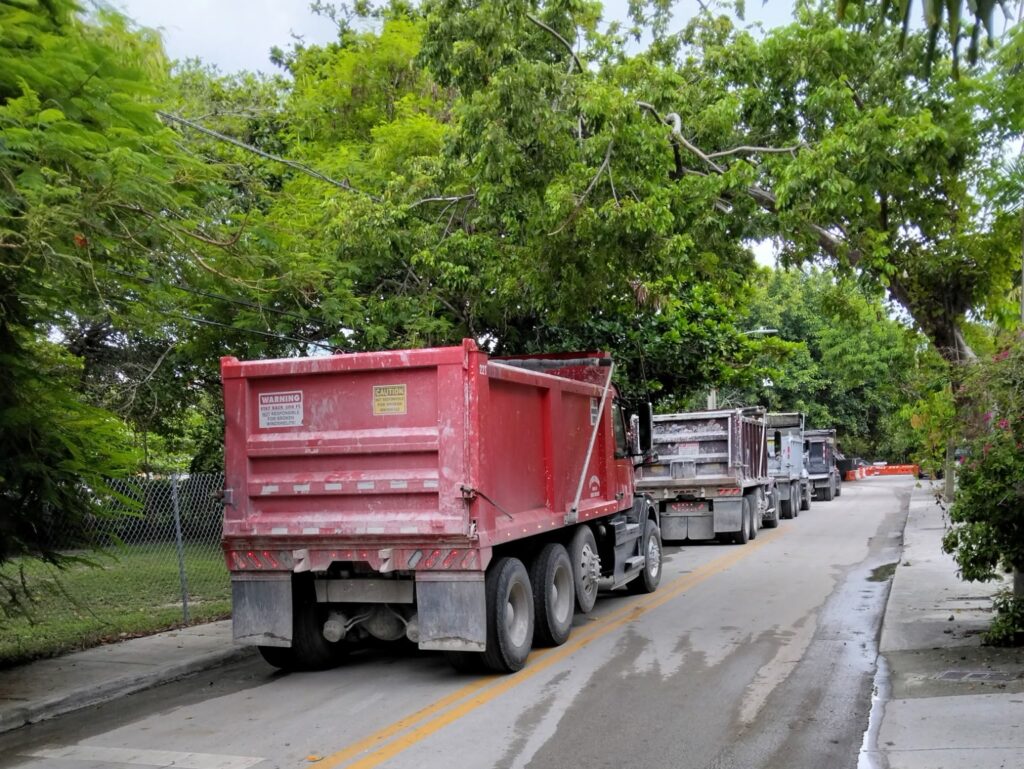
For 23-year-old Doyle, a recent college graduate who moved back to her childhood home on Charles Avenue in Coconut Grove this summer, navigating a bottleneck of construction vehicles has become a part of her daily routine.
Between the partial demolition of the Coconut Grove Playhouse and the steady construction of new homes, the sight, sound and inconvenience of heavy machinery have become a constant for residents living on one of the Grove’s most historic streets.
Now, residents say construction surrounding Charles Avenue is poised to bring another disruption to their neighborhood: a new temporary construction parking lot for Ransom Everglades.
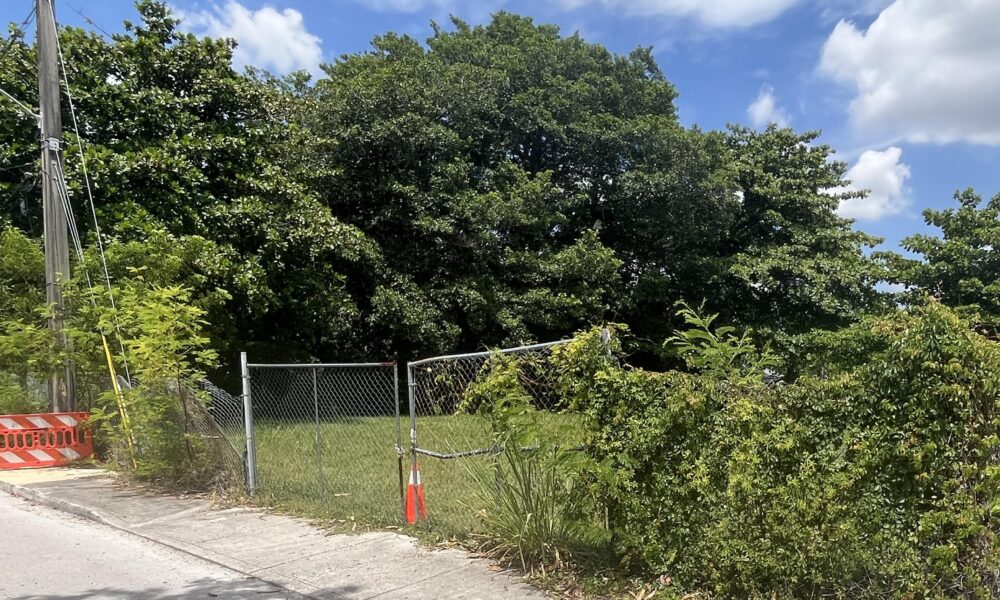
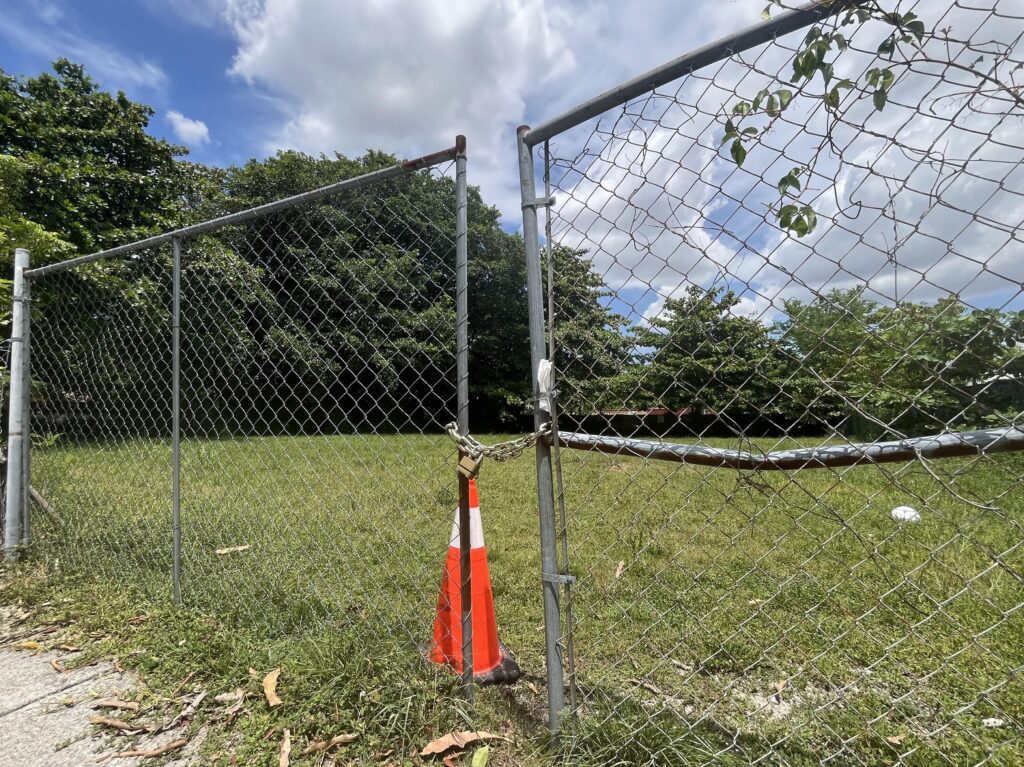
On Aug. 14, the City of Miami’s building department issued a temporary parking permit allowing construction-related vehicles from the private school to park on two connected vacant lots at 3227 and 3247 Charles Avenue.
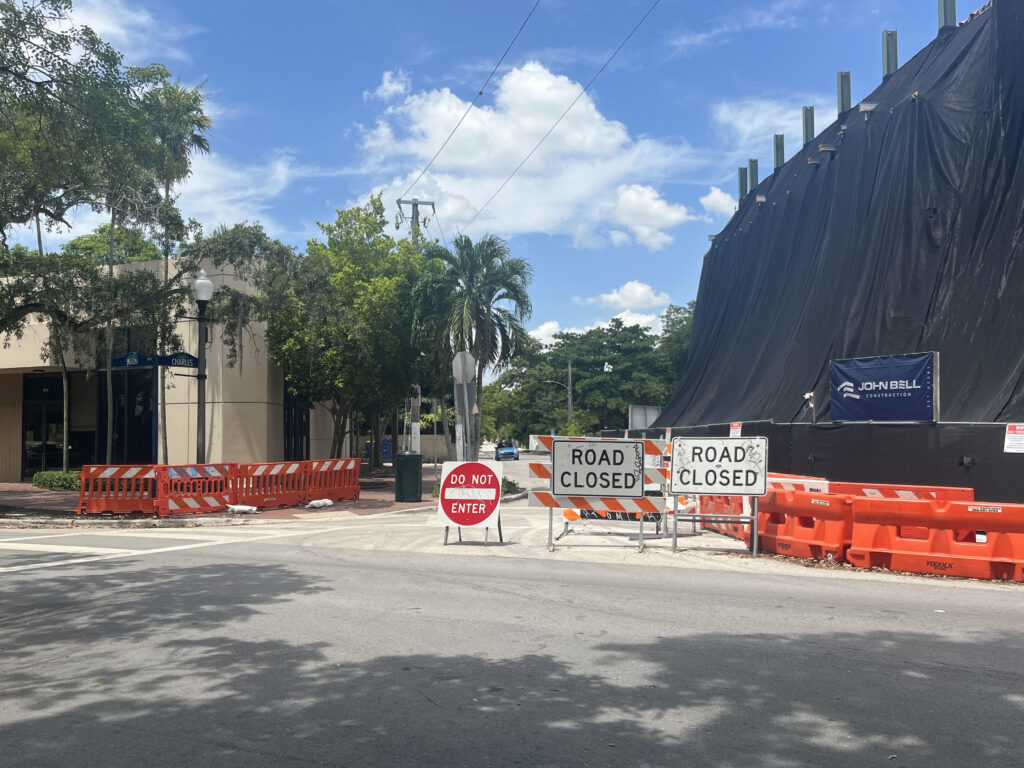
The decision was delivered over the strong objections of neighbors, who have spent the summer raising their concerns to the school and the city. The lots are owned by 3227 Grove LLC, a company managed by Coconut Grove developer Peter Gardner.
Ransom Everglades is currently building a three-story, 30,000-square-foot humanities center at its nearby campus on Main Highway. According to the permit application, the offsite parking lots will provide approximately 37 parking spaces for passenger vehicles and trucks.
Amy Shipley, Ransom Everglades’ director of communications, wrote in a statement to the Spotlight that the school expects to park 25 to 30 cars on the lot during school hours while construction is underway. The school’s site states that the new building is scheduled for completion in the fall of 2027.
“We are complying with all of the city’s requirements and look forward to returning to normal parking operations as soon as construction wraps up,” she wrote.
Since late April, members of the local nonprofit Preserve the West Grove (PWG) have raised concerns about the parking lot’s potential impact on an already traffic-burdened Charles Avenue, reaching out to both the city and Ransom Everglades.
The organization also suggested an alternative: Ransom’s construction workers could park at the municipal parking garage near Miami City Hall and ride a shuttle to the school property on Main Highway.
“If Ransom Everglades chose to utilize the City of Miami’s municipal parking lot at Regatta Park, it could not only avoid damage to Charles Avenue, but provide additional revenue for the City,” PWG board member Anthony Vinciguerra wrote to city officials this month.
On June 1, members of the group met with Ransom Everglades chief operating officer David Clark, and Ian DeMello, the attorney who submitted the parking permit application.
In an email following the meeting, DeMello outlined measures the school would take to limit the parking area’s impact, including screening it from view, providing security and maintenance, and giving credentialed parkers instructions about speed limits and traffic laws.
DeMello directed the Spotlight’s request for further comment on the meeting to Ransom Everglades. Clark did not respond to questions before publication.
PWG board member Courtney Berrien responded to DeMello’s email by asking Ransom to incorporate those proposed measures into a binding agreement. Alternatively, Berrien said the school should withdraw its application or work with the city on a traffic management plan.
The city ultimately approved the temporary permit but shortened the requested duration.
While the application requested that the lot remain open through 2027, the building department approved the permit for just 120 days, with further extensions contingent on feedback from neighbors during that period.
“The City will be keeping track of any feedback provided relative to this site during the 120-day period to ensure compliance and effects on the neighboring properties and the Charles Avenue neighborhood,” assistant director of enterprise permitting Julia Cerrato wrote in an email sharing the department’s decision with Vinciguerra.
While Vinciguerra said Preserve the West Grove appreciates that the city will review the permit after four months, he insisted that the group’s core problems with the permit are not resolved.
“It is still a parking permit that would allow Ransom Everglades to park 35 plus construction worker vehicles on Charles Ave — one of the most historic, narrow streets, in Miami’s oldest community of African descent,” he said.
Pushing back against the permit is not simply about resisting one parking lot, Vinciguerra said. For Charles Avenue residents, the fight represents the latest chapter in years of resistance against development-related intrusions on the historic street.
One of the oldest streets in South Florida, Charles Avenue is home to some of the most historic structures in the Miami-Dade region, including a 136-year-old house, first built for Mariah Brown, one of the Grove’s first Bahamian settlers.
Throughout the late 19th century, Bahamian families like Brown’s settled on what was originally called Evangelist Street, building a tight-knit community of shotgun homes, churches and community institutions like the Odd Fellows Hall, a community center and library. Eventually renamed Charles Avenue, the street was an important hub of the Grove’s Black community — and a center of early Black homeownership in Miami.
Miami has formally recognized that history in its zoning code, listing Charles Avenue as part of the city’s NCD-2 Neighborhood Conservation District, featuring neighborhoods with “a certain defined character worthy of protection,” including cultural or historical identities.
According to the code, the Neighborhood Conservation District provides “additional regulations or design guidelines for new construction, major alterations and additions to existing Buildings” intended to protect and perpetuate the value of the neighborhood.
But Vinciguerra said those written protections have done little to prevent new development that he believes is chipping away at the street’s historic character.
Ransom Everglade’s lot arrives as residents continue to push back against the city’s decision to greenlight Miami-Dade County’s plan to rebuild the Playhouse with shops, offices and parking. Vinciguerra said Preserve the West Grove may challenge that decision in court to win more protection against commercial encroachment.
Other development has changed the avenue, too.
In 2019, the historic E.W.F. Stirrup House was restored and reopened as a bed and breakfast. Since opening, Vinciguerra said residents have complained of guests illegally parking on their already-narrow street.
Two years later, Miami commissioners approved a plan that rezoned roughly an acre of residential lots behind the Playhouse to commercial lots. The plan allows the property owners to develop what has been referred to as the Grove Inn, a complex of three-story buildings with up to 66 rooms.
While commercial projects make their way up Charles Avenue, residential developers are replacing the street’s modest homes and bungalows with more expensive houses, including the white, boxy houses known as sugar cubes.
“It’s these small decisions, like approving a $4 million house, approving a parking permit, a rezoning, an opening of Playhouse restaurants and bars opening into the historic community — it’s all these little decisions that make these larger trends like gentrification happen,” Vinciguerra said.
Doyle returned to her family home on Charles Avenue in part to study the history of the West Grove for her PhD program at Florida International University. As both a historian and lifelong resident with generational roots in the West Grove, she said learning about Charles Avenue’s origins has been both fascinating and frustrating.
The more she learns about the generations of Bahamian families who built the street, she said, the more she sees a disconnect between its history and the way it is being developed today.
“That’s why I love history, because it kind of puts things into perspective and it makes you understand things differently,” she said. “But it’s also frustrating because there are other people who have no regard for history, don’t care about history, and that’s why we are in the position we’re in.”
“You know, Ransom, I understand that you probably need parking, but come on,” she added. “Charles Avenue? I feel like there’s a better way to go at this.”
Against the backdrop of development pressure, rising housing costs and increasing construction activity, the temporary Ransom Everglades parking lot looks to Doyle like another example of private development taking precedence over the people who live on Charles Avenue.
“I think this parking lot is just a huge slap in the face,” she said.
Vinciguerra said Preserve the West Grove will likely appeal the decision after meeting with its members to discuss next steps.
“To be frank, this seems egregious,” he said. “We hope both Ransom Everglades, and the City will both realize there are better places to park dozens of Ransom Everglades construction worker vehicles than on narrow, historically-designated Charles Avenue.”
Sinclair Holian is a Spotlight reporter and Report for America corps member covering gentrification and development in Coconut Grove. She joins us through our partnership with Report for America, a national organization that places journalists in local newsrooms across the United States.














This is another example of how the City of Miami favors development over our neighbors’ quality of life. Miami’s zoning code, specifically NCD-2.4.1 e, is supposed to protect the West Grove against incompatible development like modernist sugar cube box houses:
“The architectural guidelines contained in the Village West Island District are intended to produce visual compatibility among the buildings on Charles Avenue and throughout the District representing building traditions of early South Florida, the Caribbean, and the early African-American settlers.” But how well has that been enforced?
As I have seen over several decades of civic involvement, we, the people, cannot sit back and expect the City of Miami to protect our neighborhoods and quality of life. We have to constantly monitor the City and speak up if we care about homes, our neighborhood and our city.
Not only do developers and the City not care about residents, at this point we have to assume it gives them a perverse pleasure to push us around.
Absolutely. Many residents are under attack from aggressive and, in my case, unsubstantiated code enforcement allegations. I am dealing with this at 3338 William Ave.
This is language from my Notice of Violation, verbatim:
“Reduce the abundance of vegetation growing on the property, including but not limited to the majority of the plants that are potted plants providing breeding places for mosquitos.”
“Remove the plants and objects, including but not limited to forbs and a kayak leaning against the fence, exceeding the height of the fencing on the property.”
“Remove all outside storage of materials including but not limited to lawn equipment and supplies, kayak, containers and other miscellaneous items.”
Excuse me, but I’m not allowed to have maintained plants in my garden or lawn equipment on my private property? What? Is this America, land of the free, unless you’re subject to City of Miami Code Enforcement?
If anyone can recommend a great attorney experienced in municipal liability, selective enforcement or property-rights cases, please send the information my way. [email protected]
I will also be launching a GoFundMe through [email protected] to help challenge what I believe is government overreach and to advocate for keeping the Grove green, protecting our tree canopy and supporting responsible sustainability efforts.
Longtime residents should not feel pushed out while legitimate, objectively measurable violations are selectively enforced or left unaddressed. ACCOUNTABILITY MATTERS. If you’d like to join these efforts, please contact me. There’s strength in numbers. Thank you.
How can the tidal wave of new development gentrifying Little Bahamas be slowed? Recently I presented this idea: a Petition to be signed by the nine West Grove civic organizations and churches most affected to partially close Charles Avenue to vehicular traffic.
A pedestrian-friendly coral walk could be erected 400 ft. from the intersection of Main Highway and Charles Avenue so that vehicles accessing the Coconut Grove Playhouse site and current holdings of Stirrup Properties and Pointe Group Advisors could only be accessed from Main Highway.
As with Fuller Street in Center Grove, closing this part of historic “Evangelist Street” would have multiple benefits. It would resolve most community objections to the Coconut Grove Playhouse, enhance preservation opportunities for the Mariah Brown House, Odd Fellows Hall, and Charlotte Jane Cemetery, and provide a place for “shotgun” houses to be collected and re-purposed as part of a Little Bahamas tourist destination. All that’s required is:
1. Close a portion of Charles Avenue;
2. Amend the boundary of the Mixed Use Cultural District to include all properties fronting Charles Avenue;
3. Create an Historic Overlay District permitting limited commercial uses compatible with existing residences.
Doing just these three things will do more to secure the continued presence of the remaining historic residents of Little Bahamas than all the new high-rise “affordable” units proposed for Grand Avenue and Douglas Road combined. It will show that the City and County sincerely desire them to remain a part of Little Bahamas.
You are correct, Andy. It is a war that cannot be won, but good luck!
The Grove is now a Developer Operated village, so thank god we have other nicer areas of City of Miami.