

With City Hall expected to relocate to Miami Freedom Park by 2028, residents are debating whether the historic Pan Am Airways terminal should become a museum, a park gateway or something else — and whether the waterfront landmark should ever leave public hands.
What should become of one of Miami’s most recognizable — and valuable — waterfront landmarks after City Hall leaves its longtime home at Coconut Grove’s Dinner Key?
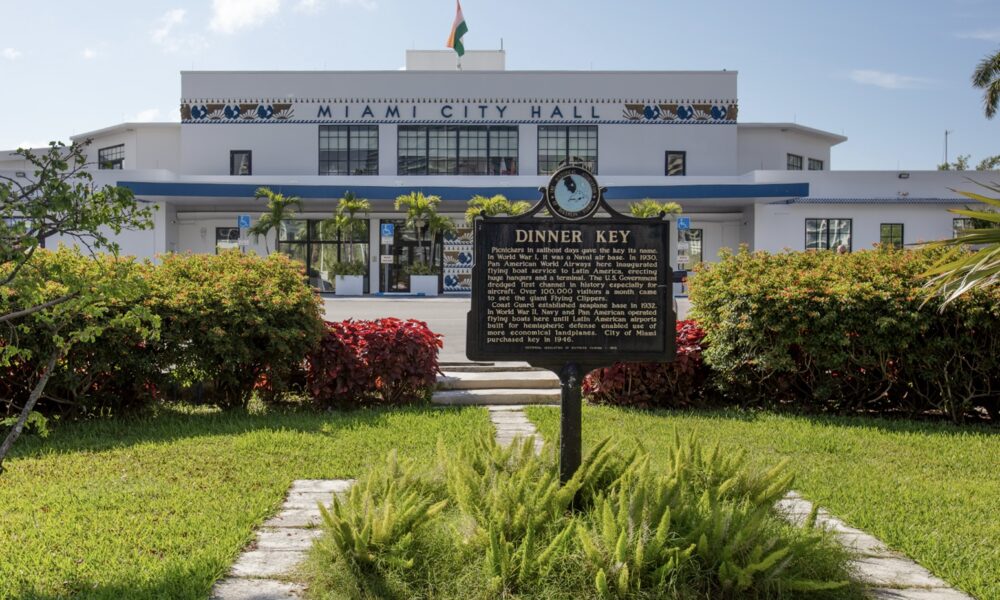
As city leaders move forward with plans to relocate government offices from the former Pan American Airways seaplane terminal to a new headquarters at Miami Freedom Park, residents, preservationists and former public officials are beginning to imagine what comes next for the city’s longtime seat of government.
The move, expected by 2028, could mark the end of more than 70 years of city government at 3500 Pan American Drive while leaving unanswered the future of one of Coconut Grove’s most historically significant and valuable public waterfront properties.
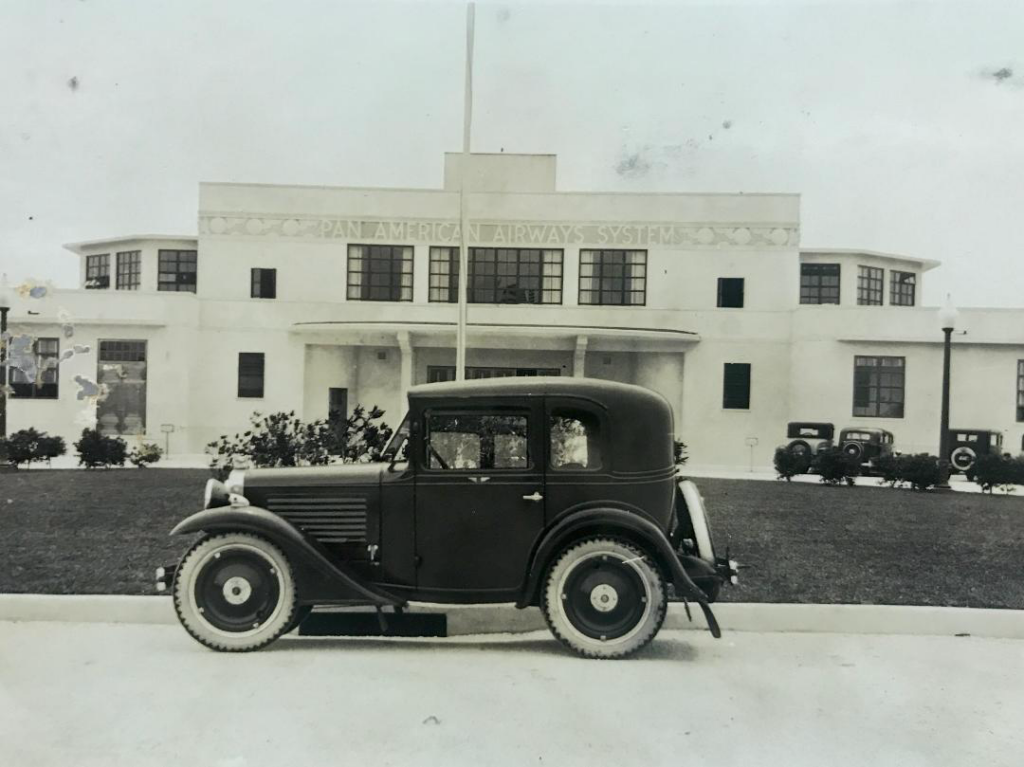
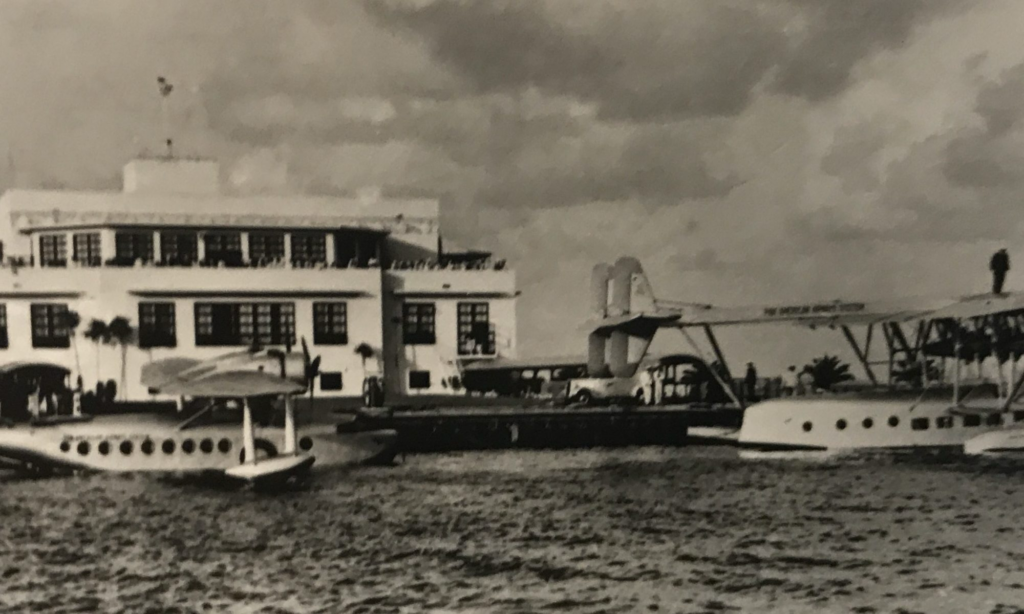
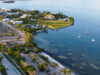
The waterfront site occupies a singular place in Miami history.
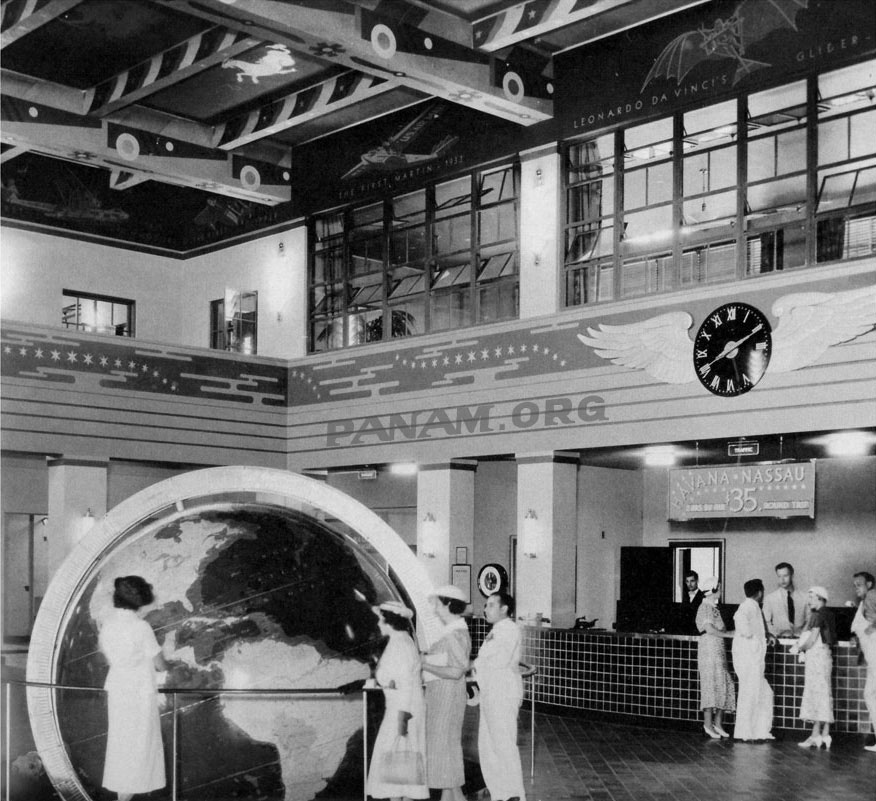
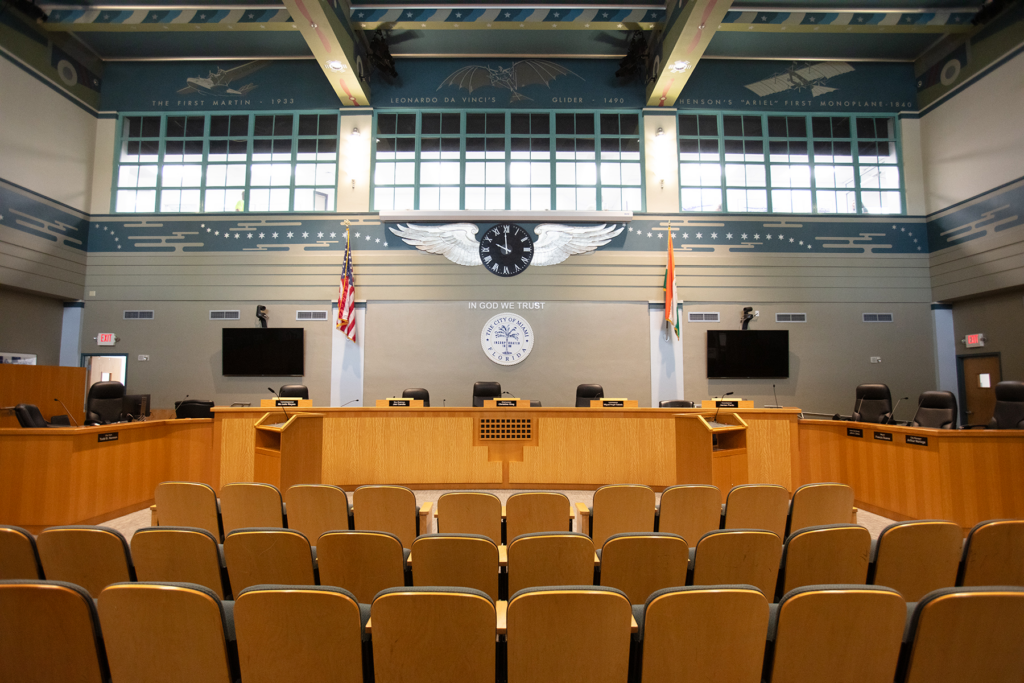
Built in 1934 as Pan American Airways’ famed seaplane terminal, it helped establish Miami as the airline’s gateway to Latin America before the city acquired the property after World War II and converted it into City Hall in 1954. Today, the Streamline Moderne building is listed on the National Register of Historic Places.
Read More: Opinion: Is the Sun Setting on City Hall?
Although construction of the new eight-story government headquarters is underway, city officials say no decisions have been made about what will become of the Dinner Key property once City Hall moves out.
Andrew Frey, the city’s former real estate and asset management director, told the Miami Herald in March that there have been no discussions about the property’s future, and no decision has been made about selling, leasing or repurposing it.
In an email to the Spotlight, Miami’s chief spokesperson, Helena Poleo, said nothing has materialized in the past four months. “There are no set plans for the building yet,” Poleo said. “That will be up to the City Commission when the time comes.”
For some residents, however, the absence of a plan is itself cause for concern. They worry that once City Hall vacates the property, one of Miami’s most valuable public waterfront sites could become vulnerable to private redevelopment.
“When they move out of City Hall, what are they going to do with it?” said Coconut Grove commercial property owner Andy Parrish. “Will they convert it into a commercial enterprise? It is a possibility.”
Parrish said the surface parking lots surrounding and adjacent to City Hall are especially concerning because they represent prime development land. “What is sacred in Miami?” Parrish told the Spotlight. “Zero. All of it is for sale.”
His concerns reflect a broader unease among some Grove residents about the city’s stewardship of public waterfront property. For them, the question is not simply what becomes of the historic building itself, but whether the site will remain a civic asset or gradually be transformed into another upscale commercial destination.
Many point to the redevelopment of neighboring Regatta Harbour — from a working boatyard and casual waterfront gathering place into a high-end retail and dining complex — as an example of how public waterfront spaces can evolve over time.
Read more: Regatta Harbour: Sales Soar as Questions Mount
And just a few hundred yards north along the Dinner Key waterfront, another commercial tenant on city-owned waterfront land — Grove Harbour Marina — is battling the city in court over what it alleges are strong-arm tactics by city officials to extract more favorable lease terms.
Marina officials contend the city’s proposed rent increases would ultimately require the business to pursue more upscale tenants and uses, further transforming the Grove’s waterfront from recreational and retail uses into a high-end entertainment district.
Read more: Lawsuit Claims City Manipulated Grove Waterfront Appraisal
Beyond simply protecting the property from private redevelopment, some residents see a once-in-a-generation opportunity to give the City Hall landmark a new public purpose.
One proposal comes from Ron Nelson, former chief of staff to ex-District 2 Commissioner Marc Sarnoff, who wants activists to push for the site to become a welcome center for Biscayne National Park.
Nelson said he participated years ago in discussions with National Park Service officials about establishing a visitor center and satellite presence at Dinner Key, viewing Coconut Grove as an urban gateway to Biscayne National Park.
“When they came down, they told us they wanted to do more and place their executive headquarters in Dinner Key,” Nelson said. “There was a whole dog and pony show, and they flew in their architects from Denver and Atlanta.”
National Park Service leaders saw Coconut Grove as a better gateway to the offshore park than the existing location in Homestead, 32 miles to the south. But the effort fizzled before it gained traction, Nelson explained.
Reviving that proposal, Nelson said, would only enhance Coconut Grove’s identity as a waterfront destination.
“Wouldn’t it be wonderful to have a national park arrow on South Bayshore Drive?” Nelson said. “That would be huge.” He also pointed to the site’s aviation legacy and said it would be a natural fit for the Pan Am Historic Society and other preservation-minded groups.
Before deciding what City Hall should become, some residents say the city first needs to decide what it should never become: another privately controlled waterfront property.
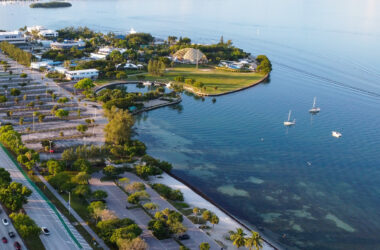
Among them is Paris Wallace, a board member of the neighborhood group Center Grove Neighbors, who is launching a nonprofit, Miami Heritage Park, dedicated to protecting roughly 1.5 miles of public waterfront stretching from Peacock Park to Kennedy Park under a single, unifying vision.
“Before we say City Hall should be used for x, y or z, we should be thinking about how we protect it as a park asset,” he said. “There are citizen groups from all over Miami that are thinking about good planning for all city waterfront land, not just City Hall, that are in danger of being sold for redevelopment.”
Former District 2 Commissioner Ken Russell, a Grove resident, shares Wallace’s view that the property should remain a public asset, but believes its historic building also presents a rare opportunity to create a civic destination that celebrates Miami’s history.
Russell said members of the Pan Am Historical Foundation had long believed the building might one day return to its aviation roots after serving as City Hall, making it a natural candidate for a museum dedicated to Miami’s aviation heritage.
Waterfront access in Miami is already limited, Russell added, which makes the site especially important.
“Finding some experiential use there for the public is obviously important,” he said. “But as we are learning, the highest and best use is not always the most profitable. Our policy makers would do well to remember that before the objective is to monetize.”
He also warned that development interests are likely circling the City Hall site. “Of course there will be suggestions that it be made into a restaurant for example,” Russell said. “Other ideas will be to adapt the building for the marina somehow.”
To help gauge such interest, the Spotlight sought the perspectives of two of Coconut Grove’s most prominent developers — Terra Group CEO David Martin and 13th Floor Investments co-founder Arnaud Karsenti — about what they believe should become of the City Hall property. Both declined interview requests.
But Tony Zamora, general manager of Grove Harbour Marina, said he would like to see a return to the building’s original spirit as a terminal and public. “It should be open to the public to learn about the early history of aviation in Miami,” Zamora said. He noted that the nearby waterfront already has connections to the city’s seaplane and hangar history.
Zamora added that he could imagine a restaurant as a secondary feature, but not as the central use. “I would hate to see it be completely privatized,” Zamora said. “And I don’t know if another big restaurant is needed in that area. I would be against any type of huge development.”
Adding another layer of uncertainty is apparent reluctance among some elected officials to trade their waterfront offices in Coconut Grove for a mid-rise office building near the airport.
While Miami District 2 Commissioner Damian Pardo did not respond to the Spotlight’s request for comment, he suggested during an April meeting of a North Grove homeowners association that the relocation of City Hall’s legislative functions may not be a done deal.
Pardo said he and other commissioners are not convinced the City Commission should relocate to the new government headquarters, adding that plans could change before the building is expected to open in 2028.
“We’re gonna fight [a move],” Pardo said. “And I really believe that the majority of the commission doesn’t want to go either. So, let’s see how that pans out.”
(David Villano contributed to this report).










The future use should be waterfront related, not some use that could be housed inland.
My suggestion would be to create an international sailing center to host the many regattas held here in the Grove.
If the City is actively moving forward with plans to move to Freedom Park, as we are hearing, then responsible stewardship of the future of the historic Dinner Key terminal should automatically be a part of that process. I’d like to suggest that a City-appointed committee of residents be set up to study alternative proposals, starting NOW. Miami’s growth and identity rested (and still in large part rest) on its status as an aviation superstar and Gateway to the Americas. None of our local institutions do our aviation history justice. The Hangar 5 Foundation was set up to correct that oversight. If anyone is interested, you can find an article describing what happened the LAST time the terminal building was vacated, back in the late 1940s, on our website as well as additional information about the history of Pan Am’s former seaplane base. Here’s the URL: https://hangar5foundation.org/stories/24/
I’ve lived in Coconut Grove for decades, and this is exactly the pattern Miami keeps repeating: preserve just enough of a historic building’s facade to make it look intact, then build the real profit center on top of or behind it. It happened at the Deauville. It’s happening at the Raleigh/South Seas/Richmond hotels. It’s being floated right now for the Miami-Dade Courthouse. Even Mutiny on the Bay, right here in the Grove, is fielding demolition buyout offers.
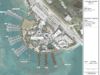
The renderings that have been circulating make it concrete: a slender tower rising directly off the terminal roofline, and from Park Grove, Mr. C, and other bayfront buildings nearby, the sightlines to Biscayne Bay and downtown simply disappear behind glass and concrete.
Before there’s an RFP, before a developer is at the table, we should be asking our commissioner directly what the actual plan is for this site once City Hall moves. The terminal is on the National Register for a reason. There are good public uses for that building — a museum, a marina building, cultural space — that don’t involve handing Dinner Key’s last open waterfront to a condo tower. Once it’s sold, there’s no getting it back.