

Coconut Grove’s once-gritty working waterfront is generating millions in rent for the City of Miami as an upscale entertainment zone. But a close look at the lease shows the city may be shortchanging itself — with favorable terms for the developer, missing improvements, and lost revenue that could add up for decades.
Among the nightlife options in the Grove next week on Halloween is the open-air, waterfront Regatta Grove — part of the Regatta Harbour entertainment complex on Dinner Key — where visitors can expect live DJs, themed cocktails and “surprises to keep the chills going.”
But it will cost you: A table for six, if you can snag a reservation, comes with a $250 minimum — for alcohol alone. Food is extra.

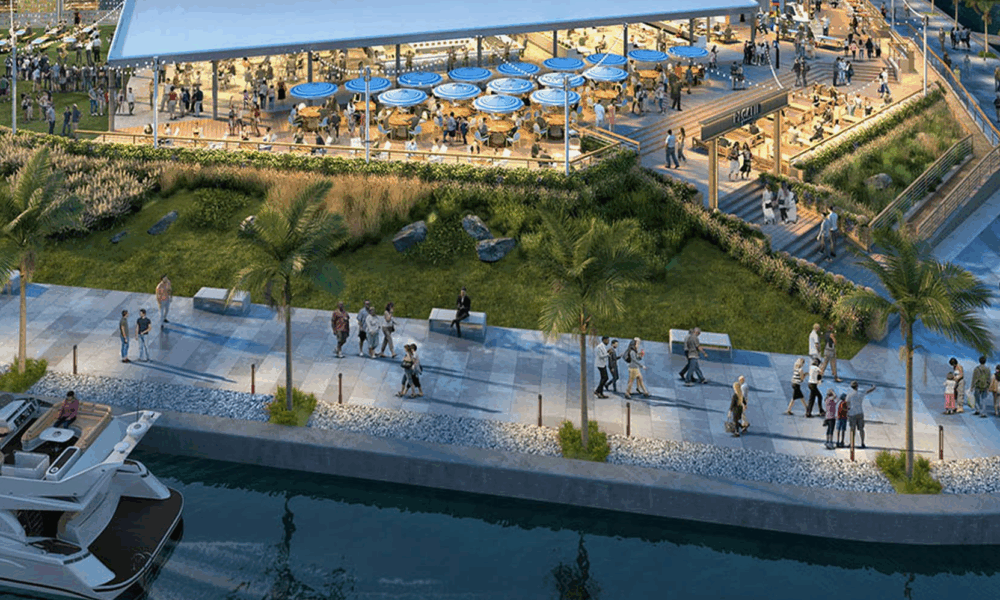
No wonder Regatta Harbour, operating on seven acres of city-owned land just north of City Hall, is on track to generate at least $30 million in sales in 2025, $3 million of which will be paid to the city in rent — more than all but two other city properties.
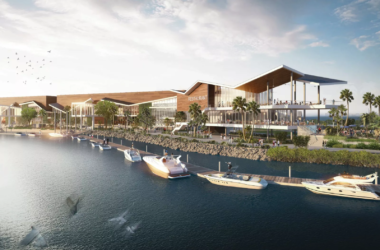
Regatta Harbour — the collection of business operations that includes Regatta Grove, Bayshore Club restaurant, The Hangar special-event space, a dry dock marina, and a small retail component – is owned by Coconut Grove-based Grove Bay Investment Group. In 2014, following a citywide voter referendum, Grove Bay secured a long-term lease for the property that, in recent years, has paid the city roughly $250,000 a month.
And yet, the Spotlight has learned, it could be much more. While city officials describe the development complex as a lucrative public-private partnership that activates waterfront land for public use, a close reading of the city’s lease with Grove Bay suggests Miami may be leaving millions on the table — and still waiting on millions more in promised improvements that remain unbuilt.

Perhaps the greatest source of untapped revenue might be Regatta Grove itself, the crown-jewel of the Regatta Harbour complex, which has outpaced all other business operations within the property, city records reveal, by averaging well over $1 million in monthly sales since its opening in 2023.
While Grove Bay pays the city 5% of Regatta Grove’s gross sales each month (a bit more when sales top $10 million in a year), that rate – as stipulated in the lease – is for a restaurant, not for what commercial real estate experts call an “alcohol-forward” business, like Regatta Grove, that typically pays rates of 12 to 15% of sales.
By those estimates, and based on reported monthly sales through August of this year, the city stands to lose nearly $1.4 million in unrealized rent from the Regatta Grove facility in 2025 alone.
Over time the losses will add up. The lease on the property runs through 2063, with an extension through 2093.
Grove Bay locked in the favorable terms, as an amendment to the lease, in 2022, when the Miami City Commission approved the developer’s request to operate Regatta Grove, for an initial term of seven years, in place of a long-promised, and lease-mandated, “formal restaurant” on the site. While the concept changed dramatically, the rent structure remained largely the same.
Under city laws, a restaurant – such as the one required by the lease — is a business that derives more than half of its sales from food and non-alcoholic beverages. Such designations are typically made by city zoning officials who issue a certificate of use, or CU, authorizing specific operations at a particular location. City records show no CU, of any kind, linked to Regatta Grove.

City officials say they’ve never asked, nor require, Regatta Grove to break down its revenue reports by alcohol and non-alcohol sales.
Grove Bay CEO Francisco Balli did not respond to multiple requests for comment. Questions submitted by the Spotlight in writing, at the request of the group’s attorney, have not been answered.
City officials offer little explanation for why Regatta Grove — which describes itself as an “entertainment venue” — is allowed to pay restaurant lease rates, and how it could operate without a certificate of use.
Andrew Frey, director of the City of Miami Department of Real Estate and Asset Management, which oversees all city leases of public property, dismissed the concerns, insisting those decisions predate his arrival. “You’d have to ask the people here at the time,” he told the Spotlight in a recent interview.
And Regatta Grove is not the only source of potentially millions of dollars in lost city revenue. Under the lease, Grove Bay is paying the city roughly one-tenth the going rate for more than 50,000 square feet of waterfront commercial retail space within the property.
While asking rates for premier commercial properties in the Grove are topping $100 per square foot per year – including this one within Regatta Harbour itself – Grove Bay is paying just $10 per square foot. The rate increases incrementally over the life of the lease, but would top out, even under the worst inflation, at $14.93 a foot – in the year 2080, a lease analysis reveals.
Rates aside, and despite Grove Bay’s capital investments at the property, some commercial real estate experts also question the city’s decision to lock in long-term lease rates for the complex’s city-owned retail facilities – the ground floor of the parking garage and the two historic hangars that once housed seaplanes – rather than tie rent to a percentage of sales, as is standard practice, and as was done with other components of the lease.
Because much of Regatta Harbour’s monthly rent comes in the form of a flat payment for retail space, not all their revenues are reported to the city. (Among those reported, 90% come from Regatta Grove and the adjacent Bayshore Club; the marina operations are minimal, dispelling any myth that the complex is geared toward the recreational boat owner and other watersports enthusiasts, as city officials once promised).
Grove Bay also may be undercutting its lease payments to the city by classifying its special-events business at the property’s south hangar as a “retail” operation. Rather than pay the city a percentage of its gross sales for the art fairs, concerts, boxing matches and private parties it hosts, Grove Bay has argued, records show, that it only owes the city the $10 per square foot for its use of the hangar, regardless of what is staged there.
And yet the lease is clear: Gross revenues, to be reported to the city, shall include “all revenue received by the lessee in connection with events at any facility within the property.”
The Hangar’s website describes itself as an “event space.”
Frey said lease payment concerns, of any kind, have never been raised by his staff.
In addition to potentially lost revenue, the city is missing millions of dollars’ worth of capital improvements on the seven-acre property — improvements either promised to voters, required by the lease, or both—that have not been completed.
Among the promises yet to arrive: two additional boat launches, a fixed pedestrian pier, a floating tourist dock, and a public open-air terrace above what is now Regatta Grove.
The lease also required the construction of a dry-rack storage facility to accommodate a minimum of 400 boats. And in a nod to Miami’s less affluent boat owners, Regatta Harbour’s dry-rack facility — which, like most, charges by the length of the vessel — is reserved, under lease terms, for boats less than 29 feet.
But during a recent visit, boats well in excess of that size limit lined the five levels of racks. And a count of overall capacity reveals a facility barely half the size the city’s lease mandates.
Frey said the missing improvements, including the undersized dry-racks and oversized boats, are all news to him.
That’s not entirely true. Internal emails obtained by the Spotlight show a flurry of exchanges in early 2024 between Frey, aides to District 2 Commissioner Damian Pardo, and Grove Bay officials to arrange meetings to discuss the missing capital improvements.
Pardo declined multiple requests for comment for the article.
In one email, long-time Grove Bay attorney Richard Perez pushed back on any suggestion that his client had failed to live up to its lease obligations. In some cases, he argued, the improvements, such as the open-air terrace, are pending; others, like the dry-racks, are a “work in progress”; others still, like the additional boat launches and pedestrian pier, proved unfeasible.
Asked if he believes the city’s Regatta Harbour lease has been a success, Frey defers to those who came before him.
“I don’t substitute my judgment for the policymakers of the city, which are the five elected officials,” he said. “If they determined that this as the right way to move forward, then that was their judgment.”

















This clearly took a lot of time and effort to investigate, in spite of the litany of “no comments” from folks whose job it is to protect the citizens of Miami and hold developers accountable for promises made or, more accurately, promises broken. Again, I find myself wondering how any of us would find out about this lack of oversight were it not for The Spotlight? Of course, the flip side of knowing all this is that I’m becoming more cynical with each and every publication of The Spotlight and now need more psychotherapy than I can possibly afford. Thanks Dave!
Real Estate and Asset Management (DREAM) Director Andrew Frey’s statement says it all: “I don’t substitute my judgment for the policymakers of the city, which are the five elected officials…If they determined that this was the right way to move forward, then that was their judgment.”
In 2026, 9 commissioners hopefully will replace the 5 we have now. Each will have to preserve and protect their own district, as well as cooperate on behalf of the entire City’s best interest.
My DREAM is that “The solution to pollution is dilution” continues to hold true. At the very least, having 9 commissioners will require the vultures to count to 5 and sometimes 6 instead of just 3.
Spotlight readers should check out StrongerMiami.org for the ballot referendum.
On the Ballot when the Votes agreed to the Lease, it stipulated that the Two Existing Boat Launches would be
Eliminated.
That the Two Huge Forklifts would transport the Boats on the Racks to Grove Harbour Marina to be Launched.
That the Huge Black Asphalt Roads would be GREEN SPACE, for us to Picnic & Play.
Why does your article state that Two additional Boat Launches are to be Added?
Please locate & Publish the Wording on the Original Ballot for the Lease that we Voted For!
So, what exactly has changed since this wonderful piece of investigative journalism was written and posted on October 23, 2025?
What changes have been made and what hasn’t been changed and continues to be a gross injustice to the citizens of this city?