


As redevelopment transforms Coconut Grove, one homeowner is asking the City of Miami to designate her 1925 home as a historic property. “When I’m dead and gone, I just would like it to stay,” says homeowner Barbara Lange.
As Barbara Lange walked her dog Chumley through her South Grove neighborhood on a recent Saturday, nearly every block held reminders of how much the community had changed over time.
Every few houses, she pointed to the places where older homes once stood, recalling the neighbors who lived there and the charm they brought to the neighborhood.
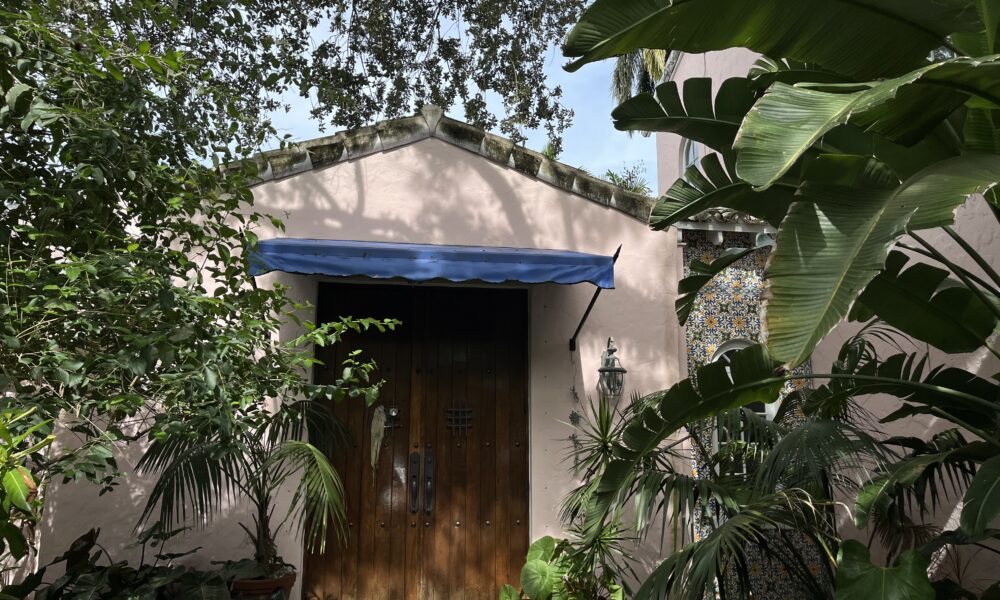
Today, boxy modern houses stand in their place, a sleek contrast to the colorful stucco walls, decorative stonework and arched entryways that drew Lange to the neighborhood 15 years ago.
“This place was so magical,” she recalled. “Now, it’s not like it was.”
After watching historic homes vanish from her neighborhood year after year, Lange recently decided to take formal steps to preserve at least one.
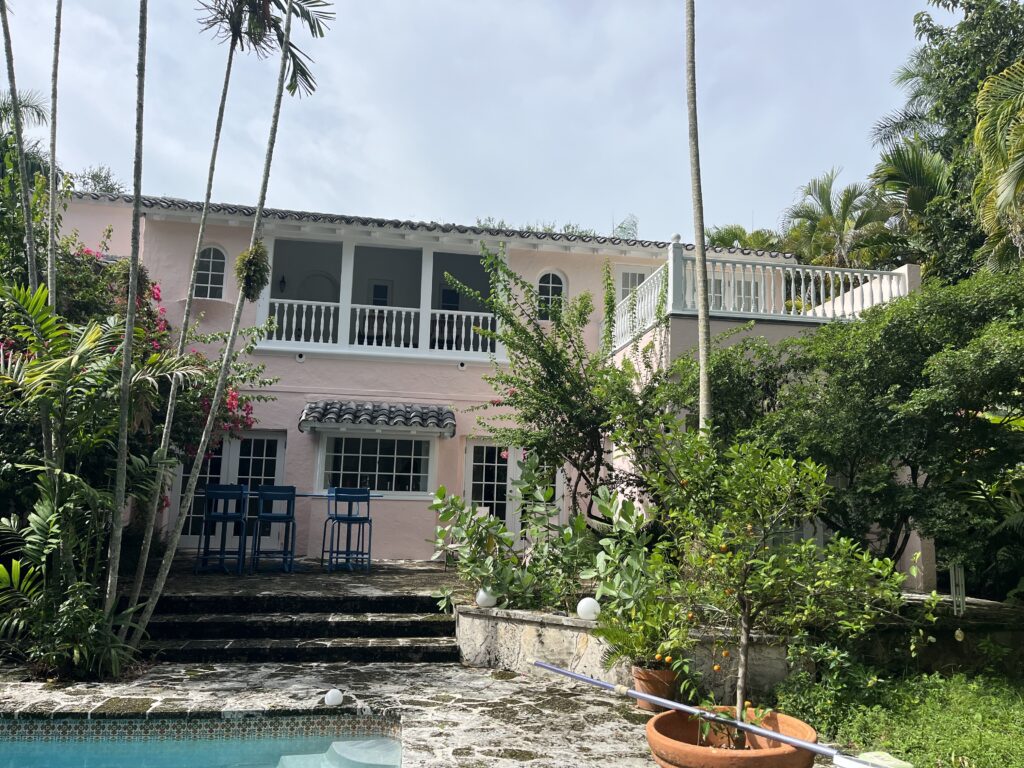
This year, she applied for historic designation for her home at 3901 Braganza Ave., an official label she hopes will protect a piece of Coconut Grove she fears could disappear entirely.
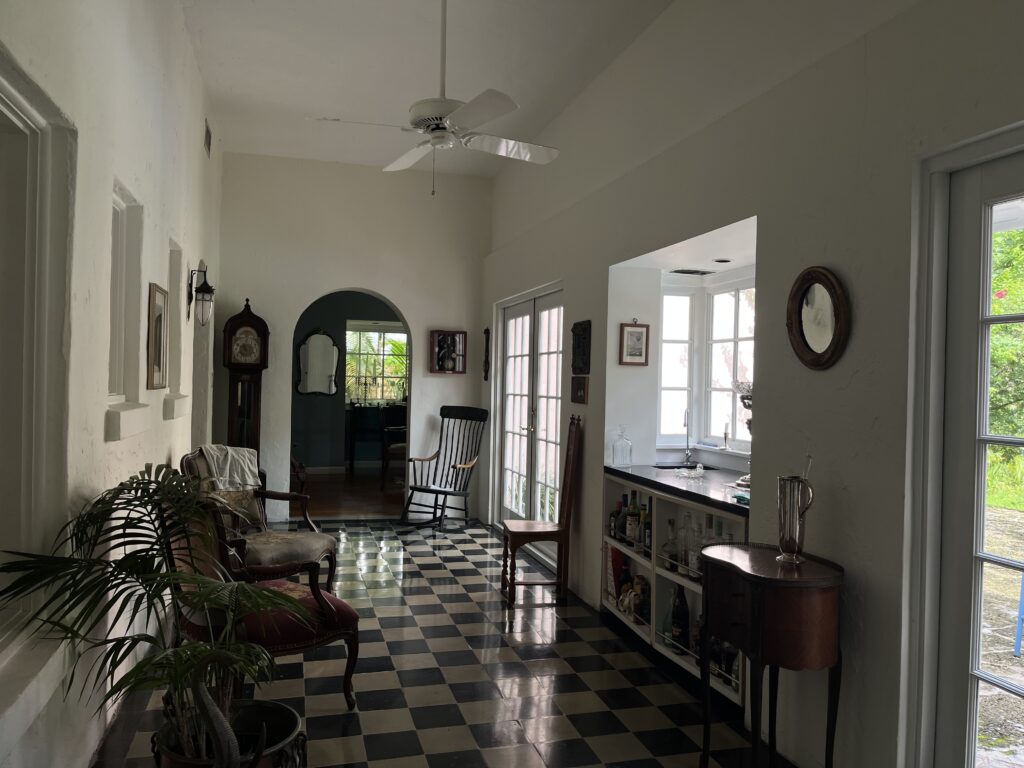
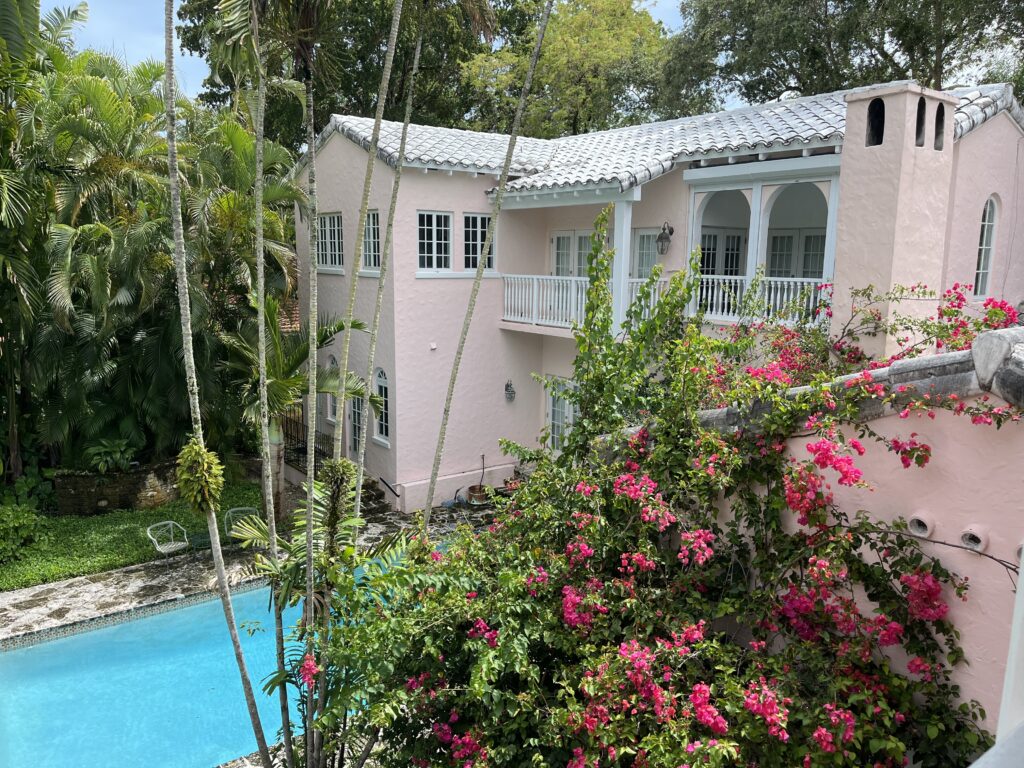
The two-story home, built in 1925 — a year before the Coconut Grove Playhouse — reflects the architectural trends that shaped the area during the 1920s.
Designed in a blend of Masonry Vernacular, Mediterranean Revival and Mission Revival styles, its coral-pink stucco walls offer a glimpse of the residences that lined the Grove’s streets a century ago.
As new development continues to reshape the Grove, historic designation offers homeowners a way to preserve properties with architectural, cultural or historical significance.
“You want to leave something for the people who come after to see what it was like,” Lange said. “That’s my feeling.”
To qualify for historic designation, properties must be at least 50 years old and meet the city’s criteria for historical, cultural, archeological, paleontological, aesthetic or architectural significance.
Once a property receives designation from the city’s preservation board, any alteration, new construction or demolition requires the owner to obtain a certificate of appropriateness from the city.
On July 7, Miami’s Historic and Environmental Preservation Board unanimously approved a preliminary evaluation of Lange’s application.
The staff report for the property identifies numerous historic features, including the stucco exterior, tiled roof, arched openings, balconies and twisted columns. The report also cites substantial evidence that the home was designed by prominent Miami architect Walter DeGarmo, including its rectilinear plan, simple massing and load-bearing masonry walls.
Moving forward, Lange’s property must undergo further evaluation and a public hearing before it can receive official designation.
Board members were enthusiastic about Lange’s effort, including Bob Powers, who called the home “a treasure to save.” Powers said he hopes Lange “sets the standard” by inspiring other homeowners to seek designation for their historic properties.
“Slowly but surely they’re all disappearing,” Powers said of the Grove’s older homes, “and it’s really rather tragic.”
Powers’ concerns are shared by preservation advocates like Christine Rupp, executive director of nonprofit Dade Heritage Trust. Rupp said that modern developers demolishing historic homes have left parts of the Grove “unrecognizable,” replacing the distinctive architecture with sugar cube-style homes.
“The best way to assure your neighborhood doesn’t evolve in a way that you don’t like: Get out there and designate,” Rupp said.
While residents may have little control over the redevelopment reshaping their neighborhoods, Rupp said the designation process allows owners to permanently preserve their corner of the area’s history.
Historic designation remains with a property even after it changes hands, making it more difficult for future owners or developers to redesign — or, in many cases, demolish — historically significant homes.
“When people step up to designate, I just think it’s amazing because they understand that they’re helping to preserve the character of a neighborhood, not just their own property,” Rupp said.
But the same protections that attract homeowners like Lange to historic designation can also make others hesitant. Lange said that while many of her neighbors value the history of their homes, they worry about the added city oversight that comes with designation.
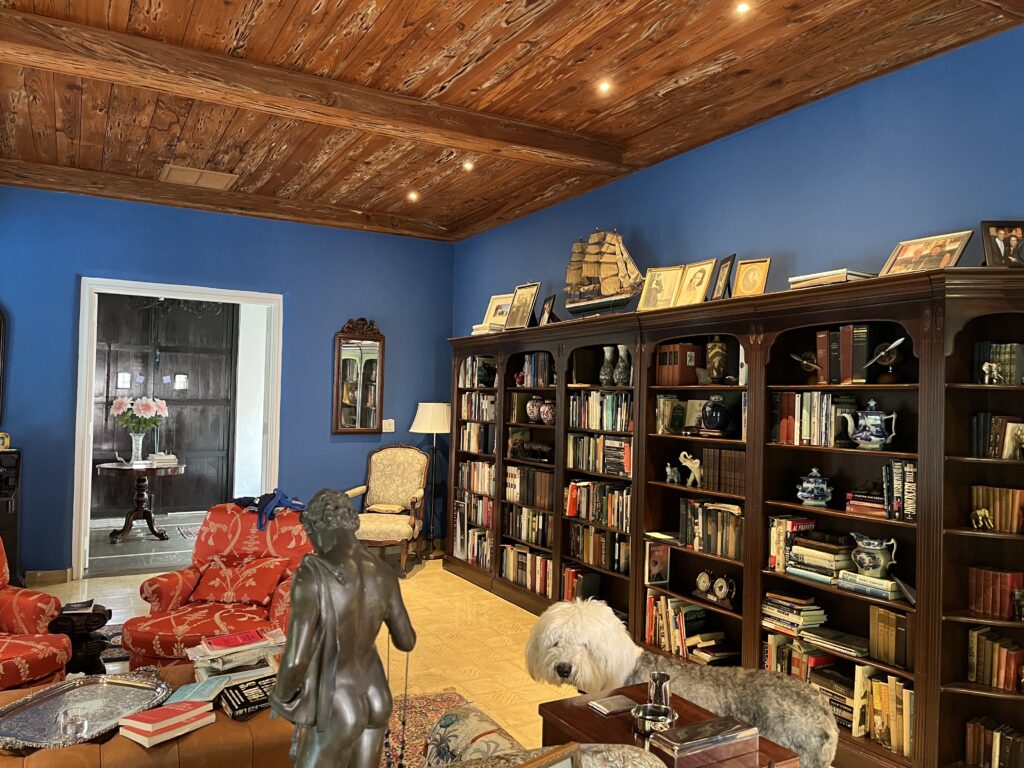
According to Rupp, that oversight is often more limited than homeowners expect. Historic designation typically applies only to a building’s exterior. While exterior work — such as repainting, replacing a roof or installing new windows — requires approval from the city’s preservation staff, interior renovations are generally left to the homeowner’s discretion.
Still, Rupp said many homeowners associate designation with restrictions rather than preservation.
“When they hear designation, they just really hear more oversight and less ability to do what you want with your property,” Rupp said. “But it’s not supposed to be completely frozen in time. There are things that you can do to your house, and I think there’s a lot of misinformation out there about what you can and can’t do with a designated building.”
Rupp added that homeowners often overlook other benefits of designation, including potential property tax incentives and the possibility of preserving the long-term value of their homes.
For Lange, the added oversight is a small price to pay to protect the home she hopes will outlast her.
“Whatever they tell me, I’m fine with,” she said. “All I know is it would be harder to tear down the house — that’s the only thing.”
Lange hopes more homeowners will act before the houses they love become the next ones to disappear. For now, she’s focused on preserving the legacy of 3901 Braganza Ave.
“When I’m dead and gone, I just would like it to stay,” she said. “I’d like the old part of the house to be the same.”
Sinclair Holian is a Spotlight reporter and Report for America corps member covering gentrification and development in Coconut Grove. She joins us through our partnership with Report for America, a national organization that places journalists in local newsrooms across the United States.
















Brava Barbara!