
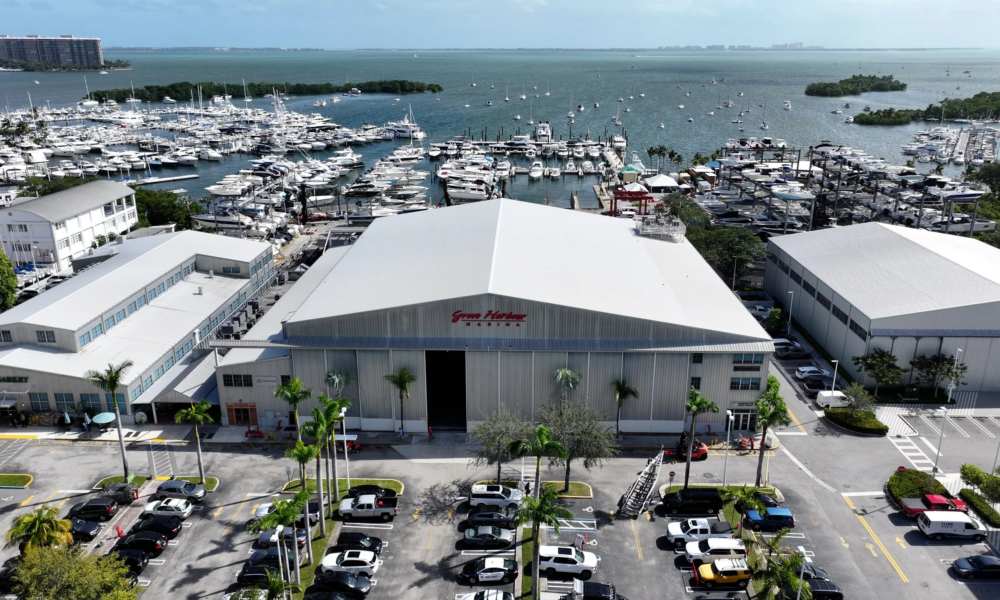


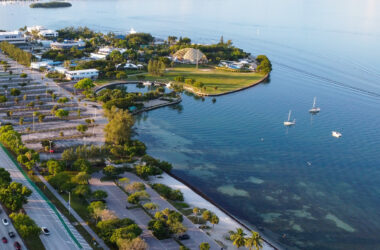
The operator of Grove Harbour, home to The Fresh Market and a Dinner Key marina, claims city officials improperly intervened in an independent appraisal process in an effort to justify millions of dollars in additional rent.
The operator of the Grove Harbour marina and marketplace at Dinner Key has sued the City of Miami, alleging city officials improperly pressured an independent appraiser to inflate the value of its waterfront lease in an effort to extract millions of dollars in additional rent payments.
The lawsuit, filed in Miami-Dade Circuit Court, accuses the city of abandoning a decades-long appraisal methodology and interfering with what was supposed to be an independent rent-setting process governing one of Coconut Grove’s most prominent pieces of public waterfront property.
The dispute centers on Grove Harbour Marina & Caribbean Marketplace LLC, the long-term lessee of approximately seven acres of city-owned land that includes The Fresh Market, a marina, boat storage facilities and other commercial tenants.
Grove Harbour has operated under its current lease with the city since 1999.
The lawsuit arrives as Miami officials prepare to ask voters this fall to approve another long-term lease of city-owned waterfront land — an $80 million marina redevelopment on Virginia Key that would commit nearly 28 acres of public waterfront property to a private operator for an initial 45-year term, with options extending the lease to as long as 75 years.
Critics of the proposal have questioned whether lease terms negotiated nearly a decade ago — before years of litigation sidelined the project — still reflect current market conditions, a concern that resurfaced earlier this month when the Miami City Commission voted to place the Virginia Key proposal on the November ballot.
The Grove Harbour property sits immediately north of Regatta Harbour, the seven-acre city-owned waterfront entertainment and marina complex operated by Grove Bay Investment Group.
Last year, a Spotlight investigation found that Regatta Harbour may be generating substantially less rent for the city than comparable waterfront properties while several promised improvements remain unfinished.
Read more: Regatta Harbour: Sales Soar as Questions Mount
Grove Harbour’s new lawsuit makes the opposite claim: that city officials, acting as the property’s landlord, are trying to extract more in rent payments than they are entitled to under the lease.
At the center of the dispute is a lease provision requiring the city to periodically determine the property’s fair-market rent through an independent appraisal. After failing to obtain a required appraisal for several years, the city retained an outside appraiser in 2024 whose valuation, under the lease terms, would apply retroactively to 2020.
According to the lawsuit, the appraisal concluded that annual fair-market rent should be approximately $990,000 for the 2020 appraisal period and about $1.12 million for 2025.
But rather than accept those figures, Grove Harbour alleges, city officials “weaponized and manipulated” the appraisal process by challenging the appraiser’s methodology and by pressing him to value portions of the property based on hypothetical redevelopment scenarios rather than their existing use.
“Regrettably, this is another case where the City has wielded unlawful power, pressure and payback against one of its own citizens,” the lawsuit alleges.
The result was a revised appraisal issued last April that dramatically increased the property’s estimated rental value. According to the complaint, the new appraisal valued annual rent at approximately $2.86 million for the property’s two historic hangars alone — more than double the amount attributed to the entire lease, including marina operations, in the original appraisal.
Grove Harbour contends the revised valuation assumes uses that do not currently exist and may not be permitted under the lease, including retail space, a food hall, a gym, and other higher-value commercial operations.
If enforced, the company says, the revised appraisal could trigger substantial retroactive rent obligations and sharply higher annual payments going forward.
Neither City of Miami officials nor attorneys representing Grove Harbour responded to requests for comment.
The appraisal dispute is also one of several legal battles involving the Grove Harbour property.
In March, Grove Harbour sued Regatta Harbour’s ownership group, alleging it abandoned a promised joint-marina operation that helped secure public approval for the redevelopment more than a decade ago, resulting in millions of dollars in lost revenue.
And last September, Grove Harbour sued the City of Miami, Miami-Dade County, and a string of utility companies alleging that utility easements were improperly granted through its property to facilitate the Regatta Harbour project, at the expense of its own long-term development plans.

















With Opinions such as, “ Critics of the proposal have questioned whether lease terms negotiated nearly a decade ago —still reflect current market conditions“,
How can a City or County project the Value of a Parcel of Public Property 45, 75, or 99 Years from Now?!!!
Yet this is what has happened the last few years…. Think Parrot Jungle on Watson Island & the 99 Year Lease!
The Public has always Voted in Favor of these “Land Grabs”, no matter what the Lease amount is…. IGNORANCE !!!!
Suggestion, List the properties at current market rate, and see if there are any interested parties. If there are, that should end the debate.