

It’s a haven for marine life offshore and a smelly mess when it piles up along the coast. In a record year for sargassum, the Grove is getting an up-close look at both sides.
Coconut Grove Realtor Sylvia Cherry takes a pragmatic view of the annual arrival of sargassum seaweed along Grove shorelines.
“It’s cyclical and prolific and it smells like a sewer, but it’s also natural and temporary, so there’s really nothing to get upset about,” she said.
Sargassum, a type of seaweed, is a brownish macroalgae that grows offshore and floats in large mats along Florida’s southern coastline.
It has become the scourge of tourism officials in Miami Beach, Mexico and across the Caribbean in recent years, as massive quantities wash ashore and pile up along beaches.
Tourists don’t like the stuff, and daily efforts to rake up and dispose of it — by hand and machine — can prove fruitless when beaches are covered again the next morning.
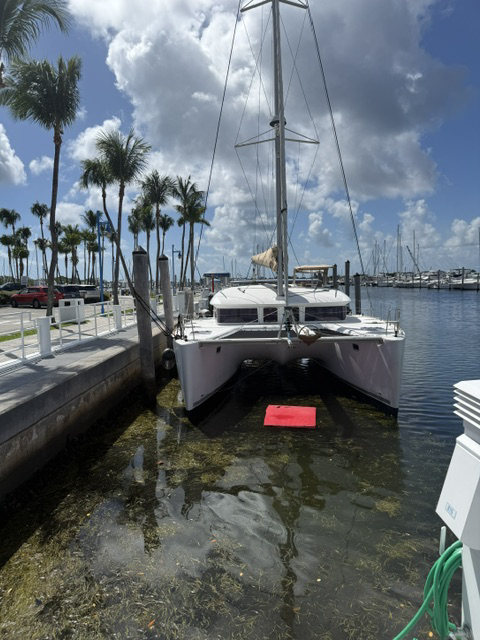
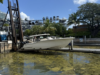
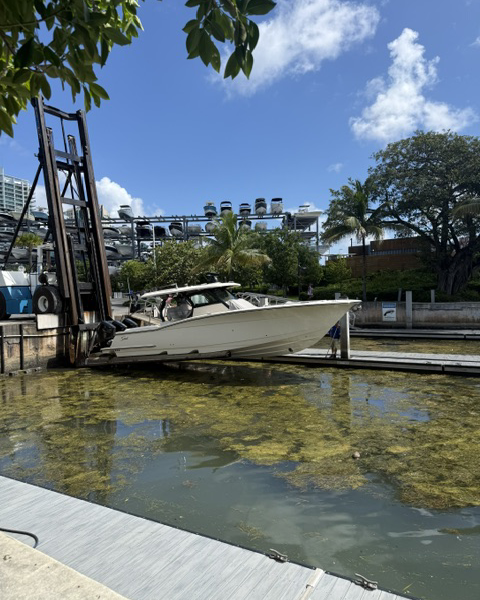
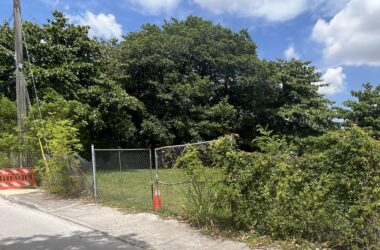
Coconut Grove has no ocean beaches, but it has been getting its share of sargassum this summer. Thick mats have collected in canals, marinas and along the bayfront at the ends of streets such as Royal and St. Gaudens roads in South Grove — part of an exceptionally heavy sargassum season across South Florida and the Caribbean.
And the masses of seaweed are likely to stick around through September.
“Both 2025 and 2026 set historical records for sargassum abundance,” said Joaquin Trinanes, an affiliate with the National Oceanic and Atmospheric Administration (NOAA). “While we’ve already passed the peak of the season and expect an overall decrease in the Atlantic, the risk of significant wash-ups in South Florida remains extremely high over the next few weeks.”
NOAA publishes the Daily Sargassum Inundation Risk to help communities plan for large wash-ups of the seaweed.
Sargassum takes its name from the Sargasso Sea in the North Atlantic, where the floating algae has long been part of the marine ecosystem. Carried by winds and currents, large mats move through the Caribbean, Gulf of Mexico and tropical Atlantic.
At sea, sargassum can be a good thing, providing food and habitat for crabs, shrimp, fish and other marine life. The problems begin when large quantities reach shore.
As sargassum piles up and decays, it releases hydrogen sulfide gas, producing the rotten-egg smell familiar to anyone who has encountered a heavy wash-up. The gas can also cause respiratory irritation, and onshore breezes can carry the odor blocks inland.
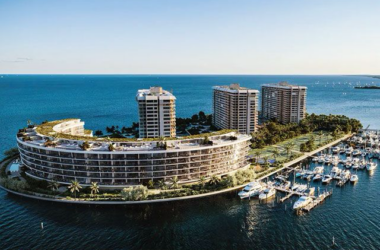
In Coconut Grove, where homes, condos, restaurants and marinas hug the Biscayne Bay shoreline, the smell can be hard to escape.
“The seaweed smell is absolutely terrible,” said Coral Gables resident Phil Cutler as he walked one morning beside Biscayne Bay at Dinner Key Marina. “It’s the only thing that keeps the setting from being the most amazing and beautiful in Miami.”
But the foul smell isn’t the only aspect of sargassum attracting scientists’ attention.
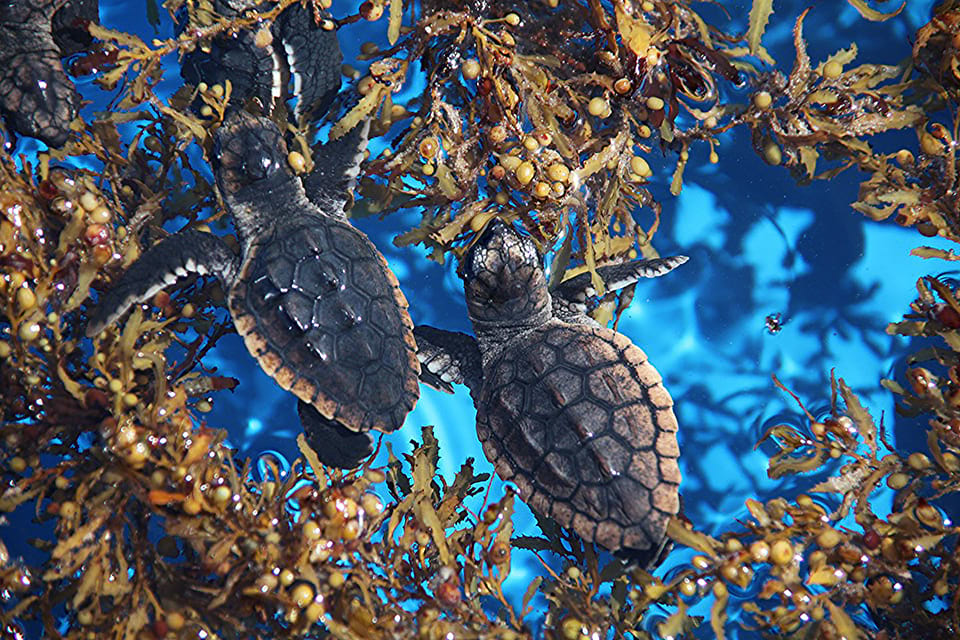
Researchers are also studying what the seaweed contains and whether it can safely be put to use. Sargassum can contain arsenic and other heavy metals, and researchers from the University of Miami’s Rosenstiel School of Marine, Atmospheric, and Earth Science have studied samples collected in South Florida, Belize, Trinidad and Barbados.
“We conducted measurements and found arsenic in organic form. There are a lot of unknowns about how much of a health risk there is. As of right now, there are no significant risks, but more research is needed,” said Brittany McIntyre, a Ph.D. candidate at the school’s Environmental Engineering Laboratory.
“In Trinidad, we found that farmers use sargassum as fertilizer. Other researchers are studying the possibilities of using it in biogas and biochar, which is a kind of charcoal. Right now, there’s no concrete evidence that using Sargassum in these ways poses a health risk.”
Scientists are also trying to understand what is driving the enormous blooms.
Rachel Silverstein of Miami Waterkeeper said nutrient runoff from major river systems, including the Mississippi and Amazon, along with warmer ocean temperatures, may be contributing to their growth. There is less evidence that local runoff is driving the larger regional blooms.
Once sargassum reaches South Florida’s shoreline, however, its local effects can be significant. Thick accumulations can make it difficult for newly hatched sea turtles to reach the ocean. As the seaweed decomposes, it can also deplete oxygen in the water and release nutrients and bacteria, conditions that can harm marine life and contribute to fish kills.
But even in a record year, sargassum season eventually ends.
The masses typically diminish as summer gives way to fall. This year, scientists expect significant wash-ups to remain a risk in South Florida for several more weeks before the seasonal influx subsides.
For many Grove residents, that means putting up a little longer with sargassum’s most obvious effects: It looks bad and smells worse.
“It stinks,” said Central Grove resident Alicia Sandelman. “And it stays in our bay for a long time and I think it has gotten worse over the years.”