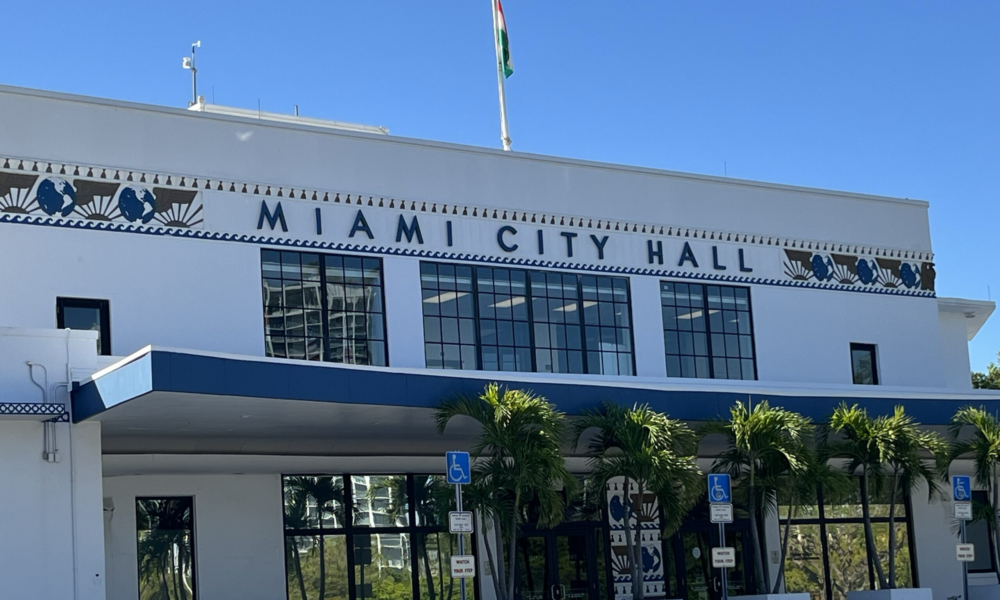




Police and Fire-Rescue would claim almost two-thirds of the nearly $73 million increase in Miami’s General Fund, while several other corners of City Hall are in line for sizable boosts.
Miami commissioners gave preliminary approval last week to a $3.7 billion spending plan that would push the city’s General Fund to a record of nearly $1.3 billion next year. A final vote is scheduled for Sept. 24.
So, who gets the extra money?
The answer starts with public safety.
The General Fund — the pot of money that pays for most day-to-day city services — would grow by nearly $73 million, or about 6%, from the budget commissioners adopted a year ago.
The Spotlight compared Mayor Eileen Higgins’ proposed budget with that spending plan to see which departments would receive the largest increases in General Fund dollars.
Here are the top five:
1. Fire-Rescue: $23.8 million more
Miami Fire-Rescue’s General Fund budget would rise $23.8 million, or 8.8%, to nearly $295 million.
Nearly $22 million — more than 90% of the increase — would go to personnel costs, including about $8.5 million more for Fire-Rescue’s contribution to the police and fire pension system and nearly $7 million more for the firefighters’ health insurance trust.
Overall, Fire-Rescue’s overtime budget would rise by about $2 million, or 10%, to $22 million. A $6.1 million increase in staffing overtime would be largely offset by reductions in other overtime categories within the department.
2. Police: $22.2 million more
The Miami Police Department is close behind, with its General Fund budget growing from about $416 million to nearly $438 million — an increase of $22.2 million, or 5.3%.
About 93% of that increase — $20.6 million — is for personnel, including roughly $8.1 million more for the pension system, $5 million more in regular salaries and $2.6 million more for the police health insurance trust.
Together, Police and Fire-Rescue would receive $45.9 million of the General Fund’s $73 million increase — about 63 cents of every additional dollar.
Combined spending on the two departments would reach $732.5 million, more than 56% of the General Fund.
3. General Services Administration: $8.5 million more
GSA, which maintains city buildings and vehicles and provides a range of internal services, would appear to be one of the budget’s biggest winners. But much of that increase reflects a City Hall reorganization.
Earlier this year, 32 marina employees were transferred from Real Estate and Asset Management to GSA, accounting for much of GSA’s increase and the Real Estate department’s $5 million-plus decline.
4. Parks and Recreation: $3.1 million more
Parks and Recreation would receive an additional $3.1 million, bringing its General Fund budget from $66.1 million to $69.3 million.
That’s a 4.7% increase — less than the 6% growth in the General Fund overall.
The budget adds money for contractual services, repairs and maintenance, supplies and seasonal workers. Parks also transferred six positions to the City Manager’s Office earlier this year.
5. City Attorney: $3.1 million more
The City Attorney’s Office rounds out the top five.
Its General Fund budget would rise from just under $16 million to $19 million — an increase of about $3.1 million, or 19.2%, one of the largest percentage increases among major City Hall offices.
But, as with GSA, much of the increase reflects money being moved from elsewhere in the city budget. About $2.2 million for outside legal services would be transferred from a citywide account to the City Attorney’s Office, which manages those payments.
The office is not adding positions. The budget also includes about $241,000 for salary increases, mostly raises for non-bargaining employees.
There are few significant losers. Code Compliance is essentially flat, Risk Management falls by about $154,000, and the $5.3 million decline in Real Estate and Asset Management largely reflects the transfer of marina operations to GSA.
Instead, another year of rising property-tax collections gives the city room to spend more across much of City Hall. Property taxes are projected to bring the General Fund about $691 million next year.
Personnel accounts for much of the additional spending. Salaries and benefits would rise by another $46.4 million, to $972 million — nearly two-thirds of the General Fund’s entire $73 million increase.
There is one more increase worth noting.
It belongs to the office of the mayor who proposed the budget.
During last year’s campaign, Higgins repeatedly called for a “deep-dive” into city finances to determine “what the heck is going on” with spending that had risen sharply even as Miami’s population remained relatively flat.
Her first proposed budget would increase spending on the Mayor’s Office from $3.61 million to $4.07 million.
The additional $458,000 wouldn’t put the Mayor’s Office among the biggest winners in dollar terms.
But it amounts to a 12.7% increase — more than twice the rate of growth of the General Fund overall.
The office would remain at 20 full-time positions.
Commissioners are scheduled to take their final vote on the budget Sept. 24.
For a deeper dive, read the Spotlight’s three-part series on the City of Miami’s budget:
Read more: Miami’s Billion-Dollar Boom, Part 1: Where Did All the Money Go?
Read more: Miami’s Billion-Dollar Boom, Part 2: The Rising Cost of Public Safety
Read more: Miami’s Billion-Dollar Boom, Part 3: City Hall’s Growing Payroll