



Over the past decade, Miami’s real estate boom brought City Hall hundreds of millions in new spending power. Much of it went to police and fire, which more than doubled their annual budgets to nearly three-quarters of a billion dollars.
Over the past decade, Miami has been transformed by a development boom and an influx of wealthy newcomers. Property values soared. Construction cranes reshaped the skyline. And the money pouring into City Hall grew with them.
Property-tax collections more than doubled, helping swell Miami’s General Fund from about $670 million in 2016-17 to nearly $1.3 billion in the proposed budget for the coming year — an increase of nearly $628 million, or about 94%.
The boom gave Miami something city leaders rarely have: hundreds of millions of additional dollars each year to spend — and choices about where to spend them.
A Spotlight review of a decade of city budgets shows that one choice stands out: public safety.
Miami budgeted about $357 million from its General Fund for Police and Fire-Rescue in 2016-17. In the proposed budget for the coming year, that figure reaches roughly $732.5 million.
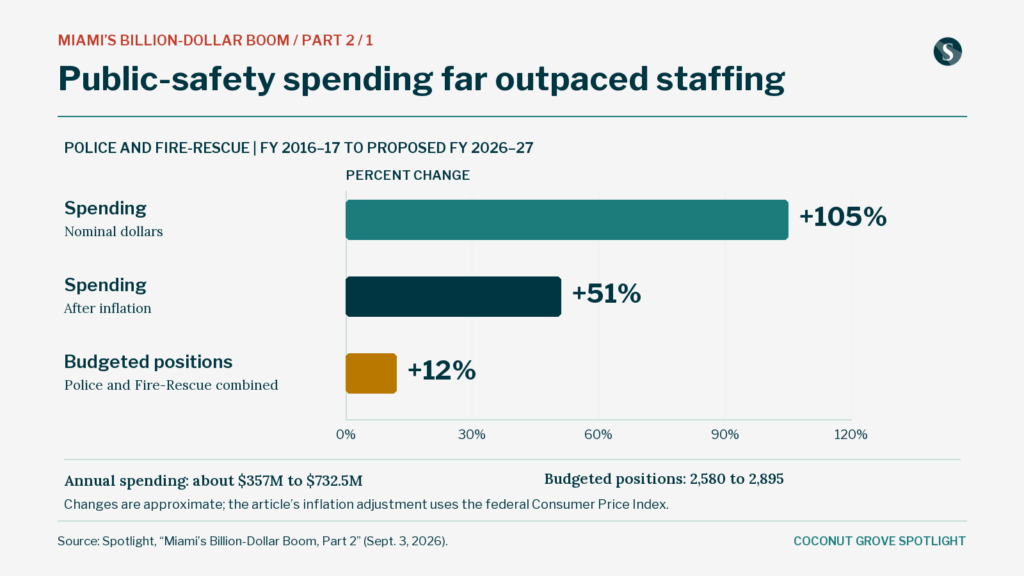
That is an increase of about $375 million, or 105%, during a period in which inflation was about 36%.
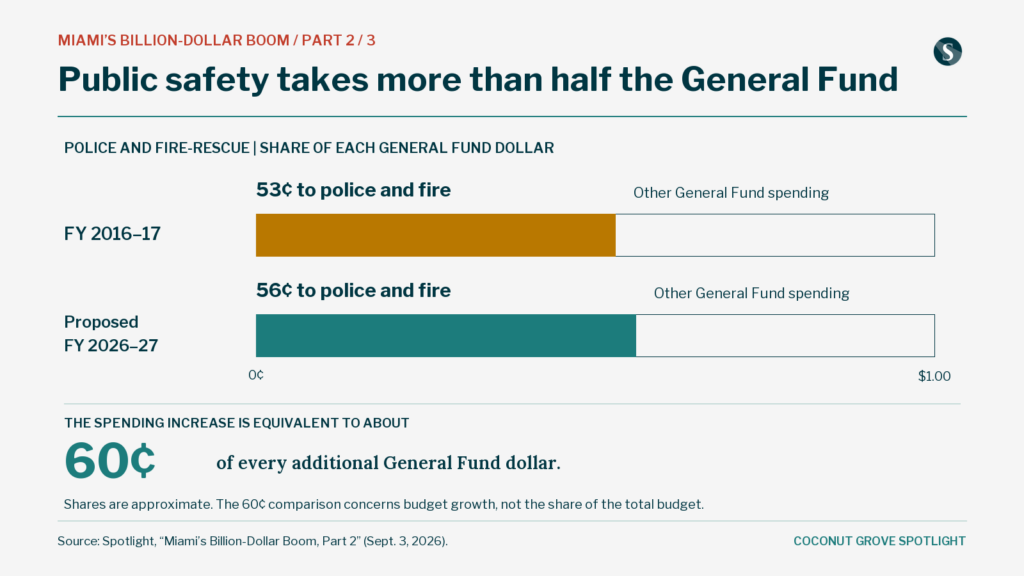
Put another way, the increase in police and fire spending alone accounts for an amount equivalent to roughly 60 cents of every additional General Fund dollar Miami has to spend today.
But Miami did not dramatically expand its public-safety workforce along the way.
The number of budgeted police and fire positions grew just 12%.
The city budgeted 1,734 police positions and 846 Fire-Rescue positions in 2016-17, or 2,580 combined. The proposed budget includes 1,902 police positions and 993 Fire-Rescue positions — 2,895 combined.
Inflation explains some of the increase in spending, but far from all of it. Adjusted using the federal Consumer Price Index, Miami is still proposing to spend about 51% more on police and fire than it did a decade ago.
Much of the increase reflects what it costs to operate those departments and compensate their employees. Salaries rose. Pension contributions climbed. Health care and other personnel costs grew.
That growth in spending will soon be back before commissioners.
Miami’s proposed 2026-27 budget is scheduled for public hearings on Sept. 10 and Sept. 24, when the City Commission will determine how to allocate nearly $1.3 billion in General Fund spending.
The numbers also provide context for a separate question voters will decide in November.
Despite spending substantially more each year on police and fire, city officials say many public-safety facilities are now so deteriorated that the city needs voter approval to borrow up to $450 million to repair or replace them.
Read more: Miami’s Billion-Dollar Boom, Part 1: Where Did All the Money Go?
The gap between spending and staffing is particularly pronounced at Fire-Rescue.
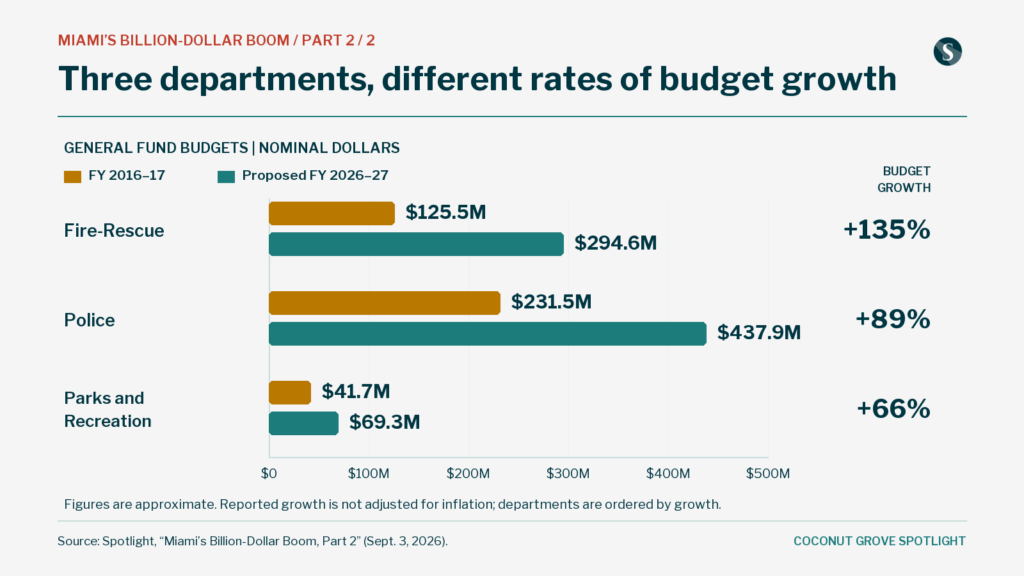
The department’s General Fund budget has more than doubled since 2016-17, rising from about $125.5 million to roughly $294.6 million in the proposed budget — an increase of 135%.
Its budgeted workforce grew 17%.
Part of the difference can be found in the rising cost of employing those firefighters.
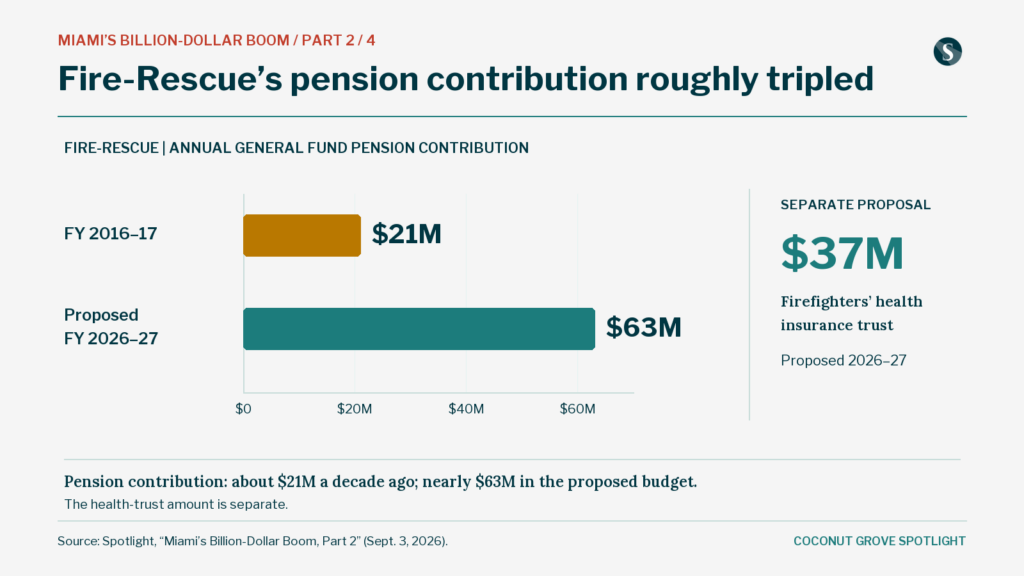
A decade ago, Fire-Rescue budgeted about $21 million for its contribution to the pension trust covering police officers and firefighters. The proposed budget puts that figure at nearly $63 million — roughly triple what it was a decade ago.
Another $37 million is proposed for the firefighters’ health insurance trust.
And a separate Spotlight report published today provides another look at firefighter compensation.
Read more: Inside City Hall: The Hidden Pay Fueling Miami’s Six-Figure Firefighter Pensions
Newly obtained pension records show that compensation credited toward Miami firefighters’ pensions averages about 32% more than their published base salaries. The difference reflects specialty, incentive and other forms of pensionable compensation that are not apparent from the city’s published base salaries.
Read more: Inside City Hall: The Pay Behind Miami’s Six-Figure Firefighter Pensions
Police spending has also risen substantially.
Its General Fund budget increased from roughly $231.5 million in 2016-17 to about $437.9 million in the proposed budget — an increase of about 89%.
Together, police and fire now consume roughly 56 cents of every General Fund dollar Miami proposes to spend, up from about 53 cents a decade ago.
That change occurred while the General Fund itself nearly doubled.
Other city services also benefited from Miami’s growing revenues, but not always at the same pace.
Parks and Recreation, for example, had a General Fund budget of about $41.7 million in 2016-17. The proposed budget allocates roughly $69.3 million, an increase of about 66%.
After accounting for inflation, Parks spending grew about 22% over the decade, compared with roughly 51% for police and fire.
Direct comparisons with some other departments are more difficult because Miami has repeatedly reorganized agencies and shifted responsibilities among them over the years.
All of that leads back to the other public-safety number Miami voters will encounter this fall: $450 million.
City officials say that despite the growth in annual police and fire spending, many of the buildings those departments operate from have deteriorated and require a major new capital investment.
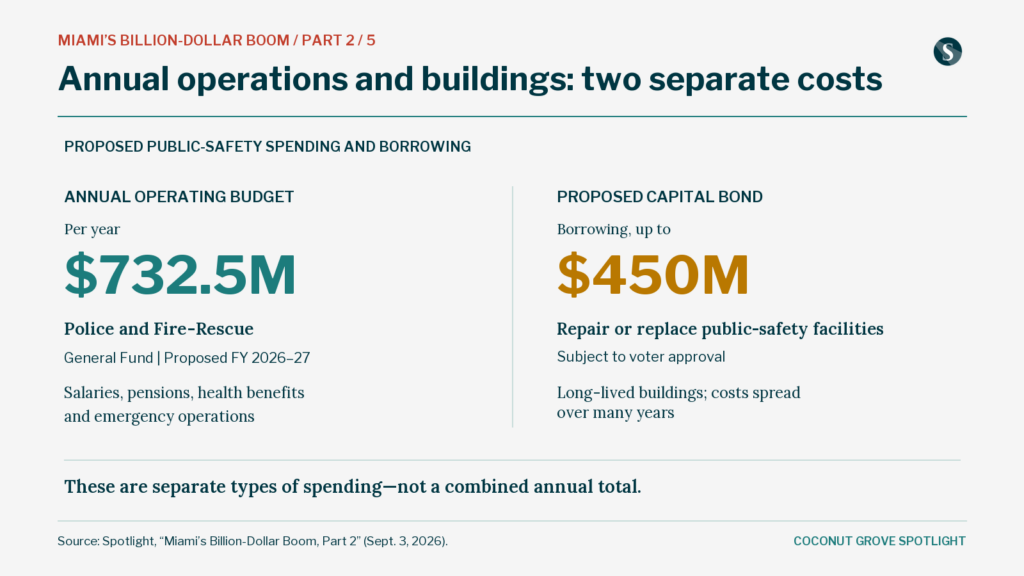
The proposed bond would pay for capital projects and is separate from the annual operating spending examined by the Spotlight. Salaries, pensions, health benefits and emergency operations generally come from the operating budget, while borrowing for long-lived buildings allows the city to spread those costs over many years.
The distinction is important. The increase in annual police and fire spending does not mean those dollars were necessarily available to repair or replace public-safety facilities.
But it leaves Miami taxpayers confronting two large numbers at once: more than $732 million in proposed annual police and fire spending, and a request to borrow as much as another $450 million for the buildings those departments operate from.
Those numbers will now confront a mayor who campaigned on a promise to scrutinize City Hall’s rapidly rising spending.
During last year’s campaign, Eileen Higgins repeatedly called for a “deep-dive” into city finances to determine “what the heck is going on” with spending that had risen sharply even as Miami’s population remained relatively flat.
Higgins will now preside over her first budget hearings beginning Sept. 10 with her administration proposing increases in both spending and staffing: a nearly $1.3 billion General Fund budget, up 6% from a year ago, and 4,883 budgeted positions, 61 more than in the current budget.
More than half of that spending — $732.5 million — would go to police and fire.