
After months of opposition from residents, Miami’s Planning, Zoning and Appeals Board overturned a temporary permit for construction-related parking on historic Charles Avenue in the West Grove.
Miami’s Planning, Zoning and Appeals Board voted to overturn a temporary permit Wednesday for a construction-related parking lot on Charles Avenue, siding with West Grove residents who spent months challenging its use on the historic street.
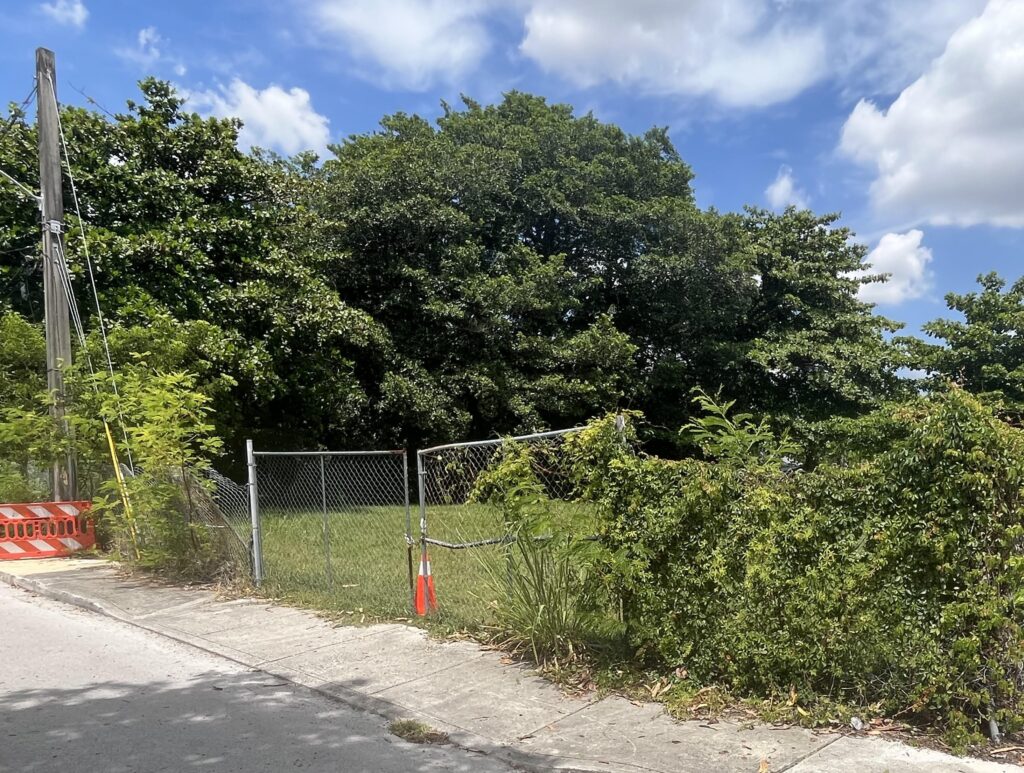
The permit, first issued in August by Miami’s Building Department, allowed Ransom Everglades School to park 37 vehicles associated with ongoing construction on two adjoining vacant lots at 3227 and 3247 Charles Avenue.
The decision followed months of opposition from the neighborhood organization Preserve the West Grove (PWG). Before issuing a formal appeal, the group tried to prevent the lot’s use for parking through negotiations with school and city staff.
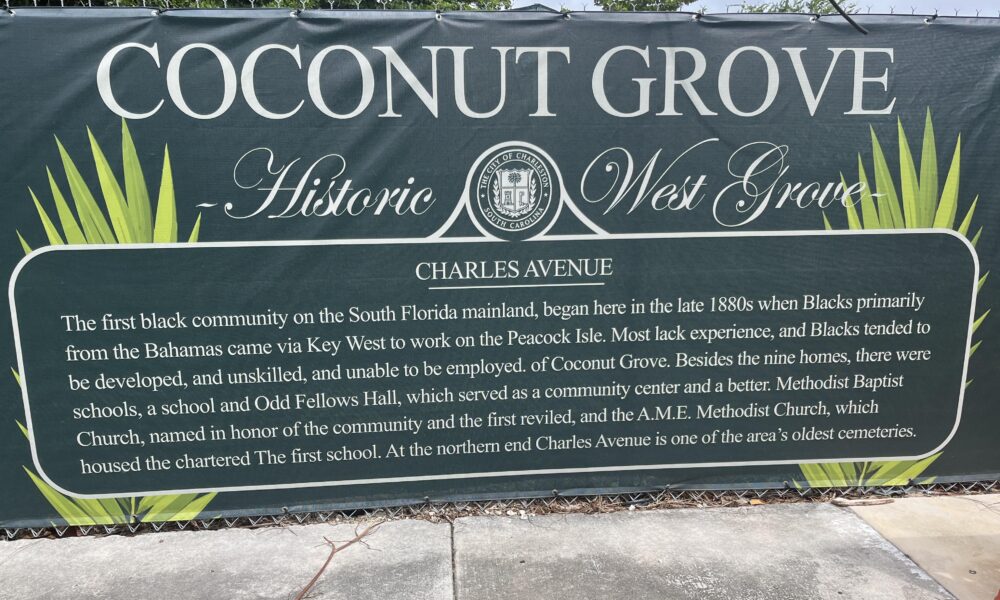
The ongoing controversy took its latest turn last weekend, when signs titled “Coconut Grove Historic West Grove” appeared on fencing around the site.
The signs appeared to commemorate Charles Avenue’s history as the heart of Miami’s early Bahamian community. But after a closer reading, neighbors found historical inaccuracies, grammatical errors and language they considered demeaning.
The signs described Coconut Grove’s first Bahamian settlers as “unskilled, and unable to be employed,” displayed the seal of the city of Charleston, South Carolina, and included a reference to “Peacock Isle.”
During public comment at Wednesday’s hearing, PWG member Jasmine Doyle read a passage from one of the signs and criticized what she described as a “total disregard and the lack of care that, ironically, Ransom Everglades has for the West Coconut Grove community.”
“I grew up on Charles Avenue, and as a third-generation resident, it is heartbreaking to see how my community’s history is not only disrespected but also erased,” Doyle said.
Anthony Vinciguerra, a longtime Charles Avenue resident who represented PWG at the hearing, told the Spotlight that the signs reflected a broader lack of regard for the neighborhood.
“I have a hard time imagining something this poor being put outside of Ransom’s entrance,” he said.
Ransom Everglades did not respond to questions about the signage before publication.
The signs were removed by Monday, but tensions remained on full display throughout Wednesday’s hearing.
Armando Hassun, an attorney with Shubin Law Group representing the permit’s applicant, urged the board to uphold the permit. He argued that Ransom had “gone above and beyond the city’s conditions or initial requirements.”
Some audience members scoffed when Hassun presented an image of the historical signs as an example of Ransom’s efforts.
Speaking on behalf of PWG, Vinciguerra urged the board to overturn the permit, arguing that the parking lot was the latest example of development decisions that, in his view, disregard Charles Avenue’s historic character and residents’ efforts to preserve it.
The parking dispute is not the first controversy involving the two vacant lots, which are owned by 3227 Grove LLC, a company managed by Coconut Grove developer Peter Gardner.
In 2021, Miami commissioners voted to rezone roughly an acre of residential lots near the Coconut Grove Playhouse, including the two now used for parking, to allow low-density commercial use. The rezoning opened the way for the property owners to pursue plans for the Grove Inn, a proposed project that would include up to 66 rooms.
During his testimony, Vinciguerra also questioned the permit’s legal standing. He cited a restrictive covenant associated with the property that states: “All parking for the redevelopment of the Property shall be provided underground (below grade) and/or at an off-site location.”
Julia Cerrato, assistant director of the building department, said staff had reviewed the covenant and determined that its parking restrictions did not apply to Ransom’s temporary lot. The parking limitations would only be associated with redevelopment of the property itself, she explained, while the current use was “redevelopment of another property.”
PZAB member Paul Mann made the motion to approve PWG’s appeal, criticizing the application as using “circular” legal referencing to justify the permit. He added that he was sure Ransom could find other parking options.
“I just don’t think this would happen anywhere else in the Grove except where they can get away with it, which is in the West Grove,” he said.
The decision passed 7-1 and is not appealable to the City Commission.
Ransom Everglades did not respond to questions from the Spotlight about future parking plans ahead of publication.
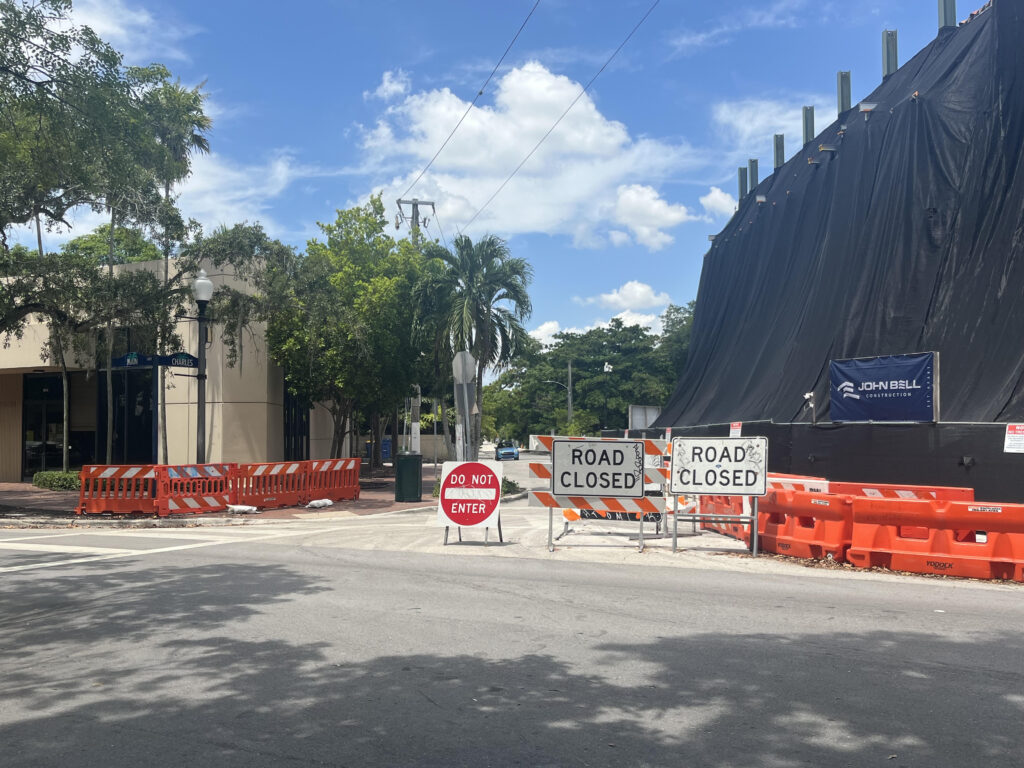
PWG welcomed the board’s decision, with some members sharing surprise that the board sided with the community. Still, questions remained about the site’s use and the relationship between the property owner and the school.
“I don’t know how this relationship was proffered, but we think it’s improper that Peter Gardner is the one submitting the permit, even though he doesn’t have a direct relationship with the school,” said board member Courtney Berrien.
Gardner could not be reached for comment on his role in the site.
For residents like Mamie Armbrister, whose family has historic roots in the community, the board’s decision reflected a positive step in a decades-long battle to preserve the West Grove neighborhood and its history.
“We’re just tired of the disrespect that we are being shown, to come in and do what you want,” she said during the meeting.
“This is our area. Our home. Our neighborhood.”
Sinclair Holian is a Spotlight reporter and Report for America corps member covering gentrification and development in Coconut Grove. She joins us through our partnership with Report for America, a national organization that places journalists in local newsrooms across the United States.