
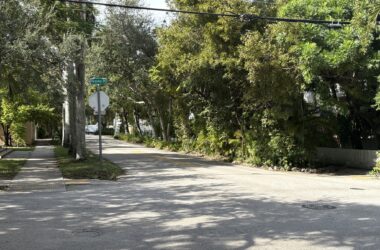

During a community briefing hosted by County Commissioner Raquel Regalado late last week, residents questioned the county’s plans to build more than 1,000 new housing units along Douglas Road in the West Grove.
Miami-Dade County says plans to replace low-rise public housing east of Douglas Road with high-density, mixed-income apartment towers will address the neighborhood’s urgent need for affordable housing.
But for West Grove residents, the prospect of years of construction bringing more than 1,000 new units to the area has raised concerns about increased density, neighborhood character and the impact on their quality of life.
Miami-Dade District 7 Commissioner Raquel Regalado and the developers behind two major public-private redevelopment projects on Douglas Road between Grand Avenue and U.S. 1 faced some of those concerns on Friday during a community webinar.
Regalado and leaders of Integral Florida and Related Urban Development Group shared updates about construction plans and responded to questions about their potential impact on the surrounding neighborhood.
“Change is hard,” Regalado said of the transformation coming to Douglas Road, “but it is being done in a thoughtful way near transit to provide people with access.”
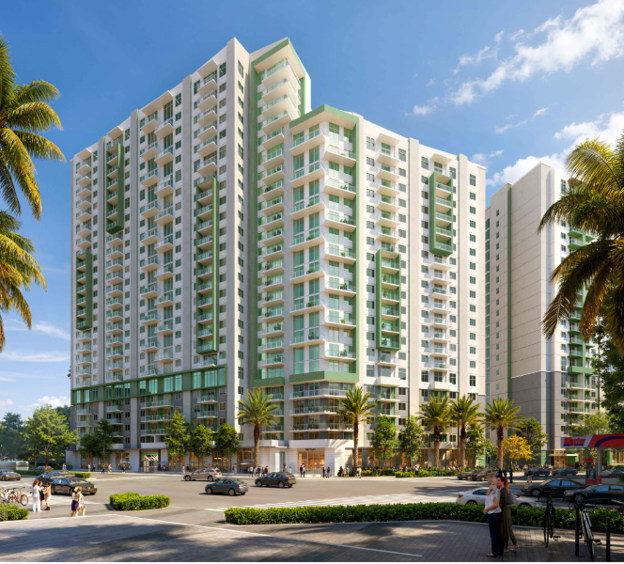
Kareem Brantley, CEO of Integral Florida, shared new details about the company’s $159 million Eviva project, which will bring two new buildings to either side of Percival Avenue. The development was approved by the county in June 2025 to replace the 24 existing two-story public housing units at the site.
Read more: More Highrise Housing Proposed for Douglas Road
Integral’s presentation described the proposed project as a “mixed-income community” with an estimated 575 units, about 210 of which would be designated as affordable or workforce housing. The two buildings at the site would differ significantly in scale: a 22-story tower north of Percival and a seven-story building to the south.
Brantley described the smaller building as a “low-income housing tax credit” property, with all 145 units designated as affordable. He called the larger tower a “mixed-income workforce development,” but did not provide a specific breakdown of its units by area median income (AMI).
The Eviva project would also include about 14,000 square feet of “destination retail” space, which Brantley described as an opportunity for local business owners struggling with rising commercial rents in Coconut Grove.
“We think it’s a great opportunity (for) some of the businesses that wouldn’t be able to stay in the Grove because the price per square foot is going up a lot higher than the growth of their business at this time,” he said.
Both buildings are set to be built simultaneously, with Integral aiming to complete the project by early 2030.
Albert Milo, CEO of Related Urban Development Group, also shared updates on the company’s Stirrup Plaza project, which would bring two high-rise towers just north of the Eviva project, closer to U.S. 1.
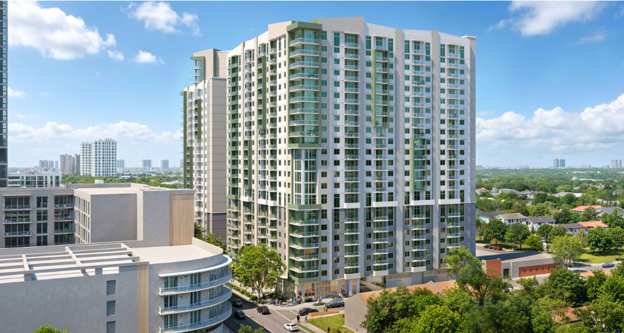
Related Urban received county approval last year to replace the three-story Gibson Plaza senior housing development at Douglas Road and Day Avenue with a mixed-use project. Milo said construction is expected to begin in October 2027 with residents able to move in by May 2030.
Gibson Plaza’s 65 current residents will be relocated to another Related Urban development while construction is underway — the Haley Sofge building in Little Havana. The developer will cover all moving expenses, Milo said, and residents will have the option of remaining at Haley Sofge or returning to the Grove once the new building is complete.
Milo and Regalado also answered longstanding questions about the new 7,650-square-foot Miami-Dade Public Library planned for the ground floor of the new Gibson site.
Regalado confirmed that the county plans to close the nearby Virrick Park Branch Library and transfer employees to the Related location once the project is complete.
Read more: Is the Virrick Park Branch Library Destined to Close?
The plan reflects a new county policy to place its libraries in county-owned buildings, Regalado explained, ensuring long-term stability and reducing rental costs amid the county’s recent budget squeeze. The building that houses the Virrick Park library is owned by the City of Miami, not the county.
Regalado cited Miami’s decision to cancel the Allapattah Branch Library’s lease in a city-owned building to make way for affordable housing as an example of a “very sad situation” that could have been avoided had the county owned the library space.
Once the library leaves Virrick Park, decisions about the future use of the library space will lie with the city. Regalado said she’s discussed plans to repurpose the space as a community center with Miami District 2 Commissioner Damian Pardo.
Related’s plans have also drawn scrutiny over the project’s changing scale. While the development was initially announced as a single tower, the Spotlight reported in July that the developer’s latest plans call for a second 25-story tower facing U.S. 1.
Read more: Second High-Rise Tower Proposed for Stirrup Plaza
When asked if that second tower would require new approval by the County Commission, Milo said Related Urban has had a master development agreement for the county-owned property for about 15 years, suggesting that no approval was needed to add the second tower.
Construction on the second tower will not start until the first tower is complete in 2030, he said. The tower will include ground floor retail space facing U.S. 1.
After hearing the updated plans for both projects, one person asked Regalado what the community could do to stop both developments. (Questions were submitted in writing and then read aloud by Regalado’s staff, omitting the name of the person who submitted the question.)
“These two projects will bring more than 1,000 people into an already congested neighborhood, and these new buildings are destroying the character of Coconut Grove,” the person said. “They don’t fit the neighborhood. This is Coconut Grove, and we want to preserve what makes it distinct from downtown Miami.”
Regalado responded that plans were developed with residential neighborhoods in mind, citing the “step-down” approach of both developments, with the largest towers situated closest to Douglas Road and U.S. 1.
While saying she understood that the transition might be difficult for residents, Regalado stressed that bringing affordable housing to the area is the county’s top priority.
“I think what’s going to be put there is going to be lovely and it’s going to allow residents that are at a lower price point to live with access to amenities that they currently don’t have,” Regalado said. “You know, I’m sorry if people don’t like them.”
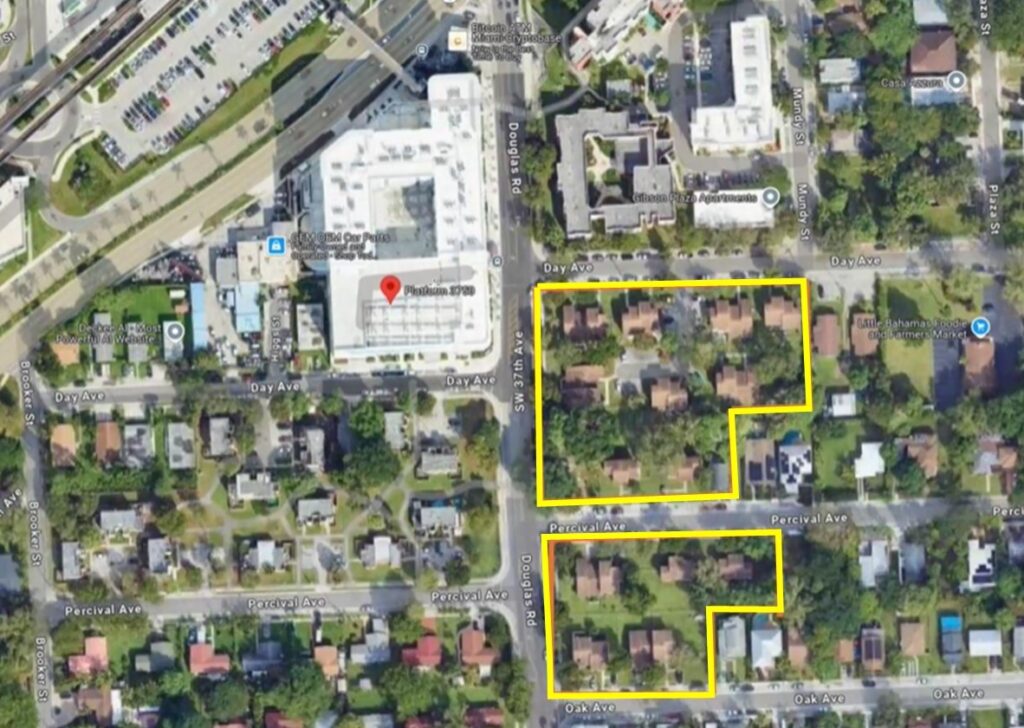
Despite residents’ concerns with development on the east side of Douglas Road, the county is also forging ahead with redevelopment plans on the west side of the avenue.
Regalado was asked about plans for 3707 Percival Avenue, where the county is seeking a developer to demolish and redevelop the 24-unit Stirrup Plaza Family public housing properties.
The county has not yet selected a developer for that project, Regalado said, adding that she could not offer additional details.
According to the county’s solicitation, the Stirrup Plaza Family redevelopment would include at least 300 residential units designated as affordable and workforce housing, with a maximum building height of six stories.
Read more: More Development Coming to Douglas Road
Sinclair Holian is a Spotlight reporter and Report for America corps member covering gentrification and development in Coconut Grove. She joins us through our partnership with Report for America, a national organization that places journalists in local newsrooms across the United States.