


While the city touts the World Cup next June as a once-in-a-generation economic opportunity for local businesses, new rules would ban vendors and street sellers who stand to benefit most.
Miami city officials have been urging the area’s small-business owners and entrepreneurs to gear up for the “biggest economic opportunity in Miami-Dade County’s history” — the 2026 FIFA World Cup. But for some of those hoping to cash in, the city’s message comes with an asterisk: you’re not invited.
A proposed ordinance sponsored by Miami Mayor Francis Suarez would ban nearly all outdoor sales of non-food items throughout downtown Miami for the duration of the World Cup, from June 8 to July 20. The restrictions would prohibit pop-up apparel vendors, mobile advertising, and street-side souvenir sales — exactly the kind of short-term, high-energy enterprise that local entrepreneurs rely on during big events.
Under the ordinance, fans looking to sell extra World Cup tickets downtown also would be breaking the rules.
The proposed restrictions, approved unanimously on first reading by the City Commission in October, would establish a vast “Clean Zone” stretching from the Miami River north to NE 15th Street, and from several hundred feet east of Biscayne Bay (yes, over the water) to NW/SW 4th Avenue. Within that zone, the city would suspend virtually all permits for sidewalk and street sales — including jerseys, memorabilia, and even handheld fans for sweltering tourists.
Even vendors who hold valid city permits to sell merchandise on sidewalks will be barred from operating within the Clean Zone during the World Cup, under language in the proposed ordinance that temporarily overrides Miami’s existing vending laws. The measure additionally prohibits temporary public hospitality events within the zone unless organized by the Host Committee and approved by the city manager. Also banned: advertising flyers, promotional samples and other giveaways.
The justification, the legislation explains, is to prevent sidewalk congestion and curb the sale of counterfeit merchandise. Inflatables, banners, signs and outdoor projected images would also be banned.
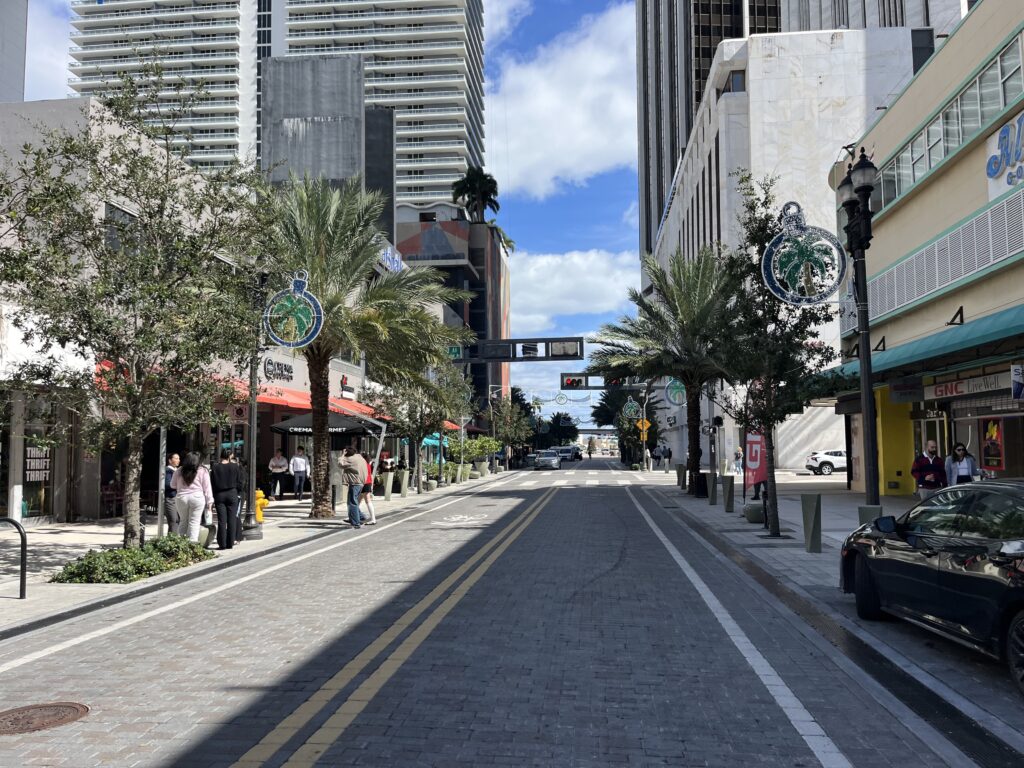
But for small vendors, the “Clean Zone” looks less like crowd control and more like a lockout. While corporate partners and FIFA-affiliated sponsors will enjoy prime placement around event sites, independent sellers could find themselves on the outside looking in during the city’s biggest payday in decades.
John Jackson, manager at Davie-based sports apparel shop CanesWear, acknowledged that World Cup host cities and FIFA have legitimate interests in curbing counterfeit merchandise by implementing street-vendor restrictions. However, he said licensed apparel sellers — many of which are already squeezed by e-commerce and big-box competitors — could suffer collateral damage alongside other South Florida vendors hoping to capitalize on the World Cup windfall.
“In terms of how many sports apparel shops are left in South Florida, it’s very slim,” Jackson told The Spotlight. “I think most vendors would agree that they should be able to get their foot in the door and have an opportunity.”
CanesWear has a mobile team that aims to branch out and sell products beyond the shop’s only retail location in Davie. But in the past, restrictions on pop-up sales in local municipalities and tailgating areas, namely around Hard Rock Stadium, have limited the shop’s campaign in that vein.
“We’re very used to not being able to sell at sporting events,” Jackson said.
Hard Rock Stadium is scheduled to host seven World Cup matches in June and July, including a quarterfinal and third-place playoff. The FIFA 2026 World Cup Miami Host Committee estimates that the matches will inject $1.5 billion into the local economy and bring a massive wave of visitors to the Miami metro area.
For now, the city hasn’t explained how the Clean Zone will operate or who will be responsible for enforcing it.
Neither the Host Committee nor Mayor Suarez’s office responded to requests for comment.
James Torres, president of the Downtown Neighborhood Alliance, told The Spotlight that many downtown residents support a temporary prohibition on pop-up sales during major events. “Residents don’t really want street vendors around when there are big events,” Torres said. “It’s an issue because so many people show up without permits.”
Torres, on behalf of the Alliance, recently sent a letter to the city requesting clarification on signage restrictions and whether residents will be subjected to any checkpoints or traffic flow disruptions in the area. The letter further requests details on the city’s plan for dealing with homeless residents in the vicinity. In the past, civil rights advocates have criticized the City of Miami for indiscriminately sweeping through homeless camps and arresting unhoused residents in advance of major events in an attempt to polish up the city’s image.
A manager at a Miami apparel supplier told The Spotlight that counterfeit merchandise is commonplace when major sporting events are in town, “especially soccer.”
The manager, who asked not to be named out of privacy concerns, said that while the ordinance, as written, will help cut down on bogus jersey sales, he supports the idea of tweaking the legislation so that a limited number of permits are available to reputable vendors during the host period.
“I do think licensed and authorized vendors should have the ability to get permits, as the only worthwhile goal I can see from [the ordinance] is the elimination of counterfeit sellers,” he said.
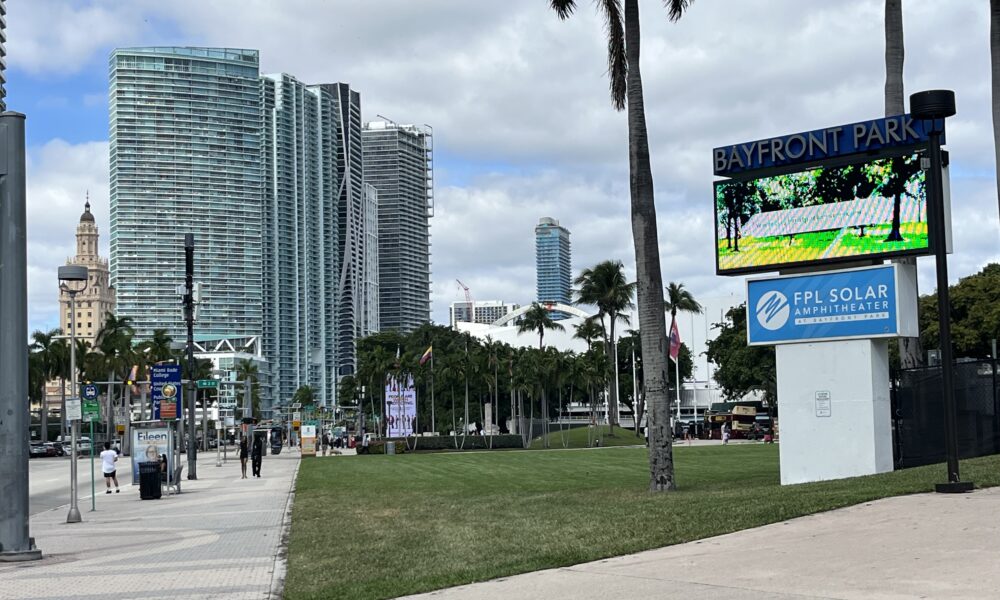
The Miami Host Committee has touted opportunities for South Florida small businesses through its Local Impact Supplier Program for the World Cup. The program’s webpage last month was soliciting local business owners for security, equipment management, and fireworks at the planned World Cup Fan Festival at Bayfront Park and other offshoot events.
The committee has also hosted small-business workshops to prepare local entrepreneurs, calling the World Cup the “biggest economic opportunity in Miami-Dade County’s history.”
Jackson of CanesWear noted that few small businesses in the South Florida sports apparel arena have survived consolidation in the market. Over the last few years, he said, they’ve been boxed out by large-scale corporate sellers like Fanatics, and on the brick-and-mortar side, big retailers like Dick’s Sporting Goods.
Jackson said events on the scale of the World Cup can provide a rare and much-needed boon for apparel vendors.
In the past, CanesWear was able to partner with local South Florida sports bars to sell merchandise on their premises during the Florida Panthers’ playoff and Stanley Cup runs. It’s a strategy Jackson recommends to small- to midsize vendors if they are shut out of pop-ups in the sprawling Clean Zone during the World Cup.
“A lot of people are just excited to have merchandise to purchase that’s significantly cheaper than at the stadium,” Jackson said.