
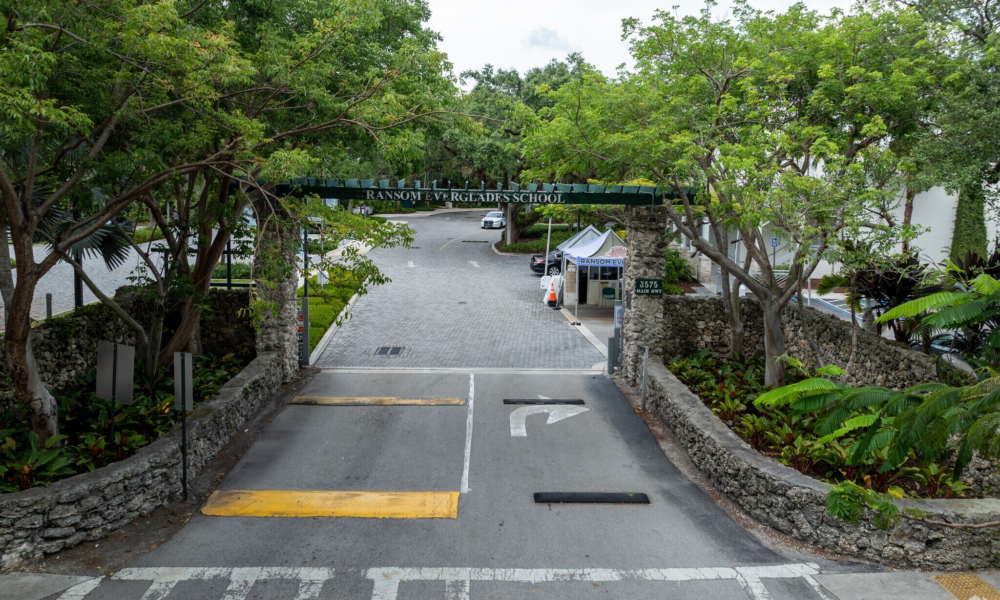

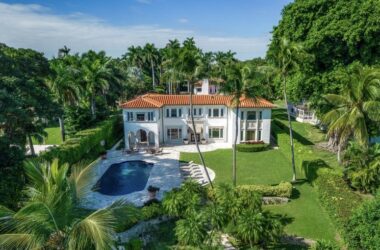
The house may be easier to find than the school. As affluent families flock to Miami, coveted seats at Ransom Everglades and other Grove private schools have become increasingly hard to come by.
For some families considering a move to Miami, one question may be more important than whether to take the job or where to find a home: Can they get their children into the “right” private school?
Andrew Ansin has heard it firsthand.
“There certainly were families calling and saying: ‘We really want to move to South Florida, but we’re only moving if our kids can get into Ransom,'” said Ansin, a board member at the prestigious Ransom Everglades School in Coconut Grove.
Ansin is CEO of Sunbeam Properties and Sunbeam Television, which owns Miami’s WSVN-Channel 7 and Boston’s WHDH-Channel 7, a Ransom alumnus, and former parent of a student at the 123-year-old school. He heard similar concerns from major employers in New York and elsewhere that would consider larger South Florida operations but worry about whether employees relocating with children could find space in top schools.
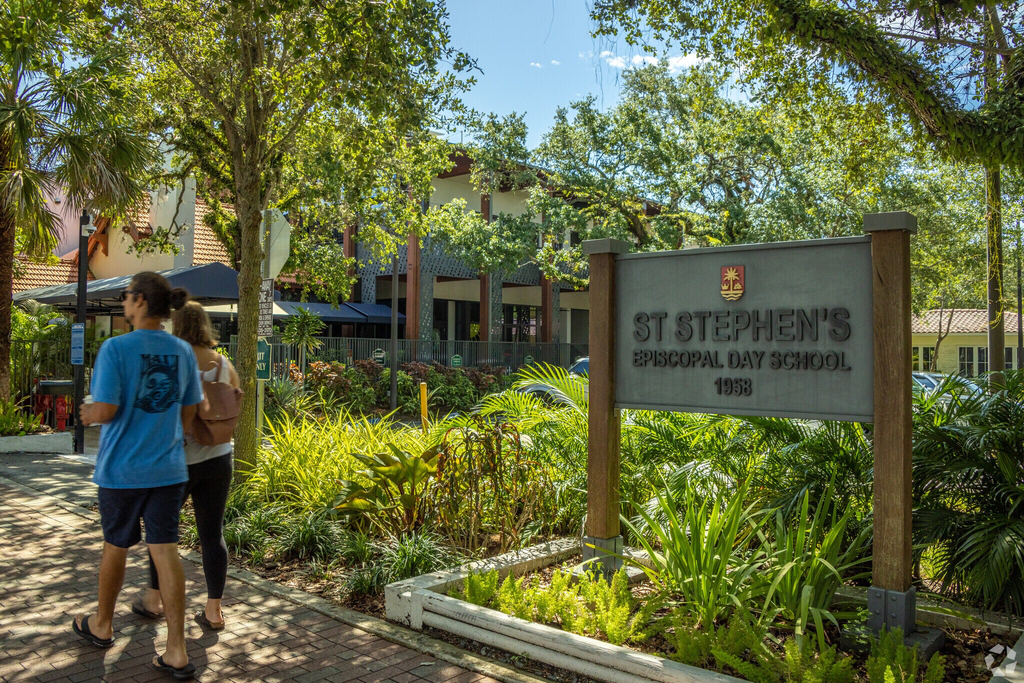
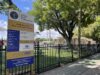
The elite-school admissions challenge is particularly acute in Coconut Grove, home to a cluster of Miami’s most sought-after private schools — Ransom Everglades, Carrollton School of the Sacred Heart and St. Stephen’s Episcopal Day School among them.
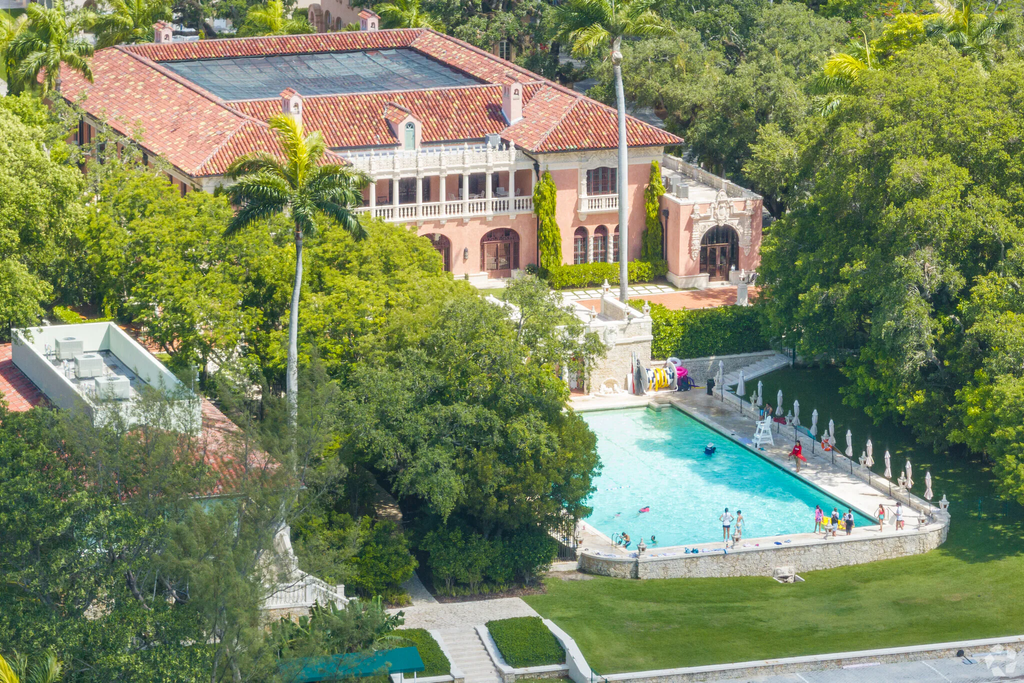
An influx of affluent families that accelerated during and after the COVID-19 pandemic has intensified competition for a limited number of seats, frustrating some longtime local families suddenly facing much greater competition for admission, according to education consultants and parents interviewed by the Spotlight.
And unlike Miami’s luxury housing market, where developers can respond to increased demand by building more, private schools have limited ability to expand — particularly in places like Coconut Grove, where land is scarce and among the most valuable in South Florida.
The Spotlight reached out to school officials at Ransom Everglades, Carrollton and St. Stephen’s about rising demand for admission, enrollment capacity and how the schools are responding to increased competition for seats. None responded.
The squeeze is increasingly influencing where families choose to live across the county and how far children travel to school, according to Ansin.
It’s also contributing to the extraordinary allure of Coconut Grove itself.
“Coconut Grove has become the sexiest city in America,” said Valeria Avirett, founder of Miami School Advisors, who helps local and relocating families navigate school admissions.
“The factor of walkability, charm, being close to the water, having access to green spaces, having that village feel definitely stands out,” she said. “It’s an incredibly desirable place to live and they have the schools to match it.”
“The challenge,” she added, “is that the offer is limited.”
There is plenty driving the demand.
According to the educational services company Niche, Ransom ranks No. 23 among private high schools in the country, while Carrollton ranks No. 1 among Catholic high schools in Florida.
University admissions are more competitive than ever, which is fueling parents’ anxiety about where their children attend school.
Ransom’s Class of 2026 numbered just 179 students. According to matriculation data compiled in a private school analysis, 10 went to the University of Pennsylvania, eight to the University of Michigan, seven to Vanderbilt, six to Duke and five to Cornell. Twenty-one enrolled at the University of Florida.
That kind of track record comes at a price. Tuition at Ransom for the 2026-27 school year is $57,300, according to school data. Ransom also provides more than $8.5 million annually in financial aid and tuition remission, reaching about 17% of its students.
Yet for families who can afford the tuition, paying it doesn’t guarantee a seat.
“It’s gotten so hard that [parents] are becoming desperate,” said Victoria Kenny, director of the Miami Schools Fair and Conference and a consultant who helps families find schools for their children.
One Key Biscayne family Kenny worked with did everything it could to secure a spot for its child at St. Stephen’s, a pre-K through fifth-grade school in the Grove’s village center affiliated with the Episcopal Church.
“There’s no capacity, so there’s nothing you can do,” Kenny said. “It’s so hard to get into pre-K that it’s looking more like Manhattan,” with its notoriously competitive private-school admissions ecosystem.
The influx of new families isn’t the only force driving demand for private schools. Florida has also dramatically expanded school choice in recent years, including state-funded scholarships that families can use toward private-school tuition.
Not all of the Grove’s most selective schools participate. Ransom Everglades and St. Stephen’s do not accept the state scholarships, according to the schools.
Ansin said the competition was increasing even before the pandemic and has become more intense as the applicant pool has grown.
“It’s much, much harder to get in because of the sheer number of candidates and the quality of candidates that are applying,” he said.
The demand has become another consideration for business leaders trying to attract executives and other highly paid workers to South Florida.
Citadel founder Ken Griffin, one of the most prominent business leaders to relocate to Miami in recent years, has made education a major focus of his local philanthropy, supporting public and private education initiatives.
Business leaders are going to great lengths to meet the demand for attractive schooling for their employees. Most recently, Griffin committed $50 million to help New York-based Success Academy establish charter schools in Miami. He has also quietly donated millions more to leading private schools, sources tell the Spotlight.
As a result, the connection between schools and real estate has become increasingly explicit.
“Instead of selling the house or selling the neighborhood, they’re selling, ‘It’s close to Ransom, it’s close to St. Stephen’s, Carrollton, Gulliver,'” said a Roads resident who is working with Avirett to find a private school for his preschool-aged daughter and asked that his name not be used because his family is currently navigating the admissions process.
Ansin recalled offering a job to one employee whose decision about where to live in South Florida depended on where his son was admitted. The son got into Ransom, and the family’s housing decision followed.
That demand has consequences beyond home prices.
Families unable to live near their children’s schools may drive longer distances each morning and afternoon, adding cars to already congested streets. Rising housing costs also make it more difficult for teachers and school employees to live near their workplaces, Ansin said.
Schools cannot necessarily solve the problem by adding classrooms.
Private schools operate under enrollment limits imposed through their local land-use approvals, he explained. Ransom, for instance, could not simply add a significant number of students even if school leaders wanted to.
Ransom, meanwhile, is preparing to build a new, 31,000-square-foot humanities center at its upper school campus on Main Highway, a project that has raised concerns among nearby residents about its potential impact on traffic and parking.
Read more: Under Siege: Historic Charles Avenue Fights Back
With enrollment constrained even as facilities expand, growing demand translates instead into greater competition for the seats already available.
Avirett said admissions officers are trying to find students who are a good fit for each school’s programs.
“They’re very intentional about the application and selection process,” she said.
At Ransom, Ansin said, academic ability is only part of the equation.
“The ethos of Ransom Everglades is to give more to the community than you take,” he said.
Ansin said the school looks for academically capable students who will contribute to the school community, while also considering interests and abilities ranging from athletics to fine and performing arts.
The intense competition has also prompted some families to reconsider an assumption that private school is necessarily the best option.
Avirett said she regularly encourages parents to consider public schools rather than simply pursuing the most recognizable private-school name.
“It’s also a lot of herd mentality,” she said. “I want to go there because it’s the most well-known recognizable school.”
Diane Serritella Quick, advocacy chair of Coral Gables Senior High School’s Parent Teacher Student Association, makes a similar case.
“Remember, we are a choice district, so any of the district’s schools are potential options for your family,” she said. “Do your research so you can make an informed decision.”
Quick chose Coral Gables Senior High School for her own children despite living seven miles away, close to other well-regarded public and private schools.
“I can confidently say it was the right decision for our family,” she said.
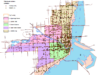
For parents set on private school, however, increasing supply may ultimately require putting schools somewhere other than the Grove and other communities in the southern part of the county where many of the most desirable institutions are clustered and housing prices are soaring.
Ansin said he is working to attract a top private school to open a campus in northeastern Miami-Dade to add coveted seats. This could reduce the number of families driving children across the county to schools concentrated in and around Coconut Grove and help with housing costs.








Sad that the wealthy new aristocracy doesn’t consider public education “sexy” or “charming.” What could be more attractive than a community where all students are educated well? Miami suffers from acute fabulous-ness and a shameful racial and class divide. Not my idea of an good place to live. Send the herd-mentality folks elsewhere. Our goal should be thriving and well-being for all, not for just a sliver of the population that wants to rope itself off from the rest of us.
As a Grovite living a few blocks away from both Ransom and Carrolton, I found this article particularly interesting. Both are excellent schools—I founded and coached the rowing team at Ransom—but I would still choose to attend St. Andrew’s School in Delaware (https://www.standrews-de.org) where I graduated six decades ago.
SAS is ranked 11th among all boarding schools in the U.S., and, to quote Admissions, “provides scholarships to meet the full demonstrated need of all admitted students, currently about half of the student population.” It is one of only four co-ed schools that are boarding only, and 100% of its graduates go on to college and university, including the service academies.
Two recent graduates I coached attended Ransom before choosing SAS for their sophomore through senior years. SAS also admits a freshman class of 70 or so newbies every year. The teacher/student ratio is 1/11.
Of course, I am biased. It’s where I learned to row all those years ago.
Interesting article. All true, too. I taught at Ransom Everglades for 16 years, and I taught in public schools for 9 years before that. I have witnessed the increase in demand and difficulty in the admissions process. In fact, I run a tutoring company right next to St. Stephen’s (called Who Tutors) that specializes in helping students get into private schools like Ransom and Gulliver. However, I like a bunch of public school options too, for instance, Coral Gables HS.