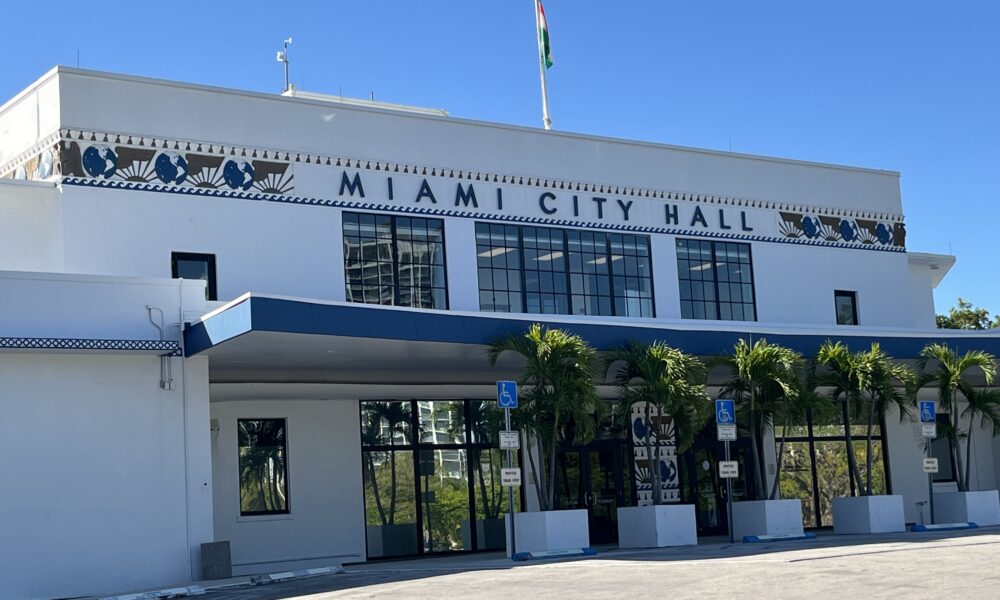




Just months after Mayor Eileen Higgins pledged to rein in runaway spending, city officials are pushing to increase the current-year budget by about 2.5% while leaving unclear why much of the money is needed and where it will ultimately go.
As the Miami City Commission prepares Thursday to debate a proposed $450 million public-safety bond — adding additional debt service to a city budget that has doubled over the past five years — commissioners are also quietly considering a midyear budget amendment that would increase spending by another $46 million, or roughly 2.5% above previously approved levels for the current fiscal year.
The amendment would also codify broad authority for the city manager over money already approved in the city budget, allowing the manager to shift funds between accounts, transfer reserves, reorganize departments and adjust staffing levels throughout the remainder of the fiscal year.
The proposal comes just five months into the administration of Mayor Eileen Higgins — who appointed new City Manager James Reyes, and who promised repeatedly during her campaign to rein in runaway spending in a city whose operating budgets have vastly outpaced population growth in recent years.
Read more: Inside City Hall: Miami’s Pay Raise Machine

Under Miami’s annual budgeting process, commissioners approve detailed spending allocations for individual departments and major operating categories at the start of each fiscal year.
Thursday’s amendment underscores how flexible those allocations can become afterward, with the administration exerting broad discretion to move money internally without repeatedly returning to the commission for project-specific approvals.
The measure would increase Miami’s overall non-capital budget from roughly $1.83 billion to $1.88 billion, including a $21.3 million increase to the General Fund and another $24.9 million in special revenue spending.
The city’s legislation says the additional funds are needed to make “corresponding adjustments” to the operating budget and capital plan, including transfers tied to previously approved resolutions and allocations to capital projects.
And despite the size of the increase, most major departments would see little or no meaningful increase in direct operating spending.
Police spending would remain flat at roughly $415.7 million, while Fire-Rescue would remain unchanged at about $270.9 million. Public Works, Solid Waste, Planning, Zoning and several other departments similarly show minimal movement.
Instead, the amendment appears largely driven by internal transfers and reserve reallocations whose ultimate destinations are only loosely explained in the legislation itself.
One of the largest shifts involves the city’s Non-Departmental Accounts, a broad reserve category that would fall from roughly $107 million to about $51 million — a reduction of nearly $56 million. At the same time, a category labeled “Transfers-Out” would rise to more than $76 million.
The resolution suggests some of that money would be redirected into the city’s capital plan, including about $15.4 million transferred from the General Fund.
But the legislation does not clearly identify which projects will ultimately receive the money, why such large reallocations became necessary midway through the fiscal year, or whether the changes reflect broader budget pressure elsewhere inside city government.
The proposal repeatedly references an “Exhibit A” and City Manager memorandum containing more detailed explanations, but the publicly available legislation itself provides little narrative breakdown of where the money will ultimately go.
As of press time, “Exhibit A” — the document attached to the legislation on the commission agenda — consisted of a single sentence: “To be substituted and distributed at a later date.”