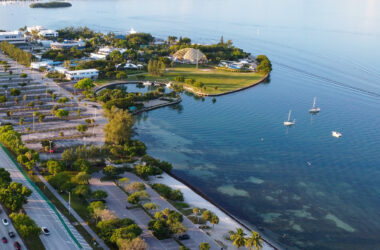

As Miami voters weigh a new lease for city-owned waterfront property, a review of the proposed agreement — and a similar commercial venture at Coconut Grove’s Dinner Key — raises questions about what developers promise, what their contracts require and what ultimately gets built.
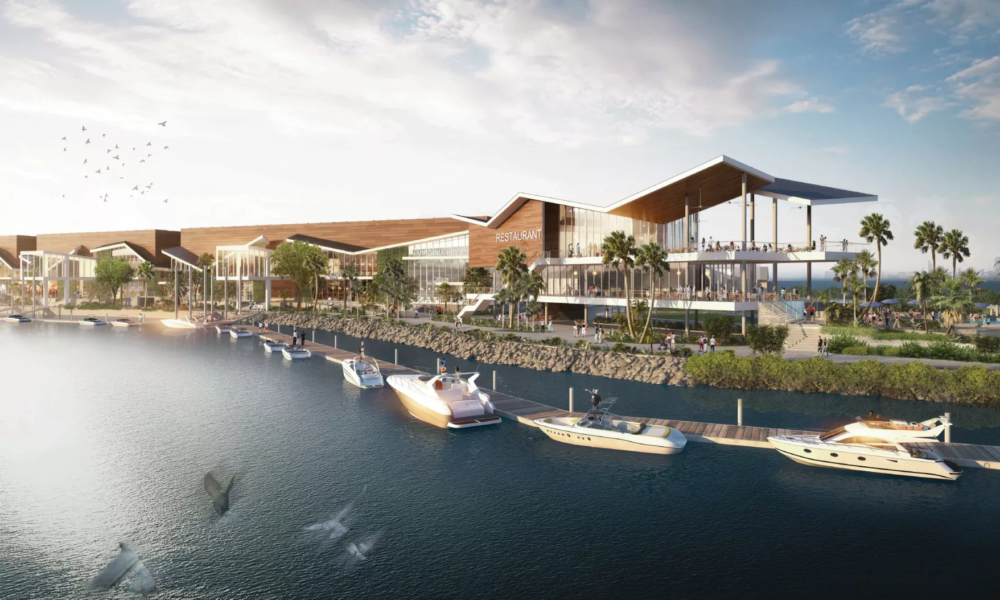
As Miami voters prepare to decide the future of 10 acres of publicly owned waterfront on Virginia Key on Nov. 3, two competing visions have emerged: a modern marina complex with upscale restaurants, retail and boating facilities, and the laid-back, come-as-you-are waterfront embodied by Gramps Getaway, an open-air bar and restaurant that has become a rallying point for opponents of the redevelopment.
For longtime Miami residents, especially in Coconut Grove, there’s a familiar ring to the debate.
In 2013, voters faced a similar choice over seven acres of prime waterfront on Dinner Key, home to a working boatyard and Scotty’s Landing, the rustic, open-air watering hole where cold beer, inexpensive seafood and sweeping views of Biscayne Bay drew legions of fans.
Voters approved the redevelopment. Scotty’s disappeared, and in its place rose Regatta Harbour, a collection of upscale restaurants, bars, entertainment venues and marina facilities that has drawn complaints from locals about noise, traffic, high prices and commercialization — while generating millions in revenue for the city.
Now, with another long-term waterfront lease on the ballot — this one potentially lasting 75 years — Miami voters face a familiar question: What will become of a publicly owned waterfront once a private developer takes control?
A Spotlight examination of the proposed Virginia Key agreement, the original Regatta Harbour lease for the Dinner Key site, subsequent amendments and city records reveals important differences between what developers promise, what their contracts require and what ultimately gets built.
At Regatta Harbour, some of the public amenities and marine-related businesses originally envisioned have never materialized, while others have given way to more lucrative commercial uses.
Read more: Regatta Harbour: Sales Soar as Questions Mount
Virginia Key LLC, the proposed developer of the island’s marina complex now up for vote, maintains that it will deliver the public amenities envisioned in its original 2017 proposal, despite rising construction costs and years of litigation that have delayed the project.
“You’re going to get what you think you’re going to get,” Robert Christoph, vice president of RCI Group, one of the partners in Virginia Key LLC, told the Spotlight in a recent interview, adding that the city’s zoning and development approval process, along with the lease itself, would help ensure that the promised improvements are delivered.
Like the Dinner Key redevelopment more than a decade ago, when city officials, in their bidding documents, declared public access to the waterfront “paramount,” the Virginia Key project is rooted in a similar directive.
The city’s 2010 Virginia Key Master Plan established seven guiding principles for the island’s redevelopment, beginning with this mandate: “MAXIMIZE PUBLIC ACCESS TO THE WATERFRONT.”
The two projects — on Dinner Key and Virginia Key — share other similarities: Both envision publicly accessible waterfront promenades, modern boat-storage and marina facilities, marine-related businesses, restaurants and public parking, all on valuable city-owned waterfront property.
But more than a decade after developers secured an 80-year lease for the site, many longtime residents question whether public access was ever truly a priority at Regatta Harbour, the Dinner Key waterfront complex now dominated by upscale restaurants, bars and entertainment venues catering largely to customers willing to pay a premium for the experience.
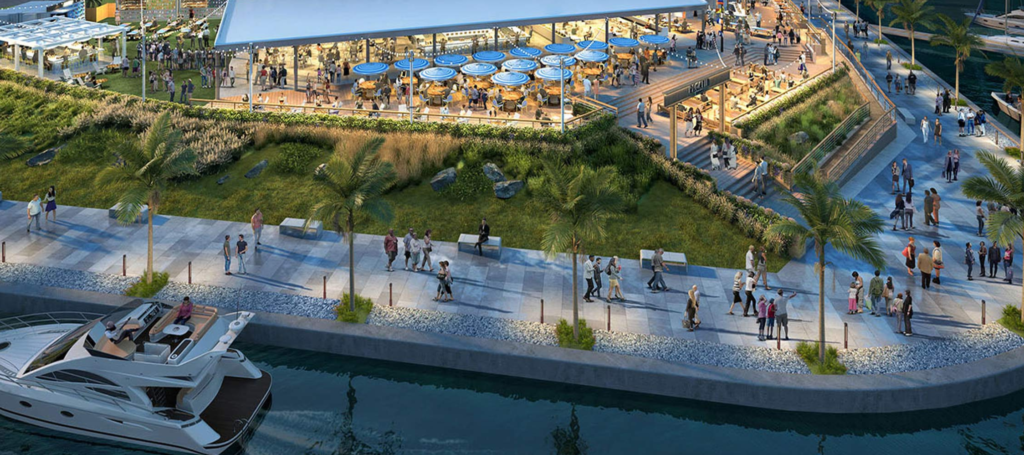
The working boatyard envisioned in the original plans, for instance, is nowhere to be found, nor are some of the open green spaces and other amenities envisioned in early concept plans.
And appealing to a more affluent customer base affected what was built as much as what wasn’t.
Regatta Harbour’s original redevelopment proposal envisioned filling one of its two historic seaplane hangars with workaday marine-oriented retail stores selling bait, fishing gear and other boating supplies.
Instead, with the city’s blessing the hangar now operates as an upscale venue for private parties, concerts and other entertainment, drawing complaints from nearby residents about noise and traffic.
Read more: The Hangar at Regatta Harbour: From Bait to Birkin Bags
Questions about public access aside, city officials have said they are thrilled with the results. In the 2024-25 fiscal year, Regatta Harbour generated nearly $3 million in lease payments to the city, more than any other individual city-owned property.
On Virginia Key, city officials have similarly focused less on how residents — regardless of their ability to pay — might use a redeveloped waterfront than on the financial returns to the city.
Much of the debate leading up to November’s referendum has centered on whether the annual lease payments — based on a 2017 proposal but delayed by years of litigation challenging the bidding process — should be reassessed to reflect rising waterfront property values.
“I think this is a bad deal for the city, something that’s ten years old,” Commissioner Miguel Gabela said at a June 11 City Commission meeting. Gabela ultimately agreed to put the question to voters after city attorneys advised that refusing to do so could expose the city to a lawsuit.
Read more: Virginia Key: A Great Deal or a Public Giveaway?
Proponents, including Virginia Key LLC, a partnership involving Suntex Marinas and RCI Group, point to a deal that would guarantee Miami nearly $204 million in base rent over the initial 45-year term, plus a share of marina and commercial revenues.
Opponents, led by the existing marina operator, who hopes to remain, argue that reopening the bidding process for the site — which includes about 17 acres of submerged bay bottom in addition to the 10 acres of upland property — could generate tens of millions of dollars more in city revenue.
Under the proposed lease, Virginia Key LLC would pay Miami an initial $2.2 million in annual base rent, with annual increases generally ranging from 3% to 5%. The city would also receive 6% of gross revenues from marina operations, restaurants, retail establishments and other commercial activities.
But like the Dinner Key development, the city’s proposed Virginia Key lease outlines only a broad vision for a revitalized waterfront while leaving considerable wiggle room for what the finished project will look like.
The project’s approximately 8,000 square feet of commercial space, for instance, is envisioned as accommodating marine-related goods and services catering to a diverse boating community. Yet the lease requires only that marine services be “included,” allowing them to occupy a tiny fraction of the commercial space while leaving the rest for more lucrative restaurants, shops and entertainment venues catering to affluent customers.
Asked what kinds of shops and restaurants might occupy the commercial space — and what price points they would target — Christoph offered few specifics, other than that he expected two restaurants. “There could [also] be a smoothie restaurant. There could be other types of food — fast casual. I’m not sure. I don’t want to say something that wouldn’t be accurate,” he said.
Such uncertainty has followed Regatta Harbour’s development plans since its own appeal to voters in 2013. Both of the new restaurants referenced in the original lease have evolved into increasingly upscale destinations.
And one, initially pitched as a moderately priced Shula’s Steakhouse, has been replaced, at least temporarily through 2031, by Regatta Grove, a high-margin nightlife venue that advertises a “coastal chic” dress code and reserves the right to deny entry at the doorman’s discretion.
The Virginia Key lease, in the fine print, also leaves room for such changes. Under Sections 5.2 and 5.3, the developer’s conceptual plans remain subject to engineering, permitting and subsequent city approvals — meaning what voters believe they are approving may not be exactly what gets built.
Details aside, Christoph insists that the centerpiece of the Virginia Key redevelopment is nonnegotiable: expanding public access to a waterfront that has long been only partially accessible.
Virginia Key LLC’s proposal calls for a renovated public boat ramp, new dry-storage buildings, wet slips, floating docks and facilities for paddlers and rowers. Christoph says the currently closed boat ramp would reopen, with additional launches for kayakers, paddleboarders and rowers, all free to the public.
The plans also envision a 2,600-foot landscaped baywalk along the marina basin, which the developers describe as the project’s largest public amenity. They say it would be open year-round, free of charge, with no requirement to patronize marina businesses.
But while the lease specifies construction timelines across the project’s three phases, it does not separately identify a construction milestone for completing the entire baywalk.
The proposed lease also provides relief in certain circumstances when required permits cannot be obtained despite “diligent” efforts, including a potential adjustment to rent.
At Regatta Harbour, similar lease language has allowed the developers to avoid building a public pier, a second boat launch, a park, and an open-air rooftop terrace — free and open to the public — above the never-built formal restaurant.
Like Regatta Harbour, the Virginia Key proposal centers on boat storage and launch facilities, specifying 750 dry-storage slips and 202 wet slips to be constructed across its three development phases.
Christoph said the new marina would accommodate a range of boat sizes, including smaller recreational vessels, and disputed suggestions that the redevelopment would cater primarily to megayachts. He said approximately 90% of the slips would accommodate boats 45 feet or shorter and that the project would not require dredging.
But the Regatta Harbour lease illustrates that contracts are only as good as the enforcement behind them.
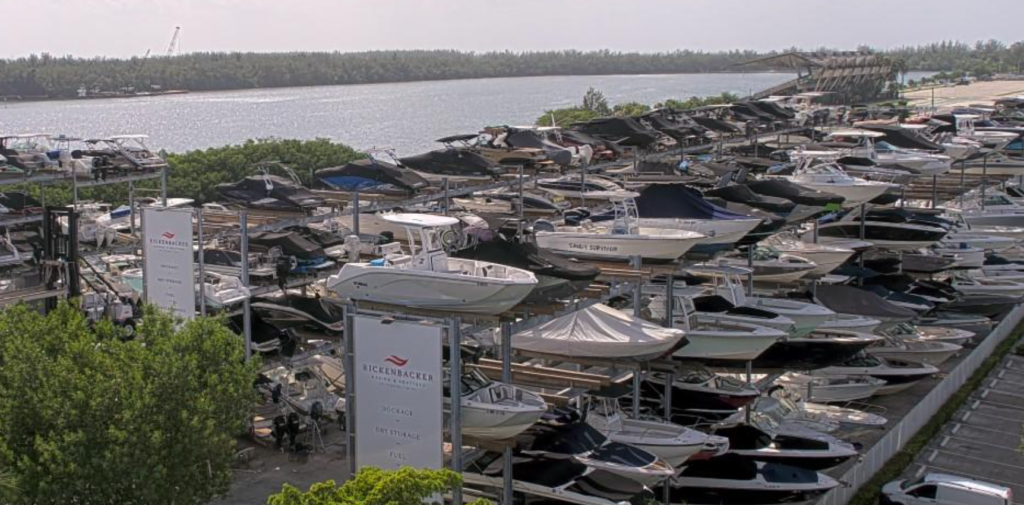
Among the provisions in the agreement approved by voters in 2013 was a requirement that the 400 dry-storage racks be limited to boats under 28 feet in length — a nod to less affluent boaters and in keeping with the city’s mandate that public access be paramount.
But marina storage rates are based on boat length — the bigger the boat, the higher the monthly payment. From the outset, the boat-size limits at Regatta Harbour were never enforced, and today the racks are filled almost entirely with boats far exceeding that length.
City officials, despite numerous requests, have never explained their failure to enforce the terms of their own lease.