
Part of the City of Miami since 1925 when it was abruptly annexed, Coconut Grove has long dreamed — and schemed — of finding a path back to independence.
Editor’s Note: For a companion story that recaps how the City of Miami was able to swallow the much smaller village of Coconut Grove 100 years ago this month, follow this link.
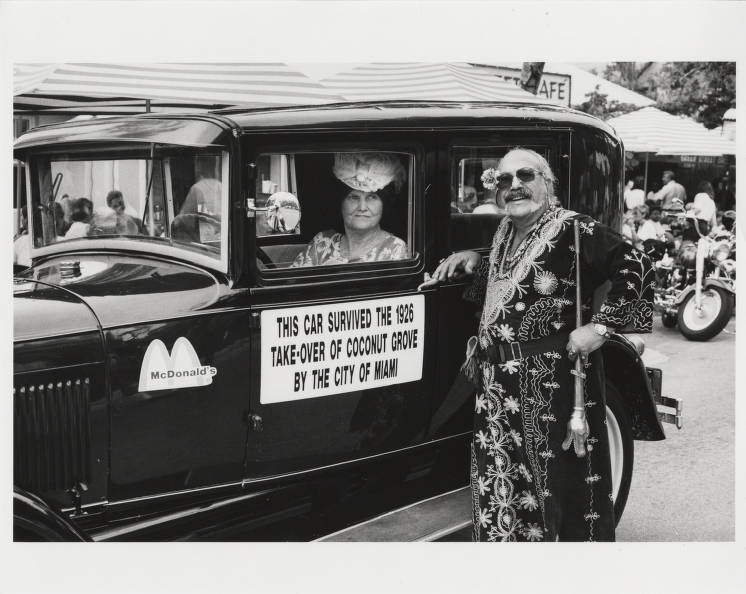
In 1925, the City of Miami annexed – some say stole – the small, quirky enclave of Coconut Grove. The takeover of the quaint, leafy waterfront village and its kooky cast of characters created a 100-year backlash from residents filled with failed attempts at independence.
And though none of the efforts toward self-rule stuck, a century later the Grove’s 22,000 residents continue to maintain their fierce independent streak, some still with fantasies of the village breaking away and becoming its own little ward with its own rules and policies and bylaws.
“It’s a far-fetched dream. But the Grove is a magical place to live. It still is,” said not-quite-yet retired Coconut Grove developer Andy Parrish. “And though it’s a wonderful place to live, it’s also embarrassing because the [City of Miami] government is so pathetic. You don’t know who to call when there’s a pothole.”
In Coconut Grove, fabled for its eclectic collection of Bahamian immigrants, artists and storytellers living beneath the dense tree canopies along Biscayne Bay, the sense of grievance runs deep. Longtime residents and civic players are quick to attribute government dysfunction and even the most quotidian challenges of village life to the enduring sin of forced annexation.
Despite the overwhelming opposition of Grove residents – 87% voting against it – Florida law in 1925 allowed annexation by a majority vote of surrounding communities. The Grove was swallowed up whole.
And the bitterness has never completely subsided.

Almost a century after F. Scott Fitzgerald’s “Great Gatsby” was penned and the Great Depression was just around the corner, the aspiration for correcting the perceived injustice remains for many Grove residents who have seen their favorite haunts gobbled up by big-brand stores and beloved bars replaced by franchises.
Paradise, far too often, gave way to paved parking lots.
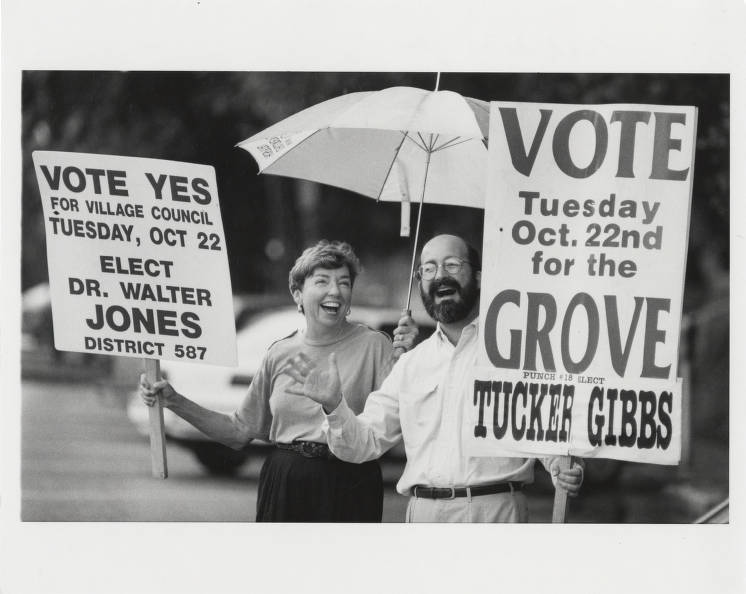
“Just look at this community,” said Tucker Gibbs, an attorney born and raised and still living in Coconut Grove. “You can see what’s happened. There was a huge tree canopy in the 1970s and ‘80s. Now, it’s not totally gone – but it’s certainly on its way.”
The Grove’s most renowned move toward secession was sparked 43 years ago, when residents looked on in fascination as Key West Mayor Dennis Wardlow brought his breakaway movement to a Miami federal courthouse.
The mayor was perturbed that U.S. Border Patrol agents had set up a blockade in Florida City in 1982 requiring Keys residents to show proof of ID before entering the mainland.
A day after a judge denied Wardlow’s request, the mayor stood proudly on Key West’s Mallory Square and proclaimed his city an independent nation that he called the “Conch Republic.”
Though Key West remained part of the U.S., the name Conch Republic not only stuck, it was glorified. Some Grove residents were a bit jealous.
That same year brought the inauguration of a Coconut Grove street festival reeking of liberation and twisted thought and which for the next four-plus decades would poke fun at everything perceived as wrong in Miami.
The King Mango Strut, created as a counterpoint to the King Orange Jamboree Parade for the Orange Bowl, has made fun of a city debt crisis, voting irregularities that overturned a mayoral election, even the village’s failed attempts to break away.
Ironically, or maybe not, the Strut came to be after some founding members didn’t take kindly to being rebuffed by organizers of the more conventional – some would say stodgy – Orange Bowl Parade.
And there was no holding back: Those debt-crisis marchers in 1996 portrayed themselves as angry taxpayers, carried a coffin and included a Grim Reaper. In the casket, they said, was the City of Miami.
“In this city, nothing surprises me, honest to goodness. Even a commissioner trying to add another year to stay in office so elections can run concurrent to federal elections,” said Strut board member Nathan Kurland, who has been the festival’s announcer the past 15 years and will serve as its grand marshal in 2026. “And you can bet someone [this year] is going to do a spoof on that.”
By 1992, attorney Gene Stearns was leading a historic independence movement within unincorporated areas of Miami-Dade that resulted in cityhood for Key Biscayne, Aventura, Pinecrest and eventually Doral. Coconut Grove residents tried to join the party.
Catapulted with an infusion of cash collected with the help of Grove businessman Pan Courtelis, village leaders collected enough signatures to secure the necessary countywide vote for secession on the November ballot.
The referendum, agreed to by Miami-Dade commissioners, would have permitted neighborhoods such as the Grove, to break away from their larger municipal umbrellas to establish their own self-rule.
But elected leaders and key political insiders never warmed to the plan, lobbying hard to scare residents over the unintended costs and consequences of a Balkanized Miami-Dade.
And nature didn’t help. Four months before the vote, Hurricane Andrew barreled through Key Biscayne on a path to South Miami-Dade, leaving mostly rubble in its wake.
Though there was a December vote, precincts from Key Biscayne to Florida City were decimated and the turnout was extremely low. The movement failed.
“We made it all the way to the ballot. But South Dade was destroyed,” said Coconut Grove resident Ron Nelson, who now works as a liaison between Miami-Dade’s Public Works and Transportation departments. “If South Dade had turned out, it would have won.”
Bitter about the loss and angry at public corruption in city government, Coconut Grove residents came up with another idea: the creation of the Coconut Grove Village Council.
The city bestowed the nine-member advisory board with the façade of municipal authority – its candidates appear on the same ballot as other city elections, and it holds meetings in the City Hall commission chambers – but its relevance gradually waned as residents (and city officials) realized that it lacked standing as an officially recognized advisory board.
In 1997, as the secession movement cooled, Coconut Grove residents came up with another plan: Abolish the City of Miami, allowing distinct communities, such as the Grove, to incorporate under their own municipal flag – and government.
With Miami mired in a costly and embarrassing financial crisis, proponents believed voters citywide would be eager to abandon a sinking ship.
They were wrong. The measure failed overwhelmingly, with many observers suggesting that voters in less affluent neighborhoods had little reason to sever ties with the Grove and other communities that provide a disproportionately large share of Miami’s tax base.
Despite the setback at the polls, the Grove’s spirit of independence never dampened.
In 2014 a broad collection of over 100 Grove residents and civic leaders met for a visioning workshop –- led by famed architect Elizabeth Zyberk, the author of the city’s Miami 21 zoning code -– to chart the future of Coconut Grove. The end product, a comprehensive strategic plan for the community, included this goal: By the year 2030 Coconut Grove will govern its own municipal affairs.
Around the same time, a group of local business leaders in the Grove floated a more symbolic route to self-rule: rebranding, using a Madison Avenue makeover to invoke the Bohemian, go-it-alone spirit that has proven so alluring to locals and visitors alike.
Then-Miami Commissioner Marc Sarnoff, also chairman of the Coconut Grove Business Improvement District (BID) at the time, and others suggested changing the wording on about two dozen welcome signs at Grove entrances to: “Welcome to the Nearby Republic of Coconut Grove Est. 1873.”
Others like Kurland found the idea silly. He’d prefer changing the name to “The Kingdom of Coconut Grove,” he quipped at the time.
The movement unraveled quickly. The name change, said locals, was not necessary and too much of an attempt to copy Key West. Despite some media attention, lack of community support killed the plan.
Looking back, Gibbs fondly tells stories of family members who have been in the Grove since the 1930s. He recalls how one evening a friend came by the family’s home to play piano, which sparked an idea from Gibb’s dad. A few minutes later the piano was hoisted onto the back of a pickup truck that drove around the Grove as the musician continued striking the keys.
“They were three sheets to the wind when they did that,” said Gibbs. “But that’s the kind of stuff they did when everyone knew everyone in the Grove. For the people like my parents who were older and had some money, it was a ball.”
As for yet another attempt at secession, Gibbs isn’t so sure.
“For political reasons, yeah, in a New York minute I would,” he said. “But I just don’t know if that’s the case, if it’s what the people want anymore.”









Another great article about the wonderful place we call home. Thank you, Spotlight!
While the article quoted me correctly that the City “government is so pathetic. You don’t know who to call when there’s a pothole,” I did not mean to disparage the hundreds of City employees working hard every day.
I know whom to call, because I was on the Planning Zoning and Appeals Board for 8 years. But the average City resident misses the local Neighborhood Enhancement Team (NET) offices in each of the City’s 5 districts. They were abolished under the prodding of Commissioner Alex de la Portilla (now running for Mayor) who wanted the NET funding to be controlled directly by him.
As for the potholes (and all things traffic related), for years I’ve asked both District 7 County Commissioners and District 2 City Commissioners to create signage identifying which roads are County and which are City. I think both offices must like the confusion.
Thanks to StrongerMiami.org, next year when we overwhelmingly vote to increase our city commission districts from 5 to 9, the new 9 commissioners will be forced to listen to their own neighborhood residents AND to work together for the City. Then fixing potholes — and much more – will get a lot easier.