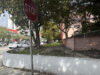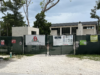

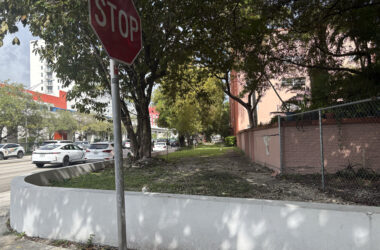
A new landscape plan for the construction of a new home on Leafy Way – a plan that developers claim will actually enhance the tree canopy – was approved after nearly a year of deferrals and controversy.
A radically revised plan promising to preserve 90% of the tree canopy at 3939 Leafy Way — where an earlier proposal would have removed 90% of the property’s trees — was approved Tuesday by the city’s Historic and Environmental Preservation Board.
Developers were seeking the city’s approval to demolish an existing 1925 home and replace it with a two-story, 9,000-square-foot house with a pool and hardscape, a construction plan that required the removal or relocation of a number of trees on the property.
This week’s decision comes after 10 months of deferrals and significant opposition from residents and tree advocates who claimed the property owner’s original plan would have reduced tree canopy well beyond what should be permitted for a home on Leafy Way, inside an Environmental Preservation District with special protections.
The new plan, first presented to the board this week, promises to not only maintain the existing canopy, but expand it – from 11,092 square feet to 11,642 square feet – with the addition of new trees.

The revised design calls for the removal of five trees, which are slated to be replaced with new plantings, and the relocation of 25 trees from one side of the property to the other – a shift the owners say is required to comply with Miami 21 zoning standards.
The remaining trees on the property, including a 100-year-old oak, will remain in place.
The owner of the 16,100-square-foot property, which was purchased in 2022 for $2.64 million, had sought to remove 75 trees, or more than 90% of all those on the property.
“This is not the same application that was originally filed. This is a carefully redesigned plan in response to staff, our neighbors, and this board’s comments and feedback,” Carlos Diaz, an attorney for the property owner, told the board on Tuesday.
A key point of contention in the debate over the canopy was how many actual trees were on the property. The original arborist’s report counted 81, but Diaz said that only 42 of those were actual trees, as defined by city code. Other plants, listed as trees in the original application, do not meet those qualifications, and some are non-native.
“All these other overgrown shrubs or whatever you may have, those things are not trees. So, they’re not subject to the protections of the Environmental Preservation District trees,” Diaz told the Spotlight.
City staff acknowledged this in their analysis, stating “the proposed removals are mostly understory growths in poor condition.” However, they determined that the grouping of vegetation in a cluster constituted a “significant landscape feature” present since the 1970s and maintained their recommendation for denial.
Breaking the previous deadlock over the owner’s application, Christopher Baraloto, associate director of FIU’s International Center for Tropical Botany and vice chair of the Coconut Grove Village Council, spoke in support of the new plan.
“I don’t see it as an ecological loss when you take non-native palm species off and replace them with native hardwood species that are going to grow canopy,” he said.
Baraloto is one of the neighborhood’s most fervent tree advocates and, as he claims, reviews every tree permit in Coconut Grove as part of his Village Council duties. This plan, he explained, met the bar for approval.
“When I run the analysis, the data are very clear that this particular plan is now improving the canopy,” he said.
The board agreed, voting 7-1 to approve the revised plan, on the condition that two proposed oak plantings be substituted with another species of native tree.
Vice Chair Luis Prieto y Munoz voted in opposition.
“I think there is a certain ecological element here that is inevitably lost by simply creating a large structure on your lot that’s not currently covered,” Prieto y Munoz said.
But other board members viewed the new plan as a significant improvement.
“This plan is a heck of a lot better than the last one,” board member Julie Odell said.
Diaz said the final layout was based around a series of constraints — protecting an old-growth oak, avoiding the septic system and meeting Miami 21 frontage rules — which pushed the home into the southeast corner of the lot and flipped the property’s tree and hardscape layout
“It seems to me that your team has done everything it can to really make a huge difference from what was previously proposed,” board member Christopher Cawley said in the meeting, before voting yes on the changes.
Not everyone was sold on the new design, however.

“While we welcome a new beautiful home and our new neighbor, I have concerns that the size of the house and the hardscape added together means the numbers of trees are moved around the perimeter, and I don’t know if just having it around the perimeter really preserves the canopy feel that we want on Leafy Way,” resident Alison O’Keefe said in a public comment.
A handful of other Leafy Way neighbors who came out to the meeting split on whether the new proposal was good enough.
“I never thought that I would be on the side that I’m going to be today, but I’m going to be on the side of letting these people build their house,” Cristina Coll, who lives a few houses down from the property, said. “I have seen the process and they have done everything they know how to comply.”
Comments like that represented a complete switch from the public opposition expressed at five previous hearings. Since May 2025, the Leafy Way proposal has drawn steady attention on social media, and at the most recent HEPB meeting in February, several residents were prepared to speak in opposition before the item was deferred.
Read More: Leafy Way Tree-Removal Plan Deferred by Preservation Board
Dylan Fay and his wife Barbara, who introduced themselves as the owners and future residents of the home, acknowledged the original proposal’s shortcomings.
“I’ll admit, when we first submitted plans for a future home, we didn’t fully understand what was being proposed in terms of canopy,” Fay said. “After speaking with the community, neighbors and other experts in the history of the neighborhood, we understand that that approach was completely wrong.”
Unless an appeal is filed in the next two weeks, the property that once housed Helen W. Lester, founder of the Leafy Way subdivision, will become the site of the Fay family’s newly constructed home — bringing the long drawn out Leafy Way dispute to a close.